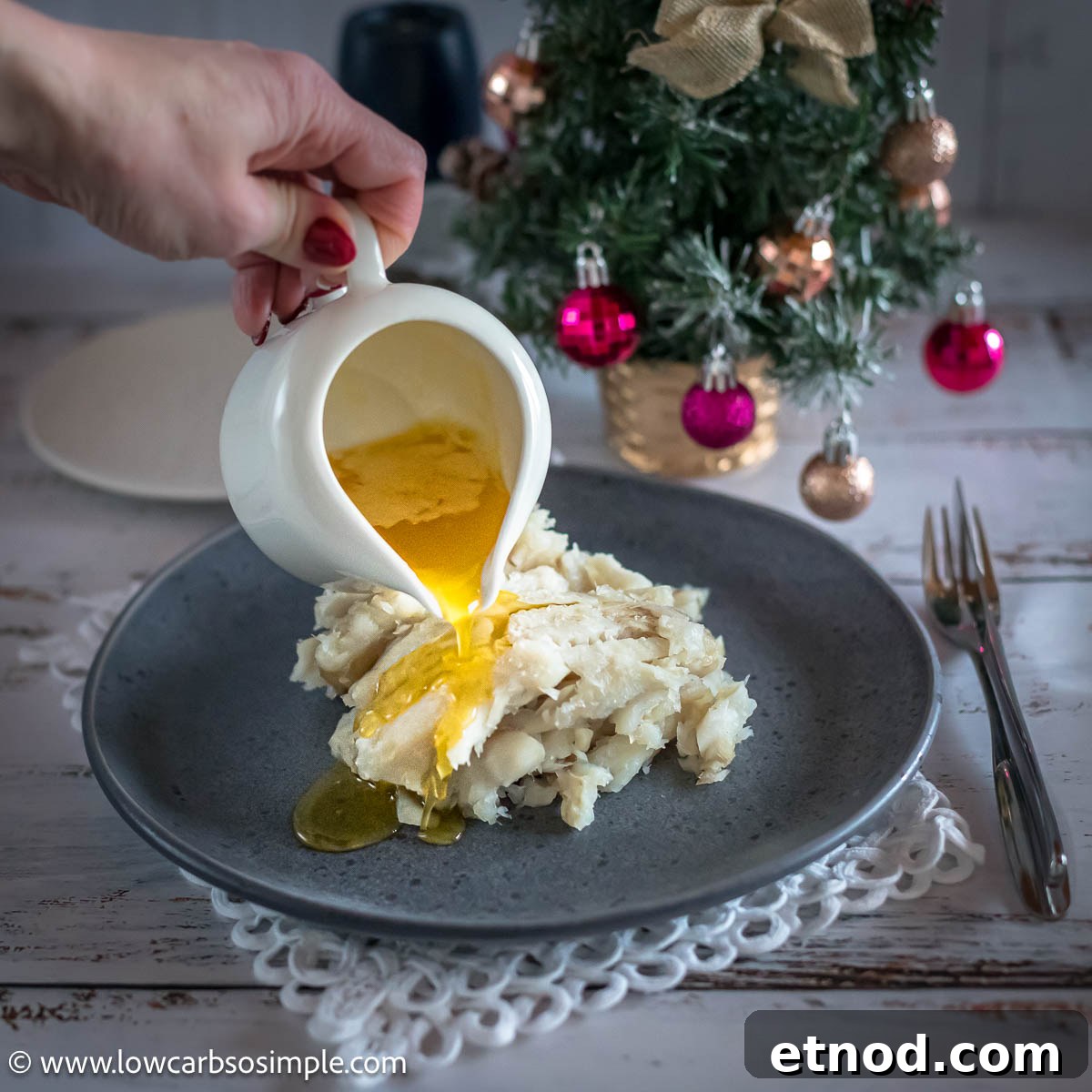
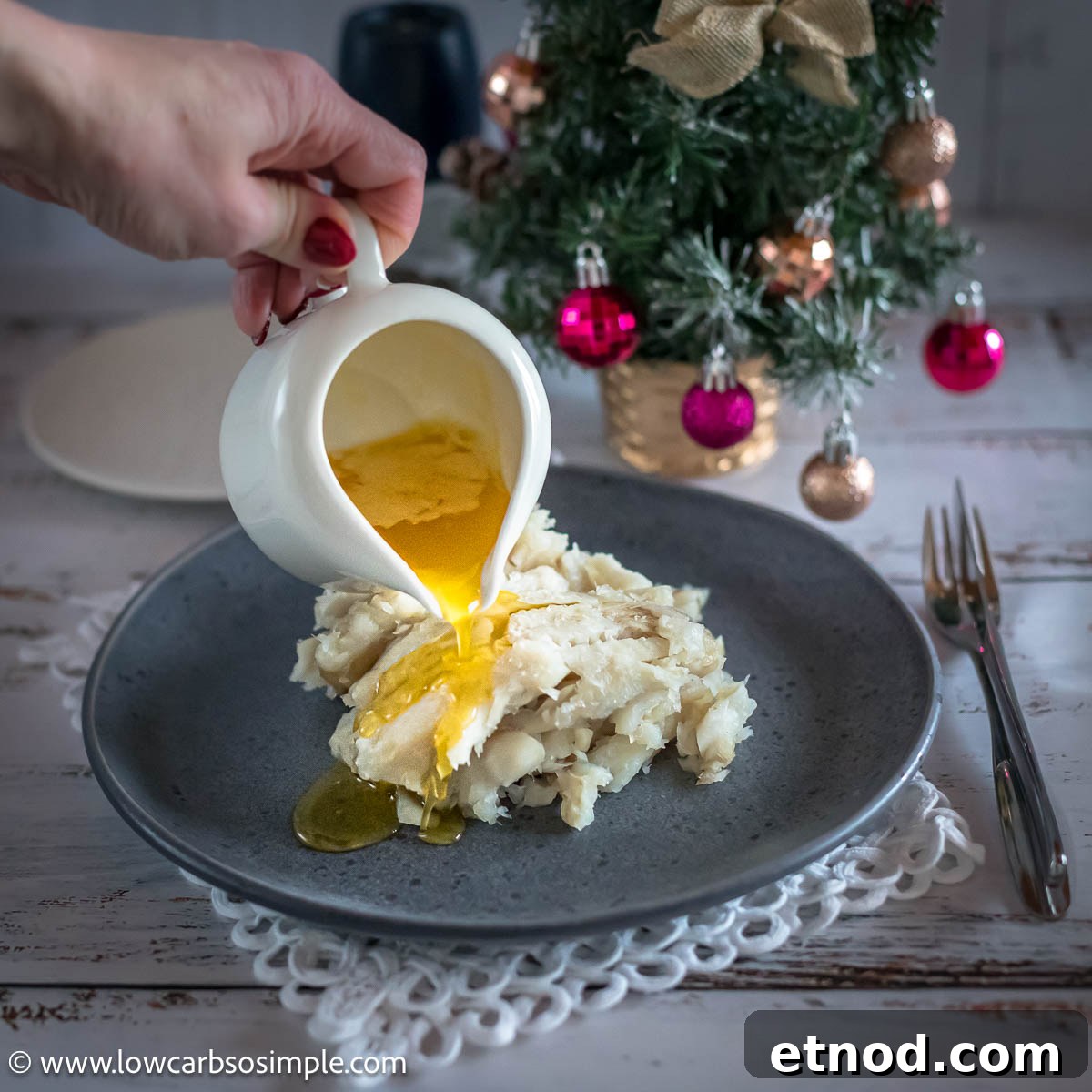
If you’ve heard of lutefisk—known in Finland as lipeäkala—you may have wondered what it tastes like. Traditional recipes call for soaking dried whitefish in a lye solution for days, which can sound alarming. This recipe shows how to capture the characteristic flavor of lutefisk safely and quickly, without using lye.
You don’t need days of soaking or handling caustic chemicals. With a simple technique using baking soda and heat, you can produce a fish that recalls the mild alkaline flavor of lutefisk in about 30 minutes. The texture won’t be identical to traditionally treated fish, but the taste is surprisingly similar and approachable for first-timers.
I know some purists will disagree, but this method is practical, safe, and convenient. If you enjoy it, you can later explore the traditional lye process with a fuller understanding of the flavor profile.
FAQ
Here are answers to common questions to help you understand the dish and the method before you try it.
What is lutefisk?
Lutefisk is a Nordic specialty made from dried whitefish—most often cod, but sometimes ling or pollock—that is rehydrated and treated to produce a distinctive, slightly gelatinous texture and mildly alkaline flavor. It is traditionally served around Christmas with accompaniments such as white sauce, boiled potatoes, melted butter, and allspice.
How does lipeäkala (lutefisk/lutfisk) taste?
The fish itself has a very mild, neutral flavor. The characteristic note comes from the alkaline treatment, which contributes a subtle, unique taste. Lutefisk is an acquired taste for many because of its texture and delicate, somewhat unusual flavor. This quick version won’t be as gelatinous, but it provides a safe way to sample the authentic flavor.
Do you really use lye to make lutefisk?
Yes—traditional lutefisk is treated with lye, then thoroughly rinsed before cooking. That process creates the classic texture and flavor. Because lye is caustic, it must be handled carefully and the fish must be rinsed extensively.
Isn’t it dangerous to use lye?
Lye can be dangerous if mishandled. The traditional process involves diluting and then rinsing the fish repeatedly until the lye is removed. If you prefer not to handle lye, this recipe achieves a similar flavor using baking soda, a safe household alkaline alternative.
How do you make lutefisk without lye?
Thaw frozen white fish fillets, simmer them in boiling water with baking soda to impart an alkaline note, rinse the fish, then simmer again in fresh boiling water until cooked. This mimics the taste without using lye or long soaking times.
What is the best fish to use?
Firm white-fleshed fish with a neutral flavor work best—cod, haddock, pollock, or flounder. Pollock is commonly used and widely available where I live.
Step-by-Step Instructions for Quick Lutefisk without Lye
This simple recipe uses just three pantry ingredients: white-fleshed fish, baking soda, and water. It’s straightforward and can be made with frozen fish from most grocery stores.
Ingredients:
- 2 lbs (900 g) frozen fillets of firm white fish (cod, haddock, pollock, flounder)
- 1/4 cup (60 ml) baking soda
- Boiling water
Method:
- Thaw the frozen fish in the refrigerator overnight.
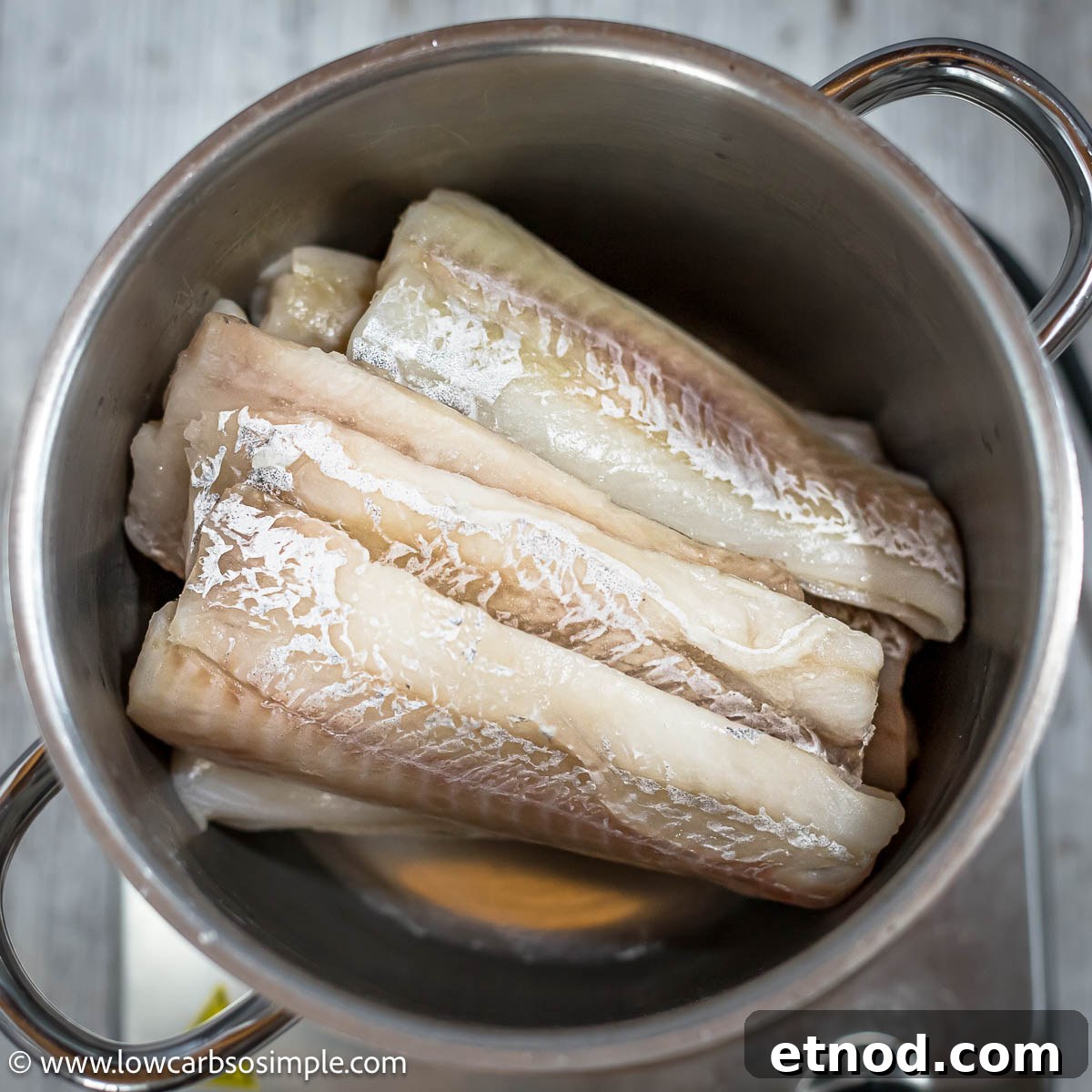
- Place the thawed fillets in a medium saucepan.
- Add 1/4 cup (60 ml) baking soda over the fish.
- Pour boiling water over the fish until it is fully covered.
- Simmer over medium-low heat for 20 minutes. Do not cover the pot; the mixture can foam and spill.
- Carefully pour off the water, then rinse the fish under clean water and drain.
- Return the fish to the saucepan and cover again with fresh boiling water.
- Simmer for another 10 minutes, or until the fish is tender and cooked through.
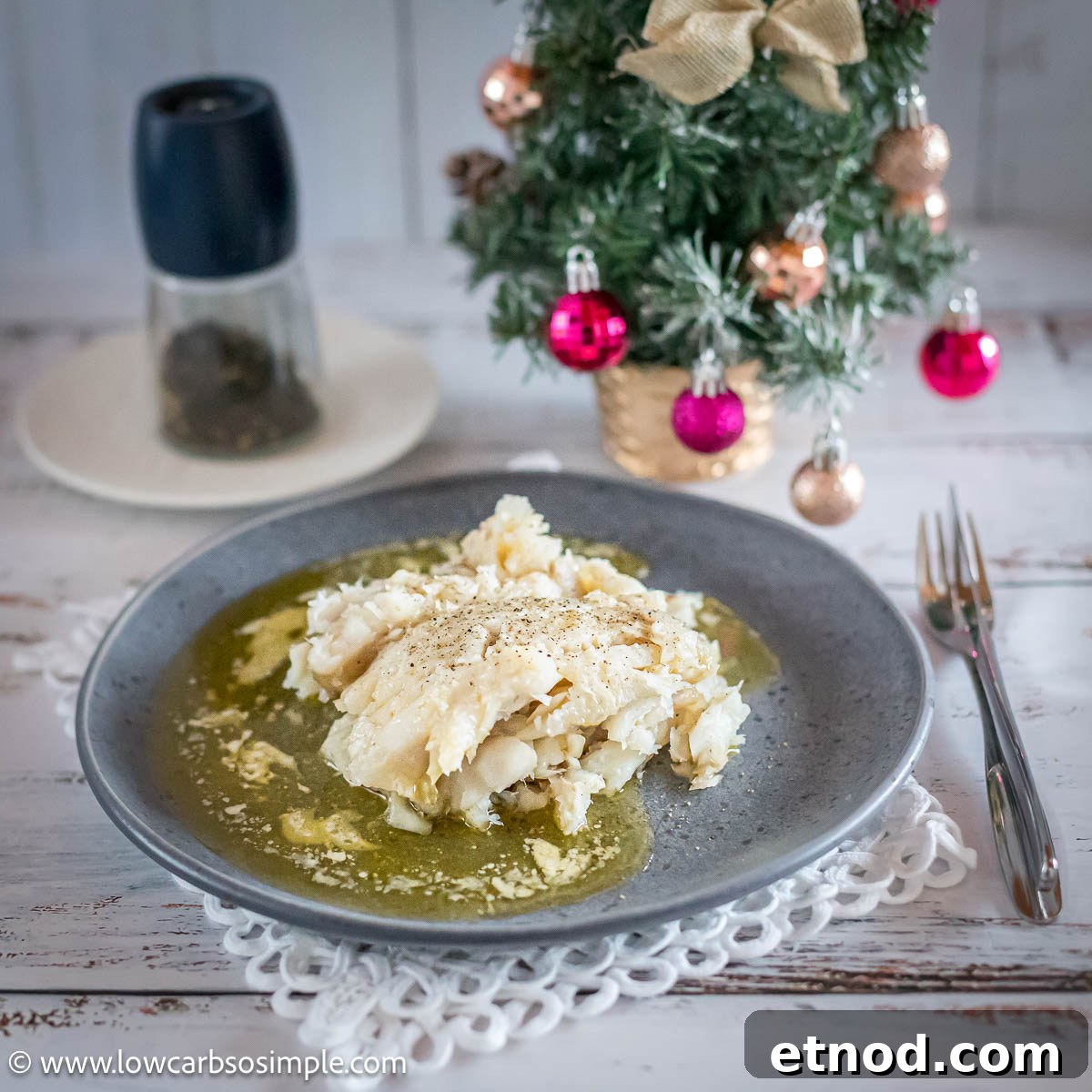
- Gently drain the water, transfer the fish to a serving plate, and serve immediately with melted butter, salt, and ground allspice.
Notes and Serving Suggestions
This recipe is not a precise replacement for traditional lutefisk, but it offers an accessible introduction to the flavor without the safety concerns and long processing time. Nutritional values depend entirely on the fish you choose; baking soda and water do not add significant nutrients.
Classic accompaniments and low-carb serving ideas:
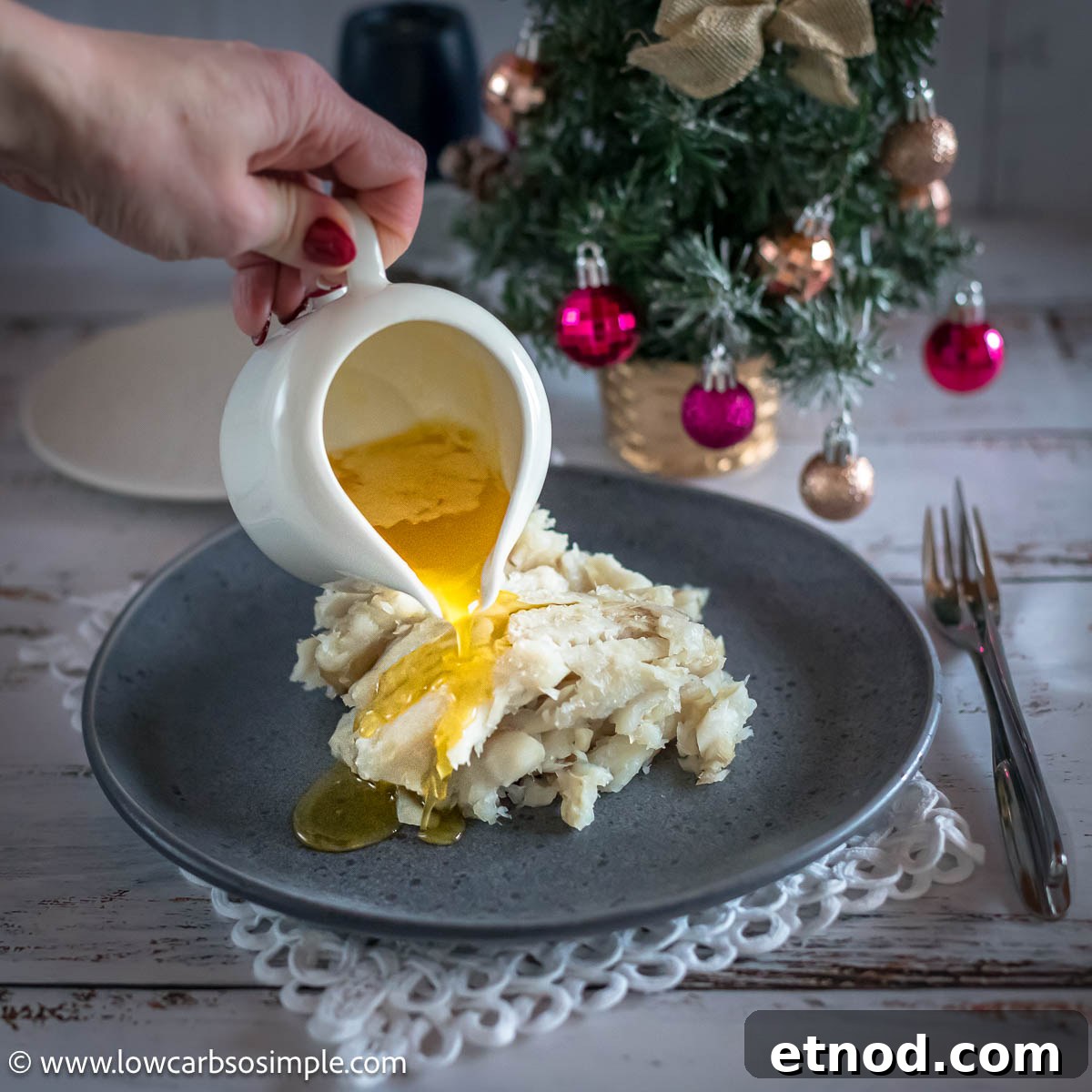
- My preferred way: drizzle ample melted grass-fed butter over the fish, sprinkle unrefined sea salt and ground allspice.
- Finnish low-carb: make a white sauce without starch—reduce cream or milk to thicken—serve with cooked cauliflower florets and the white sauce.
- Norwegian low-carb: white sauce (no starch) with crumbled fried bacon and melted butter, or a mustard sauce; add peas only if your carb allowance permits.
- Swedish style: white sauce and crisp bacon; Swedes call the dish lutfisk and commonly pair it with a cream-based sauce.
- Lutefisk polonaise: top with melted butter and chopped hard-boiled eggs for a rich, carnivorous variation.
How I Developed the Method
I wanted a safe, fast way to capture lutefisk’s flavor without using lye. Baking soda is a mild, kitchen-safe alkaline, and applying heat accelerates the chemical interaction with the fish. I experimented by simmering fish in baking-soda–infused water, then rinsing and finishing in fresh water. The result was tender, flavorful fish with the familiar mild alkaline note when served with butter and allspice.
This approach is simple, uses common ingredients, and is fast enough for a weekday meal or to serve as a festive introduction to lutefisk’s unique taste.
Quick Lipeäkala (Lutefisk/Lutfisk) without Lye
4
5 minutes
30 minutes
Ingredients
- 2 lbs = 900 g frozen fish fillets from firm white-fleshed neutral-tasting fish (cod, haddock, flounder, pollock)
- 1/4 cup = 60 ml baking soda
- Boiling water
Instructions
- Let the frozen fish thaw in the fridge overnight.
- Place the thawed fish into a medium saucepan.
- Add the baking soda. Add boiling water until the fish is completely covered.
- Simmer over medium-low heat for 20 minutes. Do not cover the pot.
- Pour out the water carefully. Rinse the fish and drain.
- Cover the fish again with boiling water and simmer about 10 minutes, until tender.
- Drain gently and transfer the fish to a serving plate.
- Serve immediately with salt, melted butter, and allspice.
Final Thoughts
This quick method provides a safe, easy way to experience the flavor of lutefisk without the time or hazards of traditional lye treatment. It’s a practical choice for anyone curious about the dish or seeking a low-carb holiday option. Enjoy it simply with butter and allspice, or adapt it to regional serving traditions—white sauce, bacon, or eggs all work well.
Merry Christmas to those who celebrate. If you try this recipe, adjust seasonings to taste and enjoy discovering a Nordic specialty in a much quicker, kitchen-friendly way.