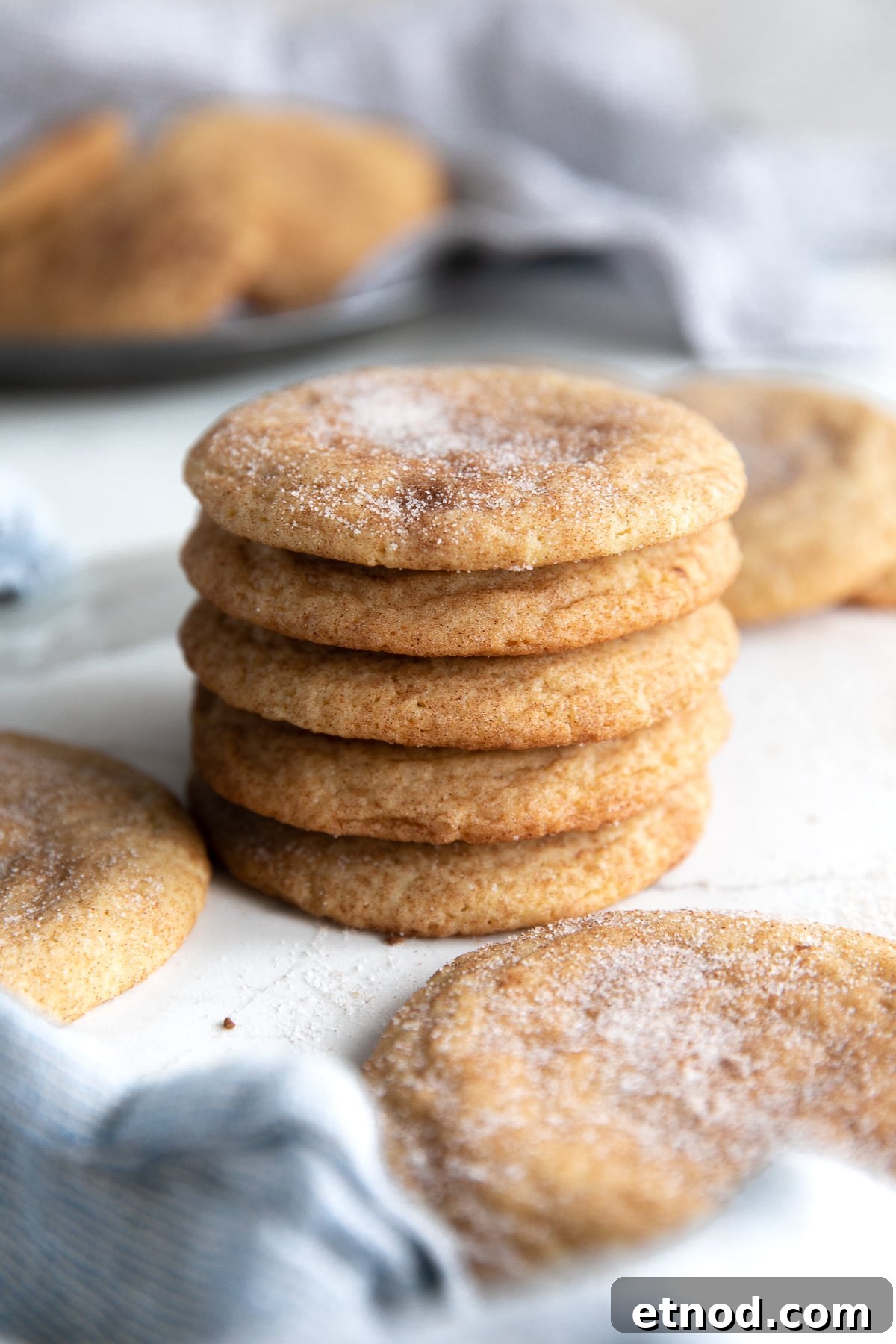
Soft Snickerdoodle Cookie Recipe with golden, chewy edges and buttery, fluffy centers. Learn how to make a classic cinnamon-sugar cookie that’s gooey, tender, and irresistible.
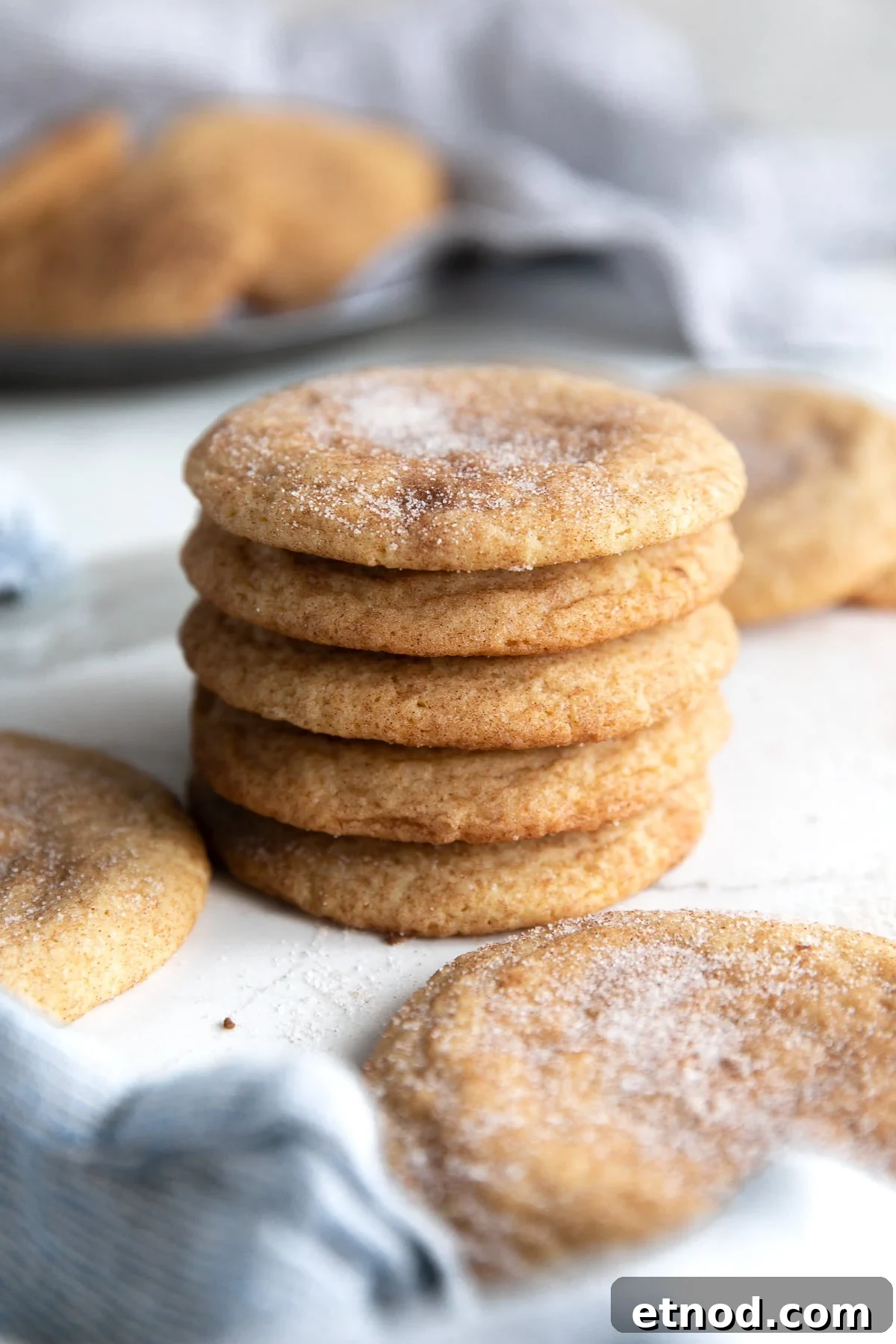
Soft and Chewy Snickerdoodles
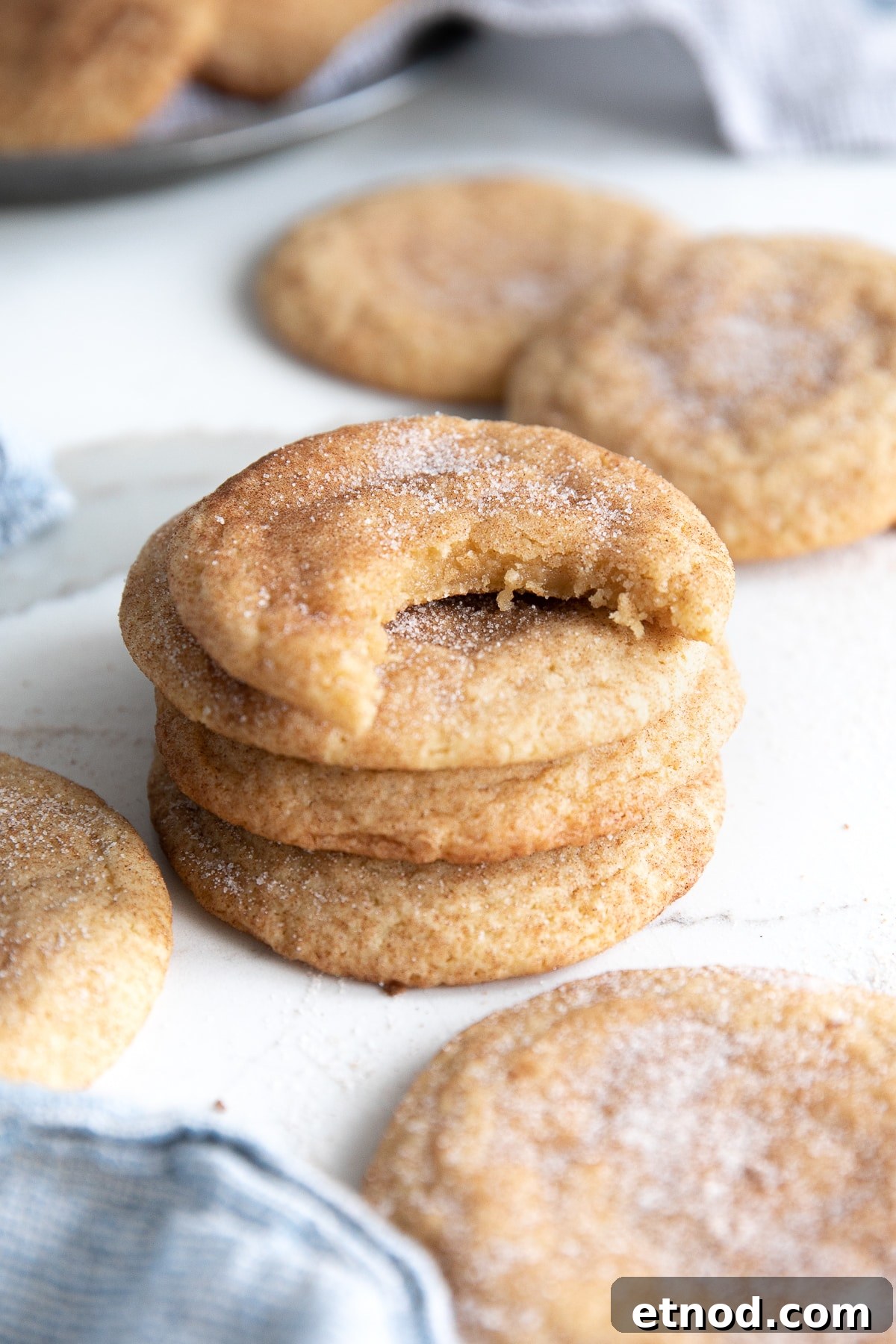
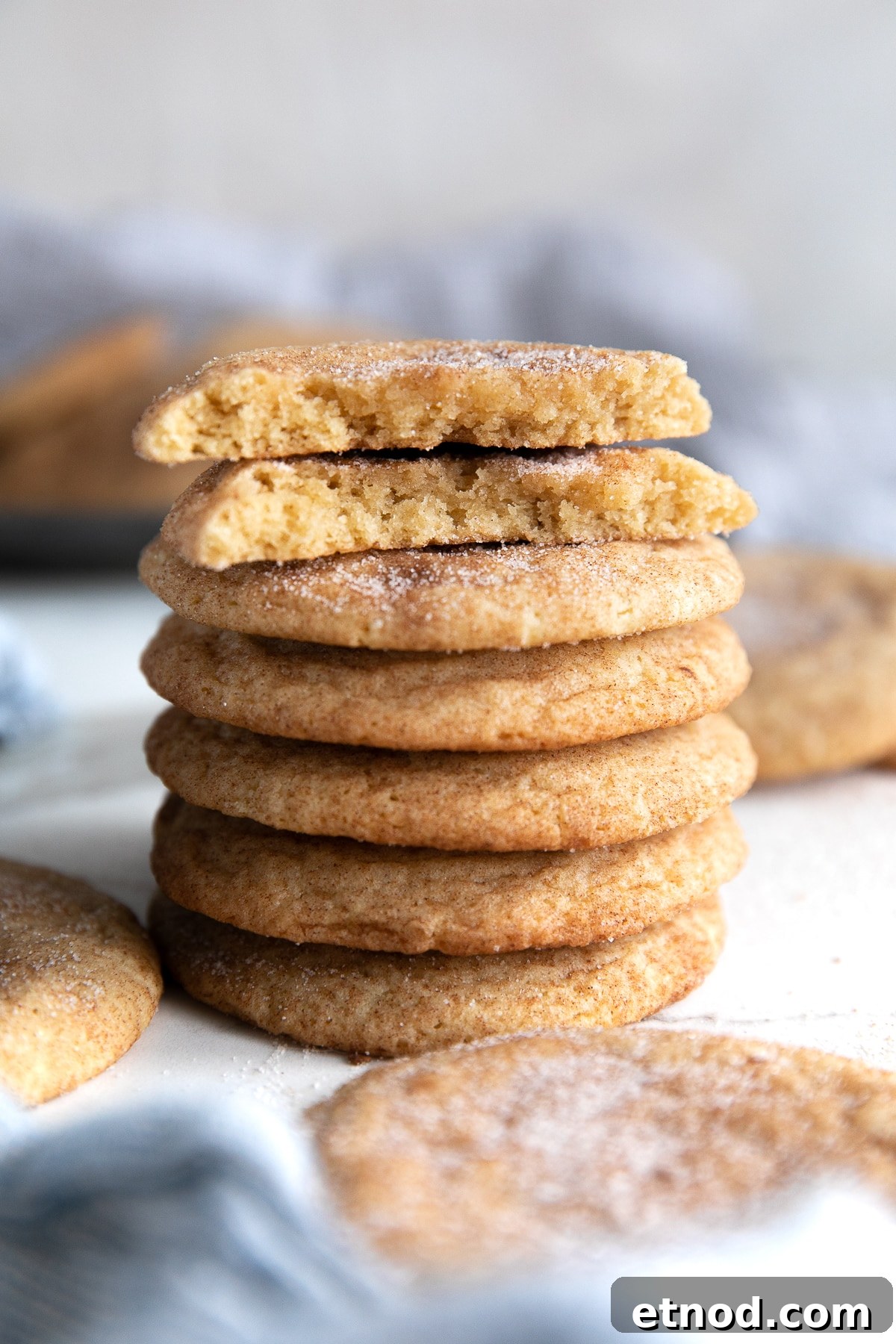
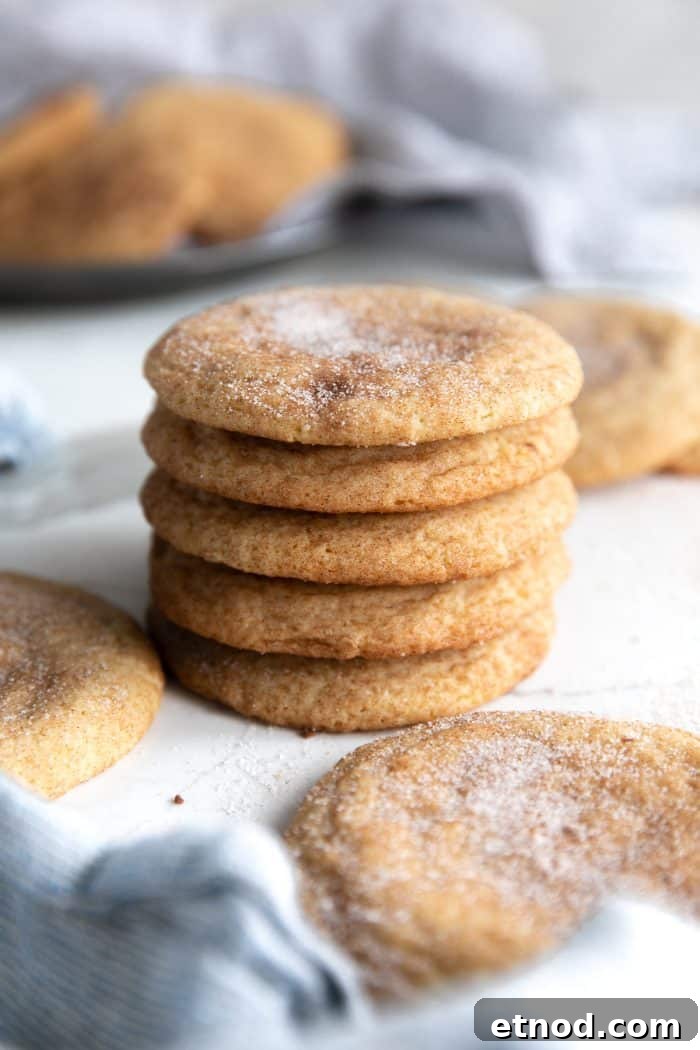
Snickerdoodles are a timeless favorite—simple to make and satisfying every time. A well-made snickerdoodle delivers:
- crispy, slightly crunchy edges that give way to soft, chewy centers
- a tender, buttery crumb
- a subtle tang from cream of tartar that defines the flavor
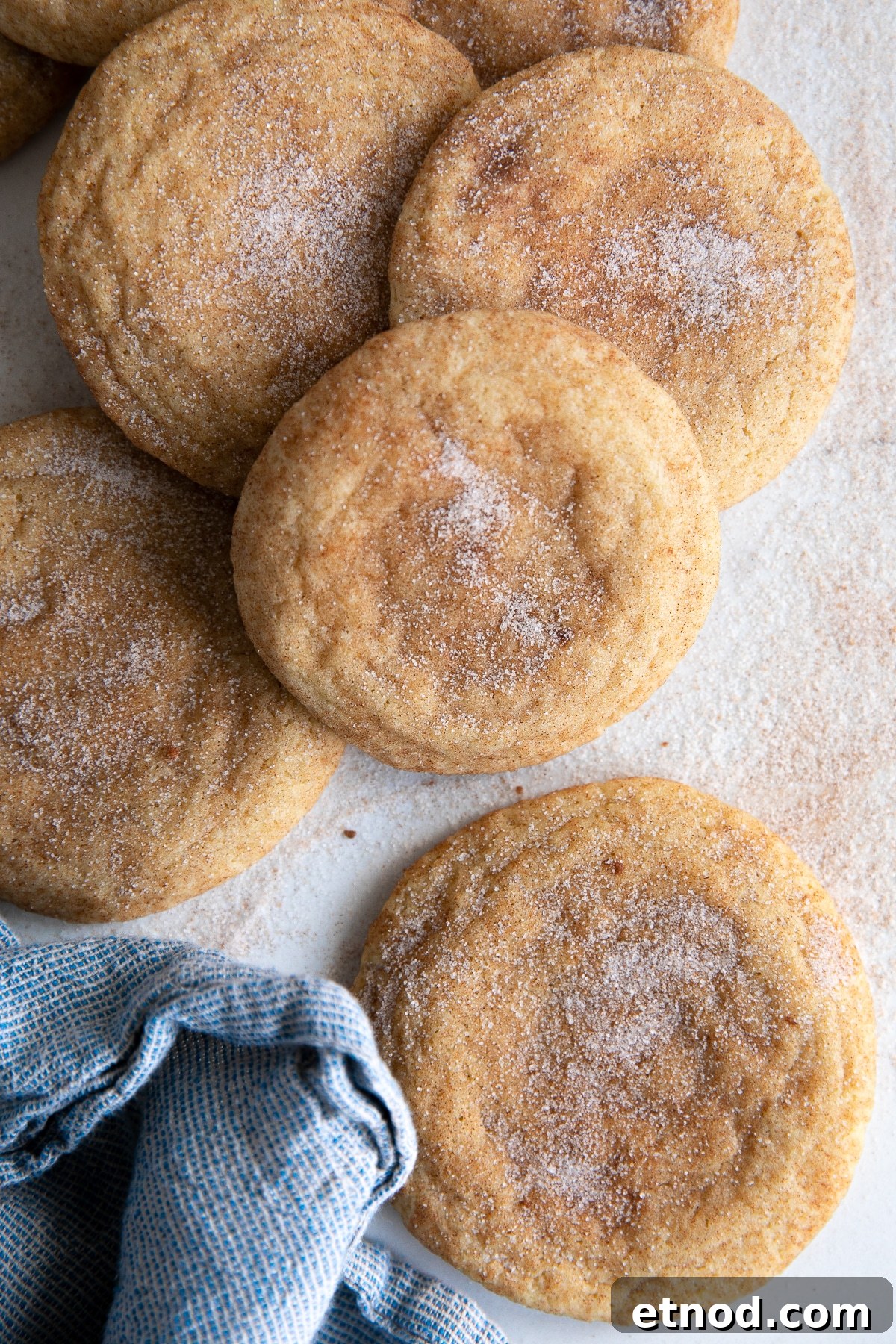
- a shimmering finish of cinnamon and sugar
These cookies are perfect for gatherings, holidays like Thanksgiving and Christmas, or a cozy weeknight treat. They’re easy enough for beginner bakers and make a great bake-ahead option for parties.
Table of Contents
- Soft and Chewy Snickerdoodles
- Why Is It Called a Snickerdoodle?
- Ingredients and Frequently Asked Questions
- How to Make the Best Snickerdoodle Cookies
- Recipe Tips
- More Cookie Recipes
- Snickerdoodle Cookie Recipe
Why Is It Called a Snickerdoodle?
According to Joy of Cooking, the word snickerdoodle likely has German roots. It may be derived from the German term Schneckennudeln, meaning “crinkly noodles.” Other theories exist, but the exact origin of the name remains uncertain. Regardless of its etymology, the cookie is beloved for its unique tang and comforting cinnamon flavor.
Ingredients and Frequently Asked Questions
- Butter
- Sugar
- Eggs
- Vanilla extract
- All-purpose flour
- Cream of tartar
- Baking soda
- Salt
This recipe relies on a few pantry staples. The result should be pillowy cookies with a spark of cinnamon sugar on the outside.
What is cream of tartar?
Cream of tartar has several baking uses:
- stabilizes whipped egg whites
- prevents sugar from crystallizing
- acts as a leavening acid when paired with baking soda
In snickerdoodles, cream of tartar provides the signature tang and contributes to the cookie’s chewiness.
What can I substitute for cream of tartar?
This recipe uses 1½ teaspoons cream of tartar and ½ teaspoon baking soda. If you don’t have cream of tartar, try:
- Baking powder: Because baking powder contains both an acid and bicarbonate, use about 2¼ teaspoons baking powder to replace 1½ teaspoons cream of tartar (this adjusts for both the acid and leavening components).
- Fresh lemon juice: Use 3 teaspoons fresh lemon juice to replace 1½ teaspoons cream of tartar (substitute liquid cautiously as it can slightly change dough consistency).
How to Make the Best Snickerdoodle Cookies
- Cream the butter and sugar for at least 4–5 minutes before adding the eggs and vanilla. This step incorporates air for a lighter texture.
- Whisk the dry ingredients—flour, cream of tartar, baking soda, and salt—together in a bowl.
- Add the dry ingredients to the wet mixture on low speed and mix only until combined; overmixing will tighten the dough.
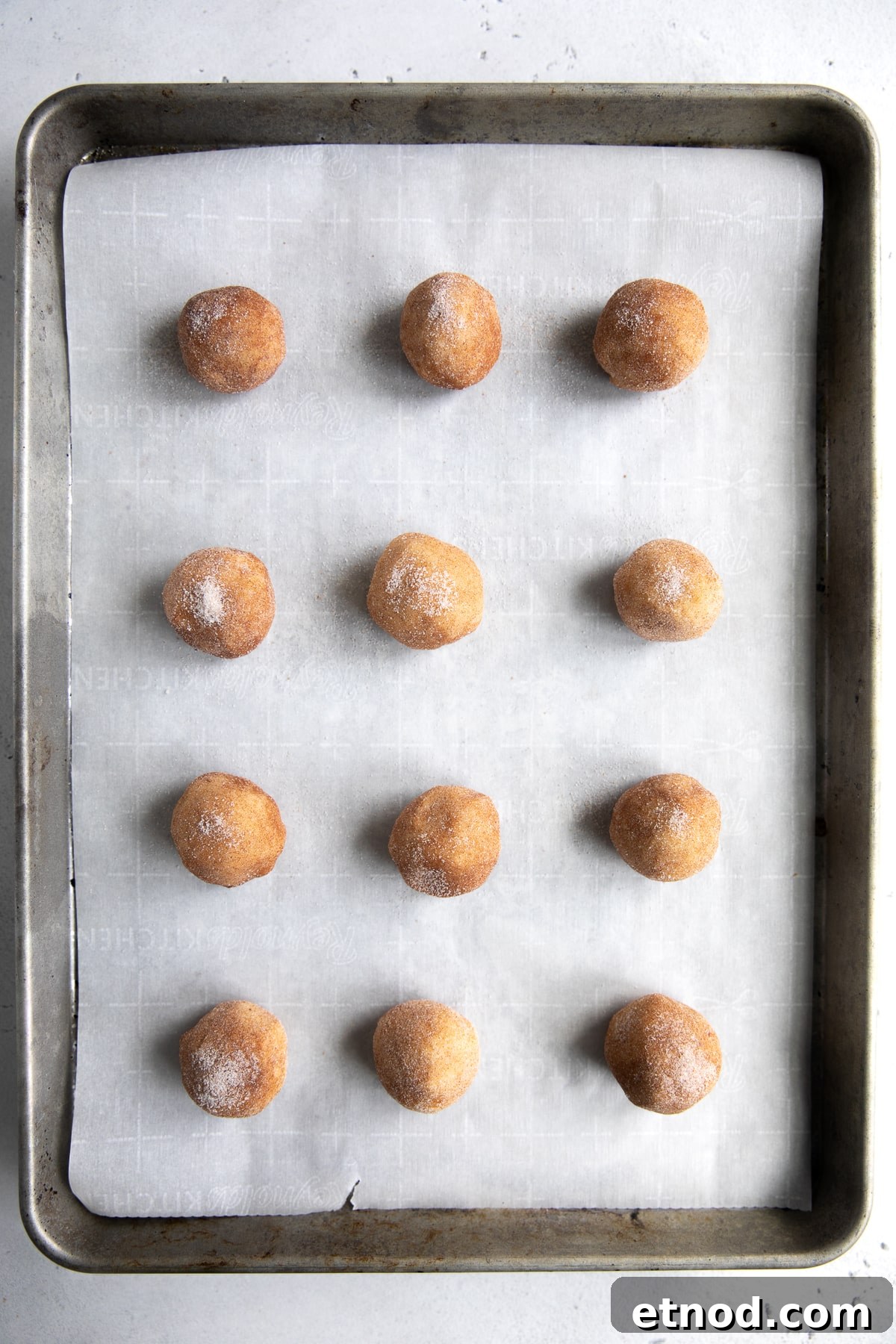
- Scoop the dough into uniform balls, roll them between your hands until smooth, then coat each ball in the cinnamon-sugar mixture.
- Space dough balls 2–3 inches apart on a parchment-lined baking sheet so they have room to spread.
Bake until the edges are lightly golden and the centers remain soft. Let the cookies rest a few minutes on the baking sheet, then transfer to a wire rack to cool. Serve warm with milk or a scoop of vanilla ice cream for an extra indulgent treat.

Recipe Tips
- Cream butter and sugar for 4–5 minutes to make the dough light and airy.
- Mix dry ingredients in with a mixer on low or fold in by hand to avoid overworking the dough.
- Leave at least 2–3 inches between cookies on the baking sheet to prevent them from merging into one large cookie.
- For thicker cookies, avoid flattening the dough before baking.
- For slightly flatter cookies, gently press the dough with the bottom of a clean glass after coating with cinnamon sugar.
More Cookie Recipes
Caramelized Apple Oatmeal Cookies
Raspberry Cookies
Cranberry Chocolate Chip Oatmeal Cookies
Brown Butter Chocolate Chip Cookies
Easy Sugar Cookies
If you try these Snickerdoodle Cookies, please leave a comment and let me know what you think!
Snickerdoodle Cookie Recipe
 Jessica Randhawa
Ingredients
- 1 cup butter, softened
- 1½ cups granulated sugar
- 2 large eggs, room temperature
- 1½ teaspoon vanilla extract
- 2¾ cups all-purpose flour
- 1½ teaspoon cream of tartar
- ½ teaspoon baking soda
- 1 teaspoon salt
For the cinnamon sugar coating
- ¼ cup granulated sugar
- 1 tablespoon ground cinnamon
Instructions
- Preheat oven to 350°F. Line two large cookie sheets with parchment paper.
- In a large stand mixer bowl, cream the butter and sugar on medium speed for 4–5 minutes until light and fluffy. Add the eggs one at a time, mixing until combined, about 1 minute. Scrape down the bowl and add the vanilla, mixing for another minute.
- In a medium bowl, whisk together the flour, cream of tartar, baking soda, and salt.
- With the mixer on low, add the dry ingredients to the wet ingredients and mix only until combined.
- If time allows, cover the bowl and chill the dough 20–30 minutes so it’s easier to roll.
- Combine the sugar and cinnamon in a small bowl. Scoop dough into tablespoon-sized balls, roll smooth, then coat in the cinnamon-sugar mixture and place onto the prepared baking sheet.
- Optional: for flatter cookies, gently press the center of each dough ball with the bottom of a clean glass.
- Bake for 7–9 minutes, or until edges are golden. Let cookies rest on the baking sheet for 5 minutes, then transfer to a wire rack to cool completely.
Notes
- I typically use salted butter; if you use salted butter and want to reduce overall salt, use ½ teaspoon salt instead of 1 teaspoon.
- For thicker cookies, avoid flattening them before baking.
- For flatter cookies, press slightly with the bottom of a glass after rolling in cinnamon sugar.
- Store leftover cookies in an airtight container at room temperature for 3–4 days.
You may also enjoy pumpkin spice snickerdoodle variations and other seasonal twists.
Nutrition
Nutrition information is an estimate and should be used as a guideline.