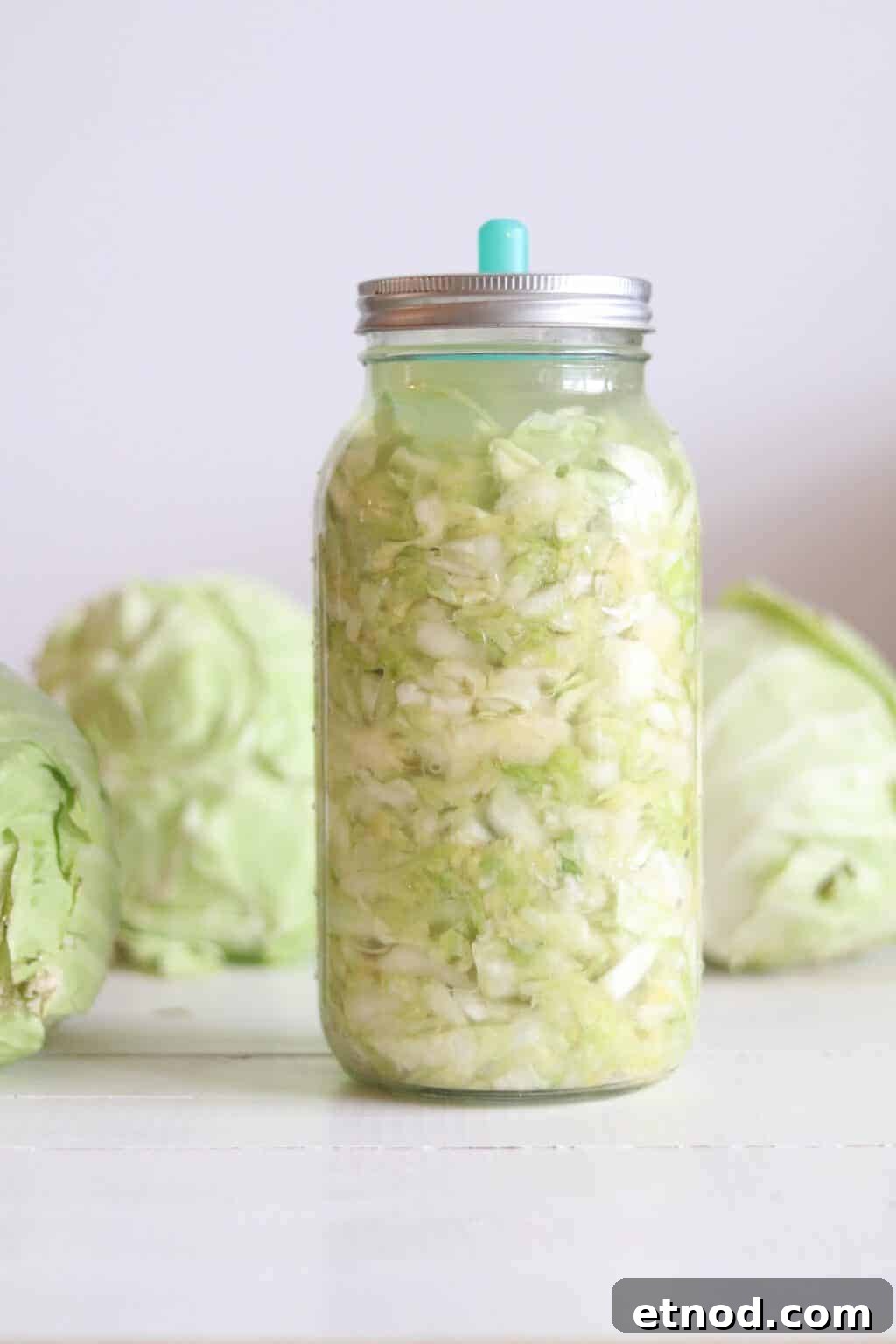
Learn how to make tasty fermented vegetables with this easy two-ingredient sauerkraut recipe. Adding sauerkraut to your regular meals supports healthy gut flora and overall wellness.
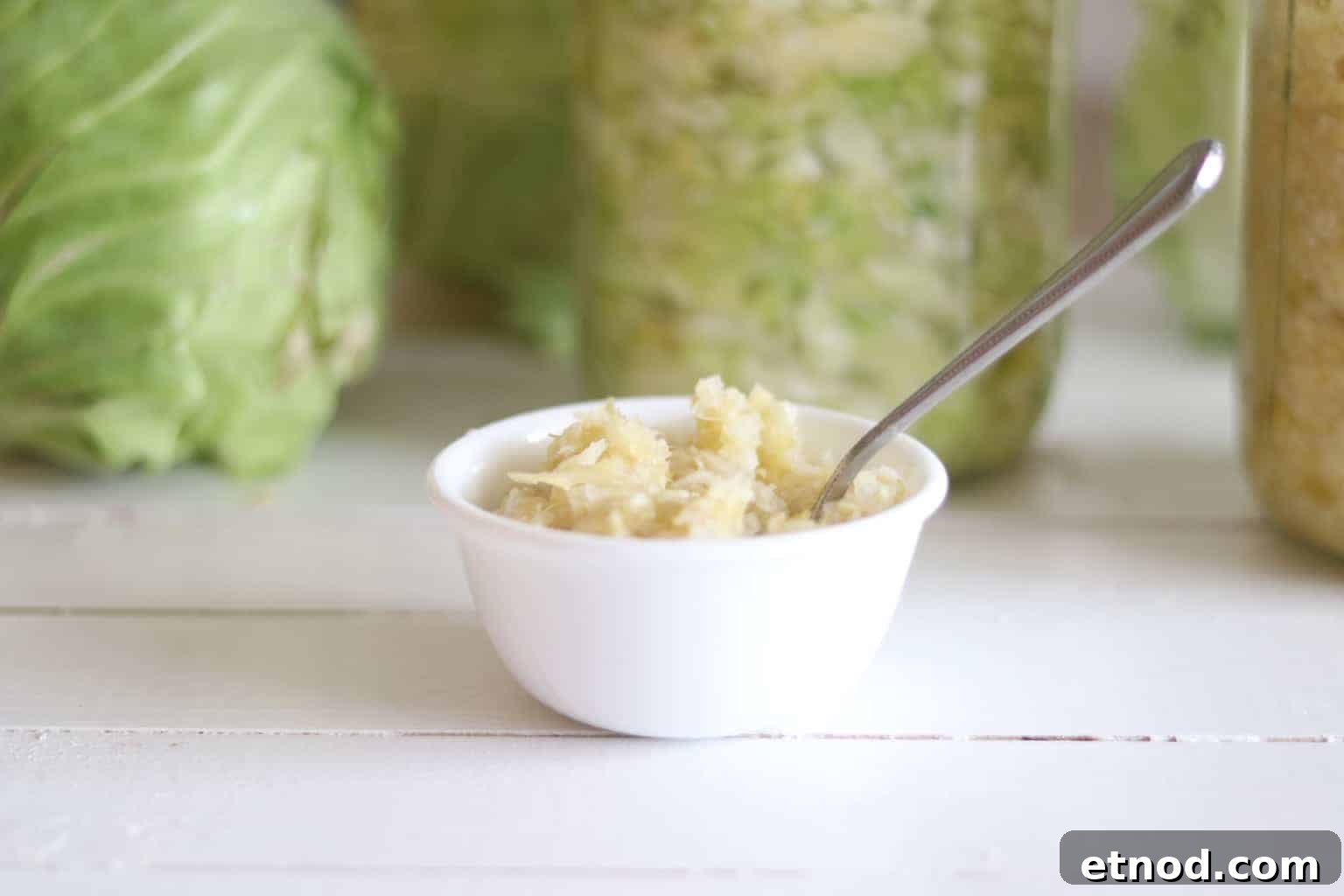
We love sauerkraut now, but it took time for our family to warm up to its flavor. A few years ago my oldest son was hospitalized with RSV and double pneumonia. He needed IVs, breathing treatments, and antibiotics. After his recovery we faced food intolerances, eczema, and digestive problems caused in part by the heavy medications. To help rebuild his gut health I put him on the GAPS approach and added fermented foods like sauerkraut to his diet. It took time and patience, but the improvements were worth it.
Sauerkraut quickly became a household staple. At first my kids didn’t enjoy it, but the more we served it the more they accepted—and now they often ask for it. If you or your children are unsure at first, keep offering it in small amounts.
MAKING SAUERKRAUT IS SIMPLE AND AFFORDABLE 
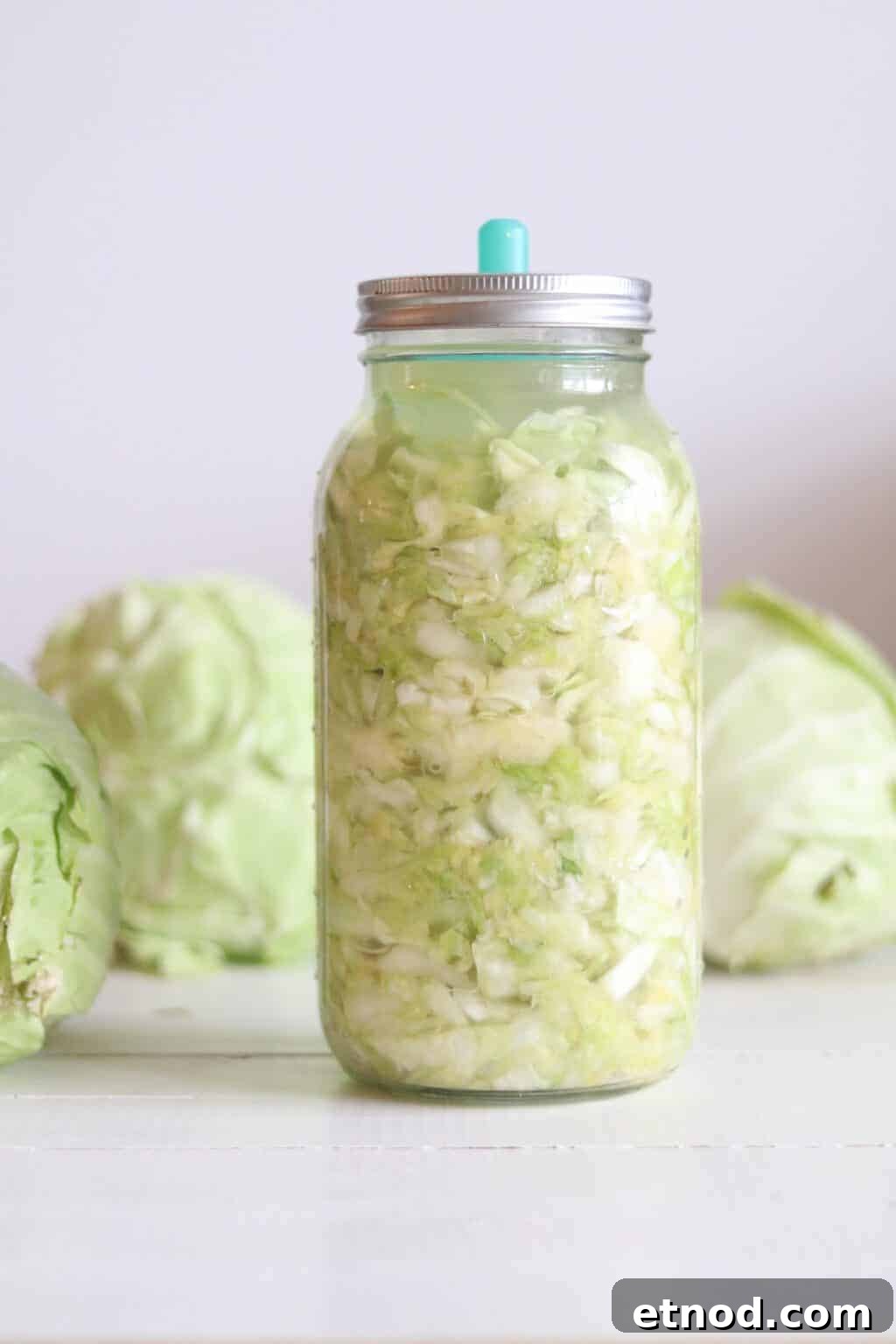
You only need two main ingredients and no special fermenting gear to make homemade sauerkraut. You can add spices or extras if you like, but the basic method is very straightforward.
INGREDIENTS
- 1 large head of cabbage
- 1 tablespoon sea salt (pink Himalayan or other unrefined salt works well)
- Mason jar (half-gallon wide-mouth jars are ideal)
INSTRUCTIONS
- Remove and set aside the outer cabbage leaves.
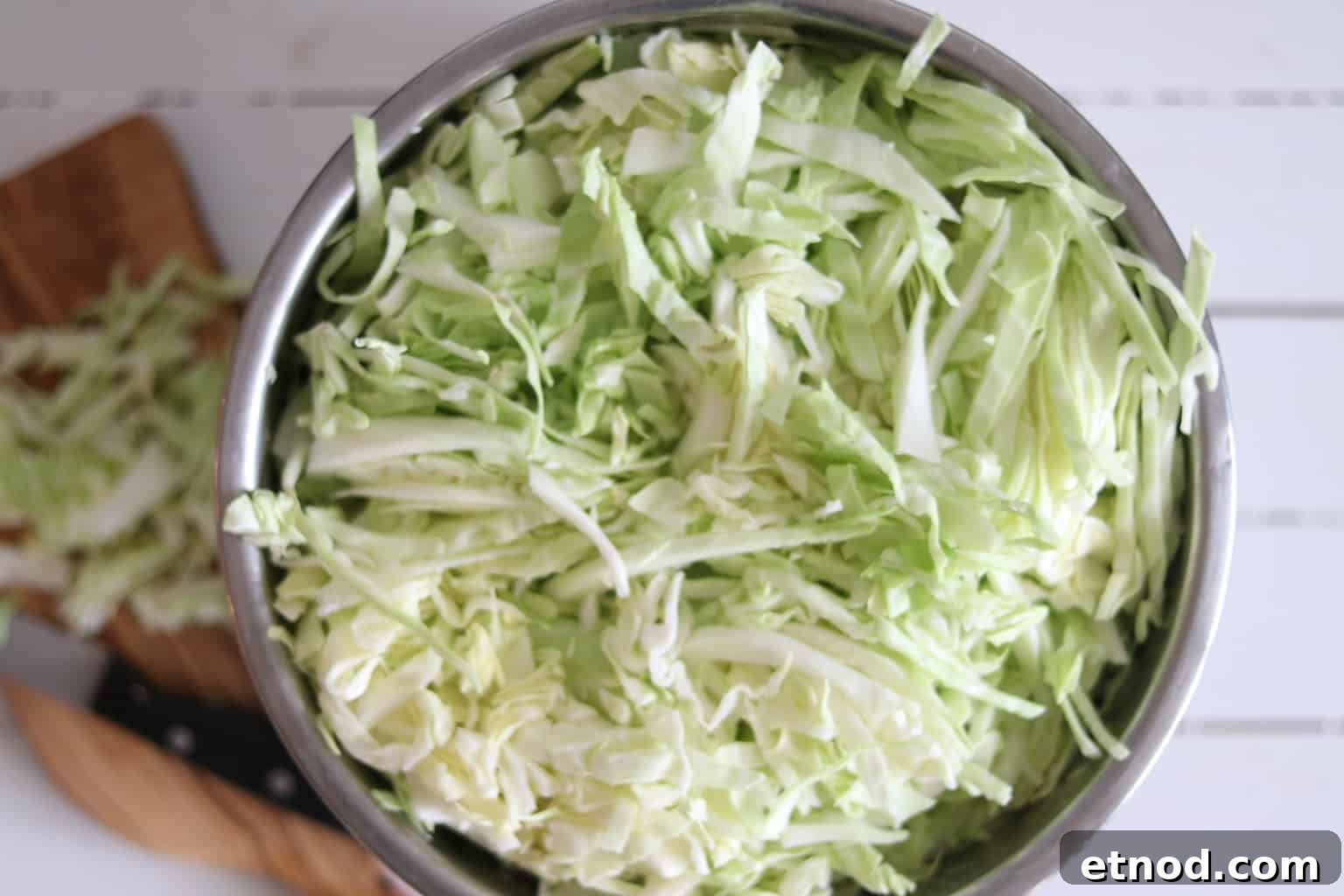
- Shred the cabbage using a food processor or a sharp knife. Both methods work; a food processor speeds things up for larger batches.
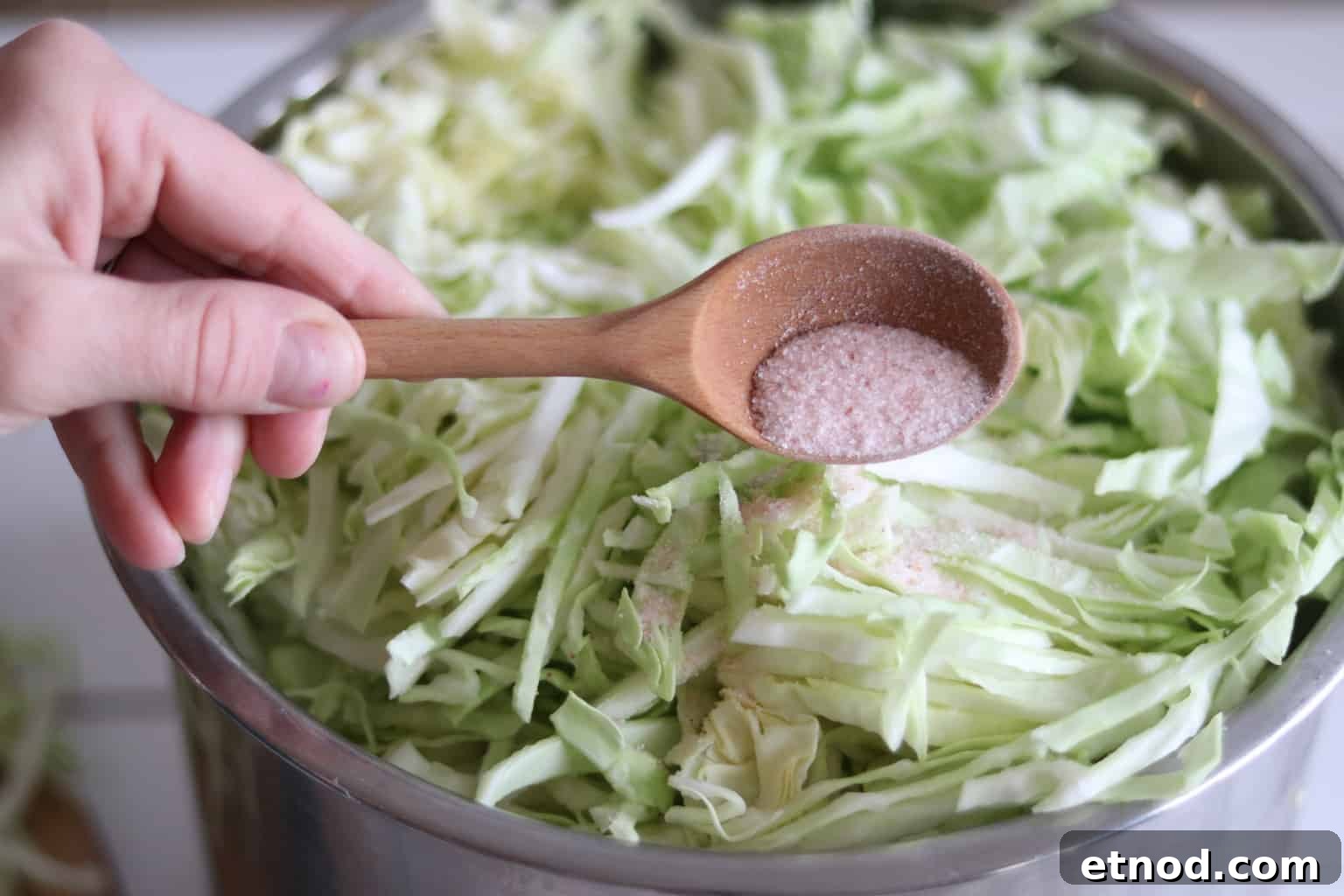
- Place shredded cabbage in a large bowl, sprinkle with salt, and let it sit for 5–10 minutes. This draws out moisture and makes the next step easier.
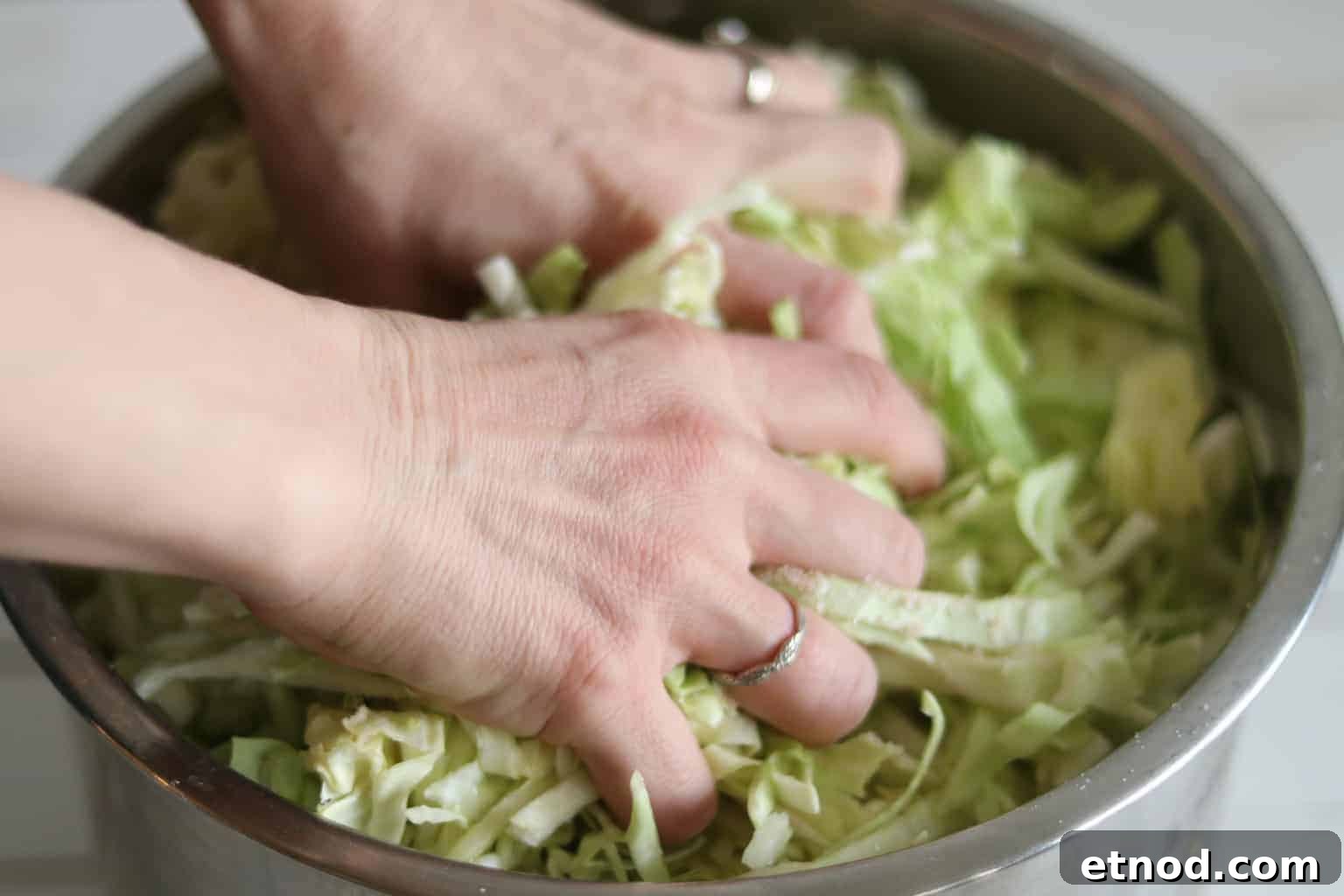
- Massage, punch, and pound the cabbage with your fist until it releases enough liquid to form a brine. You need enough brine to fully cover the cabbage in the jar.
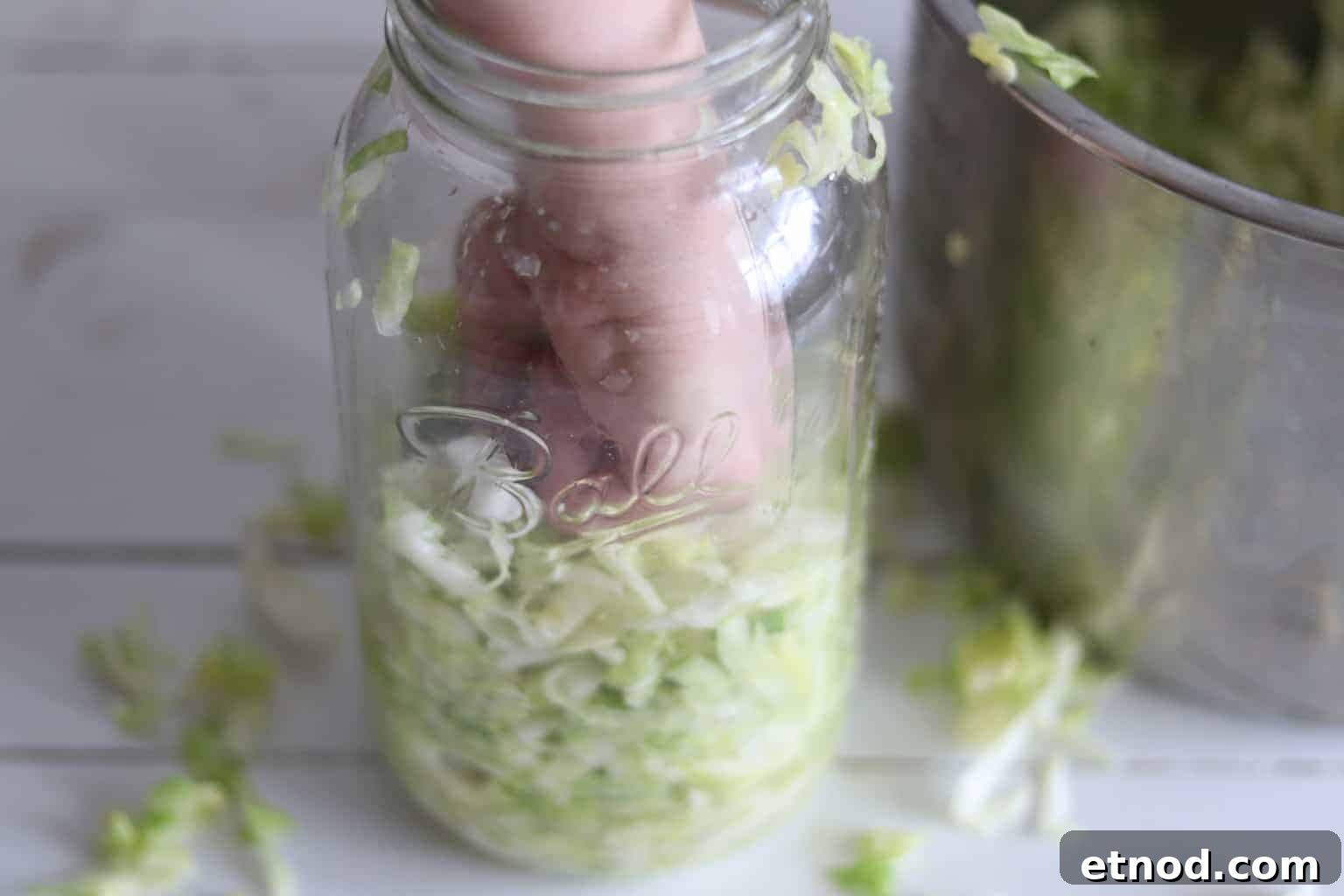
- Pack the cabbage tightly into a glass mason jar in small handfuls, pressing down firmly after each addition so the brine rises above the cabbage and air pockets are removed.
- Fill the jar leaving about two inches of headspace since the cabbage can expand. One large head yields roughly a quart of sauerkraut.
- Weigh the cabbage down so it remains submerged under the brine. Use glass fermenting weights or improvise with the reserved outer leaves rolled into a log. A sealed plastic bag filled with clean stones can also work—ensure the stones don’t contact the cabbage.
- Cover the jar loosely and leave it at room temperature to ferment. Fermenting time ranges from 5 days to 2 weeks. Taste after five days and let it continue until it reaches your preferred sourness.
- When fermentation is done, remove the weight, seal with a lid, and refrigerate. Properly stored, sauerkraut can keep up to several months.
OPTIONAL TOOLS
- Glass fermenting weights
- Fermenting lids
- Half-gallon mason jars
- Food processor
THINGS TO KNOW ABOUT FERMENTING SAUERKRAUT
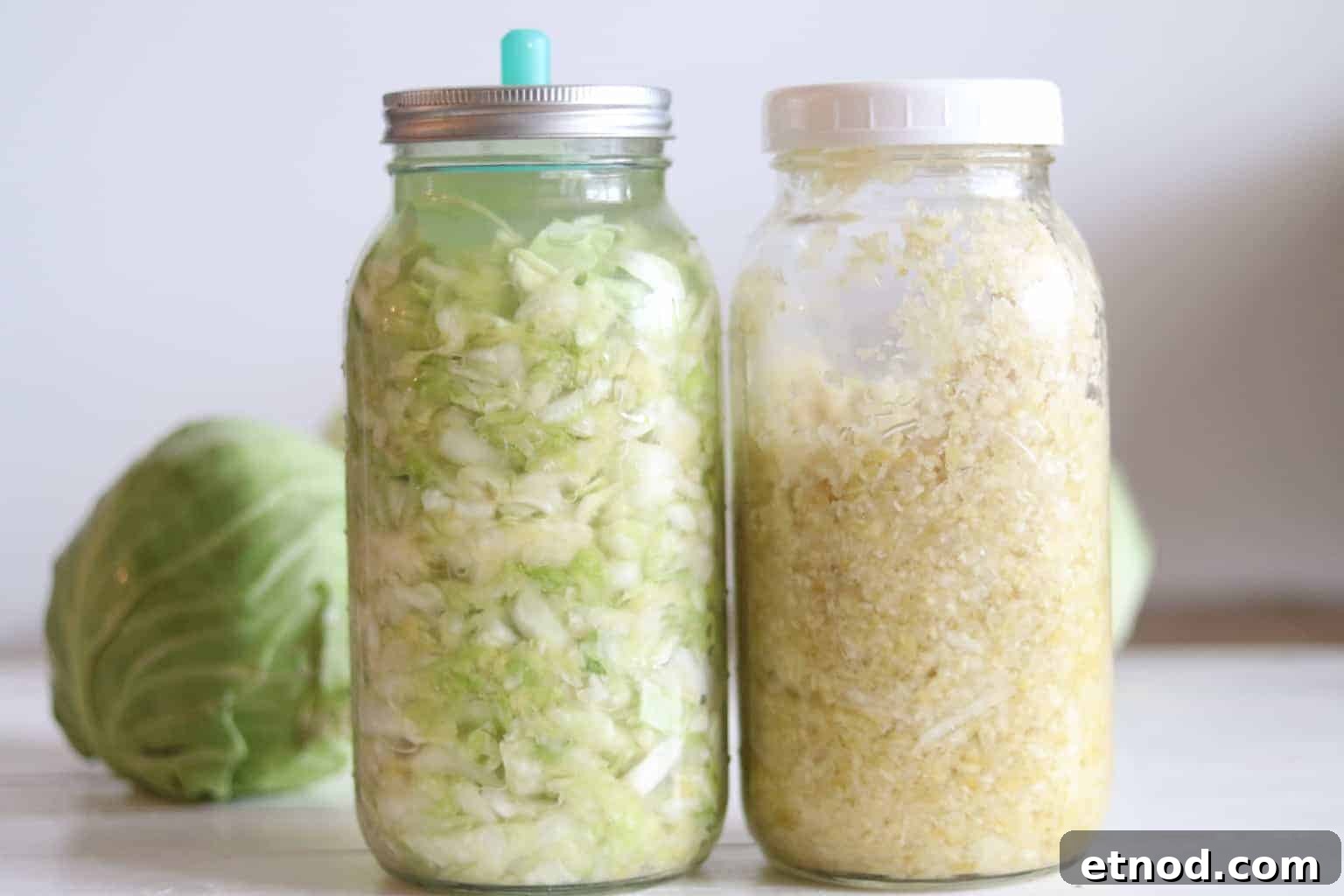
- Color changes during fermentation are normal.
- Ferment at temperatures of at least 68°F (20°C) or warmer; warmer conditions speed fermentation. In winter you may ferment around two weeks, while in summer one week may be enough.
- Ferments can leak brine—place the jar in a dish to catch any overflow.
- If fermenting multiple items, keep them several feet apart to avoid cross-contamination of cultures.
- If you’re not using an airlock lid, “burp” the jar occasionally to release carbon dioxide. Leaving the lid loose allows gas to escape; otherwise open it once a day.
- Keep the cabbage submerged under the brine to prevent mold. If mold appears or the smell is unpleasant, discard and start over.
- Introduce sauerkraut to your diet gradually—start with a couple of tablespoons and build up to about 1/2 cup per meal. Some people with sensitive stomachs begin with the brine first.
BENEFITS OF EATING SAUERKRAUT
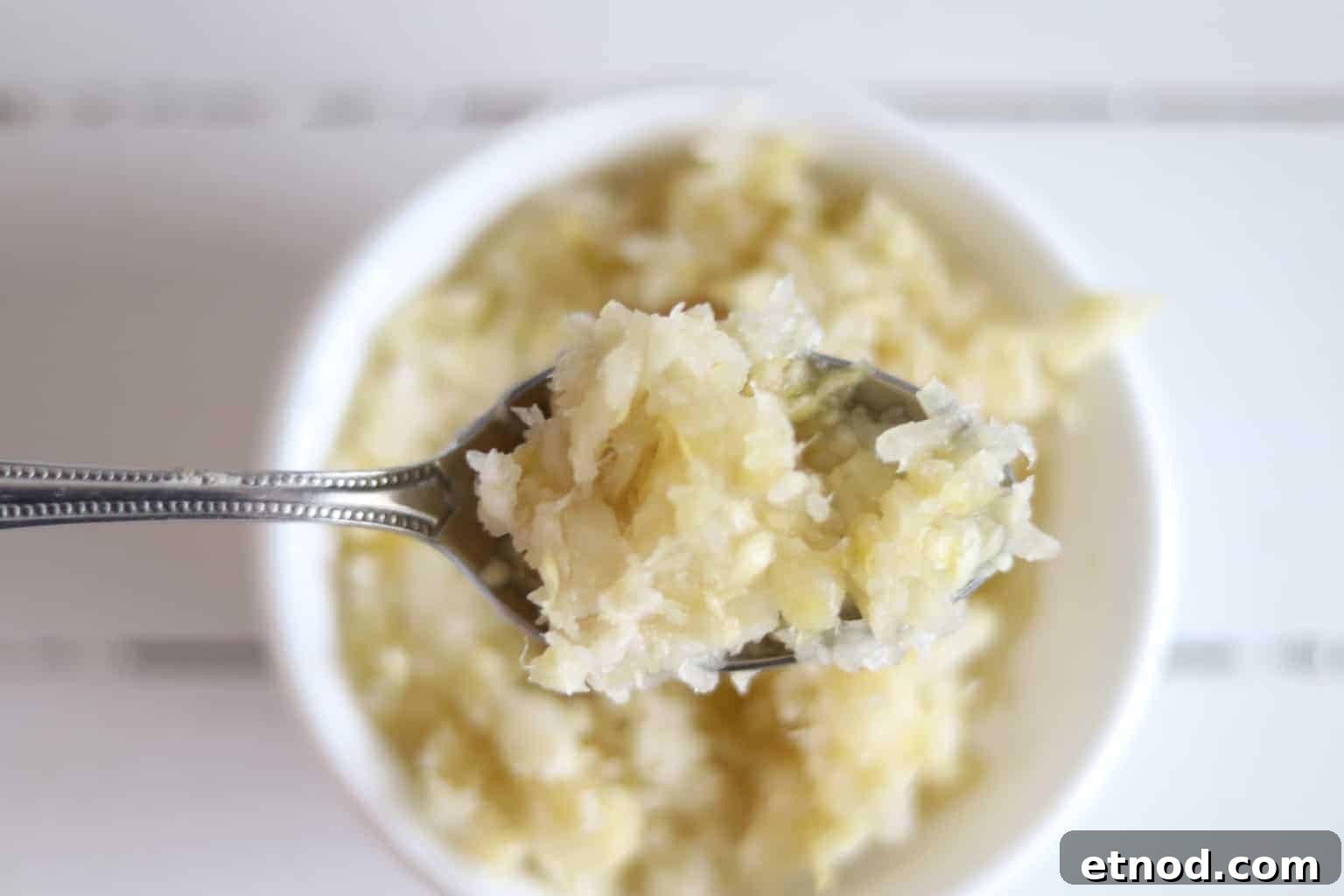
Fermented cabbage is rich in probiotics and beneficial bacteria that support digestion and overall gut health. Modern lifestyle factors—antibiotics, antibacterial products, steroids, processed foods, and excess sugar—can harm gut flora, and regular consumption of fermented foods helps replenish good bacteria.
Sauerkraut also provides vitamins and minerals, including vitamin C, B vitamins, vitamin K, folate, calcium, magnesium, and iron. Eating sauerkraut may support digestion, immune function, and even brain health.
Have you made sauerkraut at home or added it to your meals? It’s an easy, economical way to boost nutrition and support gut health.
PIN IT FOR LATER
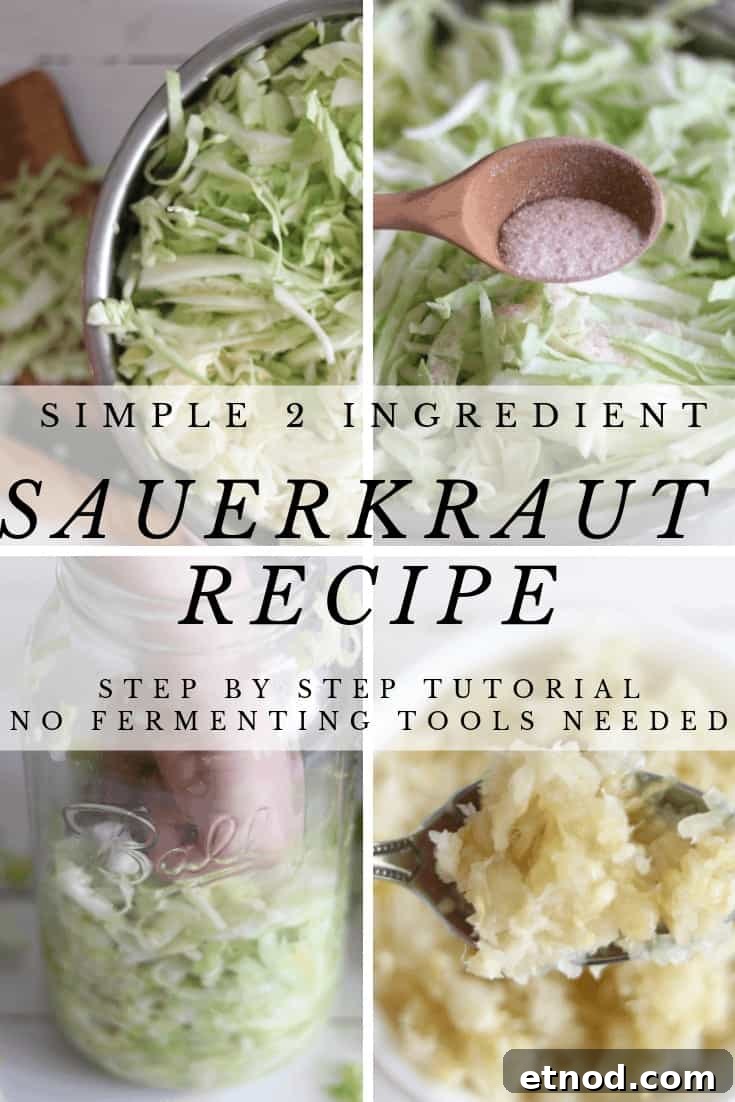
Simple 2 Ingredient Sauerkraut Recipe
Equipment
- Large mixing bowl
- 1/2 gallon mason jar
Ingredients
- 1 large head of cabbage
- 1 tbsp sea salt
Instructions
- Remove the outer leaves of the cabbage and set aside.
- Shred the cabbage by hand or with a food processor.
- Place shredded cabbage in a bowl and sprinkle with salt. Let sit 5–10 minutes to draw out moisture.
- Massage and pound the cabbage until it releases enough liquid to form a brine.
- Pack the cabbage tightly into a jar, pressing so the brine covers the cabbage and there are no air pockets.
- Leave about two inches of headspace; one large head yields roughly a quart.
- Weigh the cabbage down so it stays submerged under the brine.
- Cover the jar loosely and ferment at room temperature for 5–14 days, tasting until it reaches the desired sourness.
- When fermentation is complete, remove the weight, seal the jar, and refrigerate. It keeps for months.
Notes
Step-by-step photos are included above, and a video tutorial is provided below for visual guidance.
Nutrition
Calories: 57 kcal, Carbohydrates: 13 g, Protein: 3 g, Fat: 0.2 g, Sodium: 1785 mg, Fiber: 6 g, Vitamin C: 83 mg. Nutrition values are approximate.