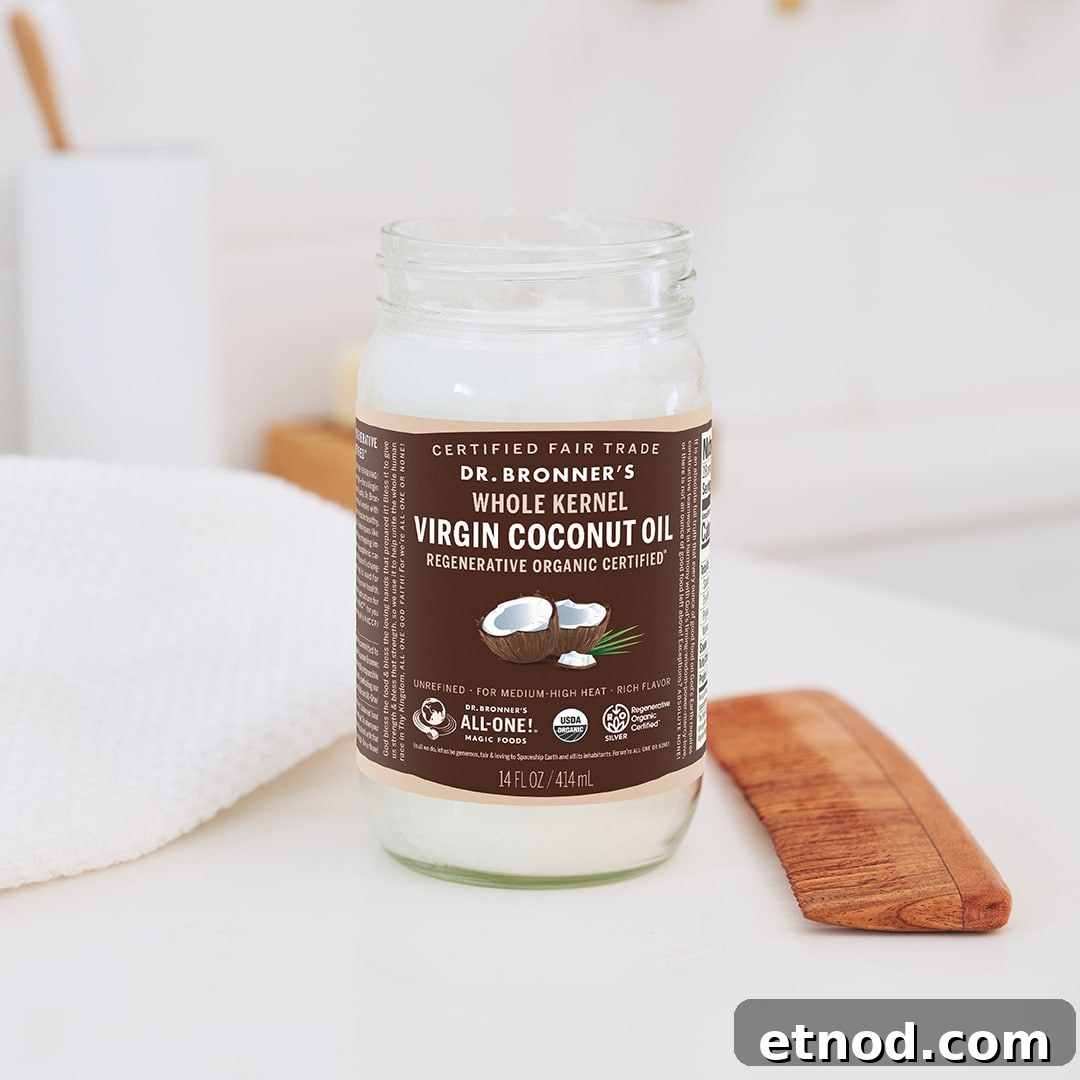
Coconut oil guides often read like a game of extremes: 20 uses! 77 uses! 101 uses! I stopped counting long ago. Coconut oil is part of many of my kitchen routines and personal care rituals, and I’m constantly discovering new ways to use it. The uses below are ones I personally rely on or have seen work well, so I can vouch for them.
Coconut oil has seen both praise and criticism. For a time it was maligned in food contexts because hydrogenated versions contain trans fats — something true of any oil once hydrogenated. Unprocessed coconut oil contains no trans fats. During the era when all saturated fats were broadly condemned, coconut oil fell out of favor, but it has since reemerged as a useful plant-based option among healthy cooking oils. As with any fat, moderation is wise.
In personal care, coconut oil has been entangled in debates over “non-comedogenic” claims and a so-called comedogenic scale. These terms sound scientific and definitive, but there is no standardized, regulated scale for comedogenicity on product labels. Much of the online ranking of oils is anecdotal and circular; I haven’t found solid, independent research to back many of the commonly cited numbers. A widely discussed study from the 1970s that tested oils on rabbit ears has been repeatedly questioned and even refuted by its author. For a thoughtful look at acne causes and care, see discussions by dermatology-informed writers and practitioners.
High-quality virgin coconut oil can be a particularly valuable product when sourced responsibly. Sustainably produced coconut oil supports healthier ecosystems and communities, and choosing ethically made products matters.
Now, on to practical uses.
Coconut Oil Uses
Coconut oil can also act as a seasonal thermometer: it melts around 76°F (24°C). When it’s liquid, you’ll know summer is here; when it returns to a white solid, cooler weather has arrived. The repeated melting and solidifying doesn’t harm the oil. It’s shelf-stable at room temperature; refrigerate if you prefer it solid. To liquefy solid oil, warm the needed amount gently on the stove or place the jar in warm water.
Kitchen:
Coconut oil substitutes well for butter or other oils in many savory and sweet recipes. It’s suitable for medium-high heat cooking up to about 350°F (177°C), such as sautéing and stir-frying, thanks to its medium-chain fatty acids like lauric acid. For very high heat uses (for example deep-frying around 450°F/230°C), choose an oil with a higher smoke point.
Stovetop cooking: Use coconut oil to fry or scramble eggs, sauté vegetables, stir-fry, brown, or caramelize much as you would with butter or another oil.
Cookies: Replace half the butter in many cookie recipes with solid coconut oil.
Brownies: Use melted coconut oil in place of vegetable oil, or solid coconut oil in place of butter.
Cinnamon Toast: Spread about 1 teaspoon coconut oil on toast, then sprinkle with cinnamon sugar.
Popcorn: Toss freshly popped popcorn with an equal amount of liquid coconut oil (2 Tbsp. kernels to 2 Tbsp. oil) and finish with salt or your favorite seasoning.
Caramel Sauce: In a small saucepan, combine 1/2 cup (100 g) coconut oil, 1/4 cup (60 mL) milk, and 1 cup (200 g) packed brown sugar. Heat gently while stirring, bring to a soft boil and simmer 1–2 minutes until thickened. Remove from heat and stir in 1 Tbsp. vanilla.
Dipping Chocolate: For dipping fruit or cookies, melt 1 cup (175 g) semi-sweet chocolate chips with 1 Tbsp. coconut oil until smooth.
“Magic Shell” Ice Cream Topping: Melt 1 cup (175 g) semi-sweet chocolate chips with 3 Tbsp. coconut oil until smooth. Optional: stir in 1 Tbsp. peanut butter for variation.
Granola: In a large bowl combine 6 cups oats with 3 cups of your favorite mix-ins (unsweetened coconut, nuts, seeds). In a small bowl mix 1/2 cup coconut oil, 2/3 cup honey, 1 Tbsp. vanilla, 1 tsp. nutmeg, and 2 tsp. cinnamon. Combine, spread on a pan, and bake at 350°F (177°C) for 30 minutes, stirring every 10 minutes. Cool, then stir in raisins.
Caramelized Onions: Melt 2 Tbsp. coconut oil over medium-low heat, add one sliced onion, season with salt and pepper, and cook low and slow about 20 minutes until golden.
Season Wooden Spoons: Sand and wash spoons, let dry, coat thinly with coconut oil, and bake at 375°F (190°C) for 2 minutes. Cool before use.
Season Cutting Boards (Wood Seasoning Butter): In a double boiler combine 1 cup liquid coconut oil with 1/4 cup melted beeswax. Stir to a smooth paste, rub into the board in a circular motion until it won’t absorb more, wipe off excess and let air dry.
Season Cast Iron: Rub a thin layer of coconut oil over all surfaces and bake at 425°F (220°C) for 1 hour. Turn the oven off and let the pan cool inside.
Season Stoneware: Wipe a thin film of coconut oil over baking surfaces and bake at 400°F (200°C) for 30 minutes. Allow to cool inside the oven.
Personal Care:
Whole Body Moisturizing: After showering, while skin is still damp, massage a thin layer of coconut oil over your body to lock in moisture.
Exfoliating Sugar Scrub: Mix 1/2 cup plus 2 Tbsp. (125 g) granulated sugar with 1/4 cup (50 g) liquid coconut oil. Optional: a few drops of essential oil. Swap in finer baker’s sugar for a gentler scrub or raw sugar, coffee grounds, or salt for more abrasion.
Shaving: Massage a thin film over the area to be shaved until hair softens. For added exfoliation, mix in a touch of sugar before shaving. Rinse away residual oil with soap to avoid slippery floors.
Hand & Foot Overnight Mask: For cracked or rough skin, massage a generous amount into clean hands and feet and cover with gloves or socks overnight.
Cuticle Care: Rub a small amount into cuticles before bed to soften and nourish.
Chafing Prevention: Apply a thin layer before exercise to help reduce friction.
Soothing Irritated Skin: Apply a small amount to soothe areas irritated by shaving, chafing, or sun exposure.
Tattoo Care: Use a thin film on new tattoos to soothe or on established tattoos to help brighten and nourish the skin.
Makeup Removal: Massage coconut oil into makeup, wipe with a soft tissue or reusable pad, then cleanse as usual.
Overnight Facial Mask: After cleansing, massage a small amount into the face and leave overnight; wash in the morning.
Pregnancy Relief: Massage into itchy, stretching skin on the belly and let air dry.
DIY Baby Wipes: Combine 1 1/2 cups warm distilled water, 1 tsp. unscented baby castile soap, 1 1/2 Tbsp. liquid coconut oil, 9 drops tea tree oil, and 4 drops lavender oil. Use with disposable or reusable wipes for gentle cleaning.
Diaper Rash Prevention: Apply a thin layer twice daily to help protect delicate skin.
Hair Mask: On dry hair, work a tiny amount through the ends, wrap in a warm towel for 10 minutes, then wash out. You may skip conditioner that day.
Hair Protector: Apply before sun or swim by working a thin coating through hair to help protect and condition.
Hair Detangler: For children, apply a very thin film to wet hair before brushing to ease tangles.
Beard Moisturizing & Smoothing: Rub a small amount into the skin beneath the beard and through the facial hair to soften and condition.
Massage Oil: Warm coconut oil in a jar placed in warm water for a soothing massage oil suitable for all ages.
Carrier Oil for Essential Oils: Mix several drops of essential oil into 1 Tbsp. of coconut oil to dilute for topical use.
This list is far from exhaustive. Coconut oil is a versatile base for many DIY personal care recipes — from deodorants to lip balms and body butters — as well as countless food preparations. I hope you’ll try some of these ideas and share your favorite uses.
Further reading
- Dilutions Cheat Sheet for Dr. Bronner’s Liquid Castile Soap
- Magic Balms Usage Cheat Sheet
- Sal Suds Dilution Cheat Sheet
- Bar Soap Dilutions Cheat Sheet
Many of these uses and more appear in my book, Soap & Soul: A Practical Guide to Minding Your Home, Your Body, and Your Spirit with Dr. Bronner’s Magic Soaps, available in hardback, eBook, and audiobook formats.