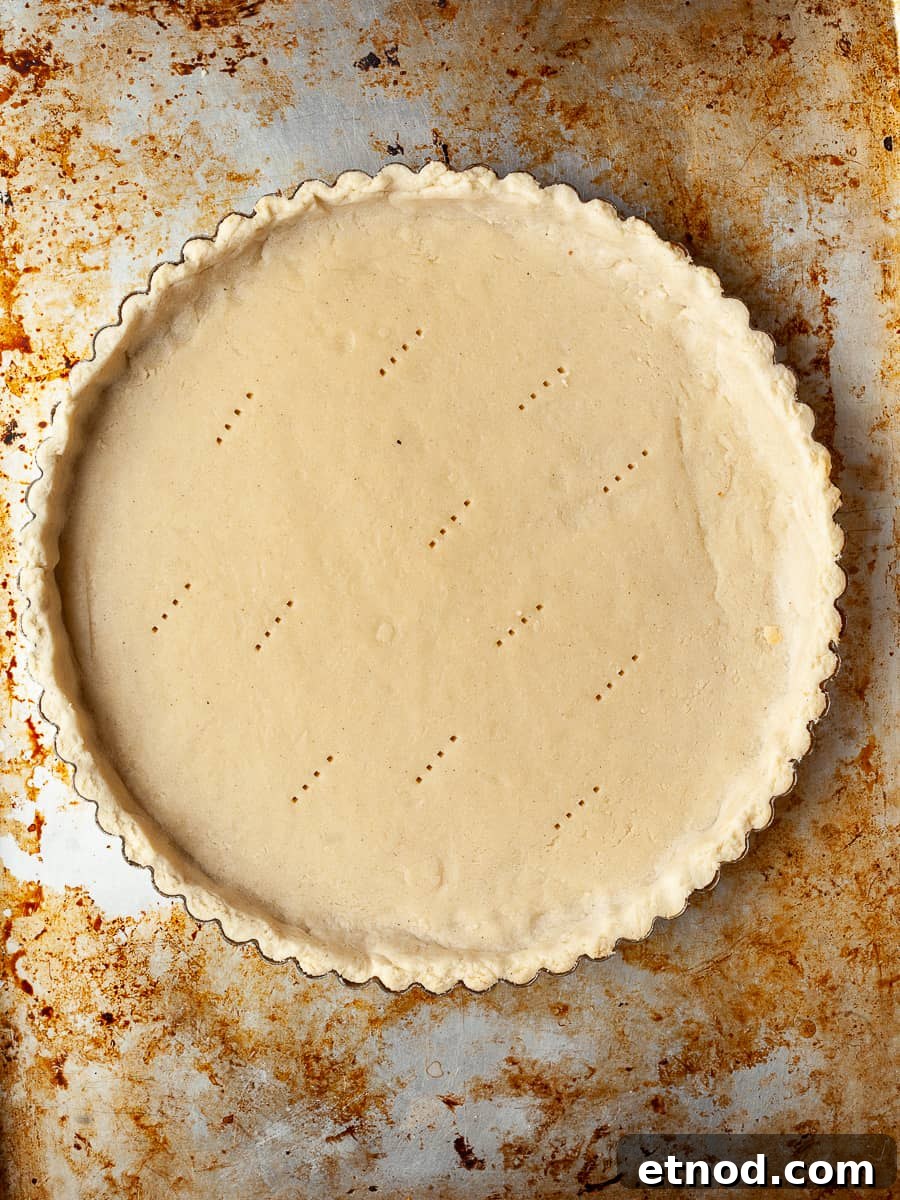
Gluten Free Tart Crust, also called Gluten Free Pâte Sablée, is a fundamental pastry dough every baker or pastry chef should master. Often referred to as shortcrust, sweet short pastry, or tart dough, this version is rich, tender, and ideal for dessert tarts.
Gluten Free Pâte Sablée is one of the most flavorful tart doughs because it contains more sugar and almond flour, which gives it a cookie-like, melt-in-your-mouth texture. The name comes from the French word sabler, meaning “to sand,” and highlights the dough’s sandy crumb. Other classic tart doughs include pâte brisée and pâte sucrée.
Use this dough for filled desserts like Strawberry Rhubarb Tartlets or a Caramel Apple Tart.
Recipe Ingredient Notes
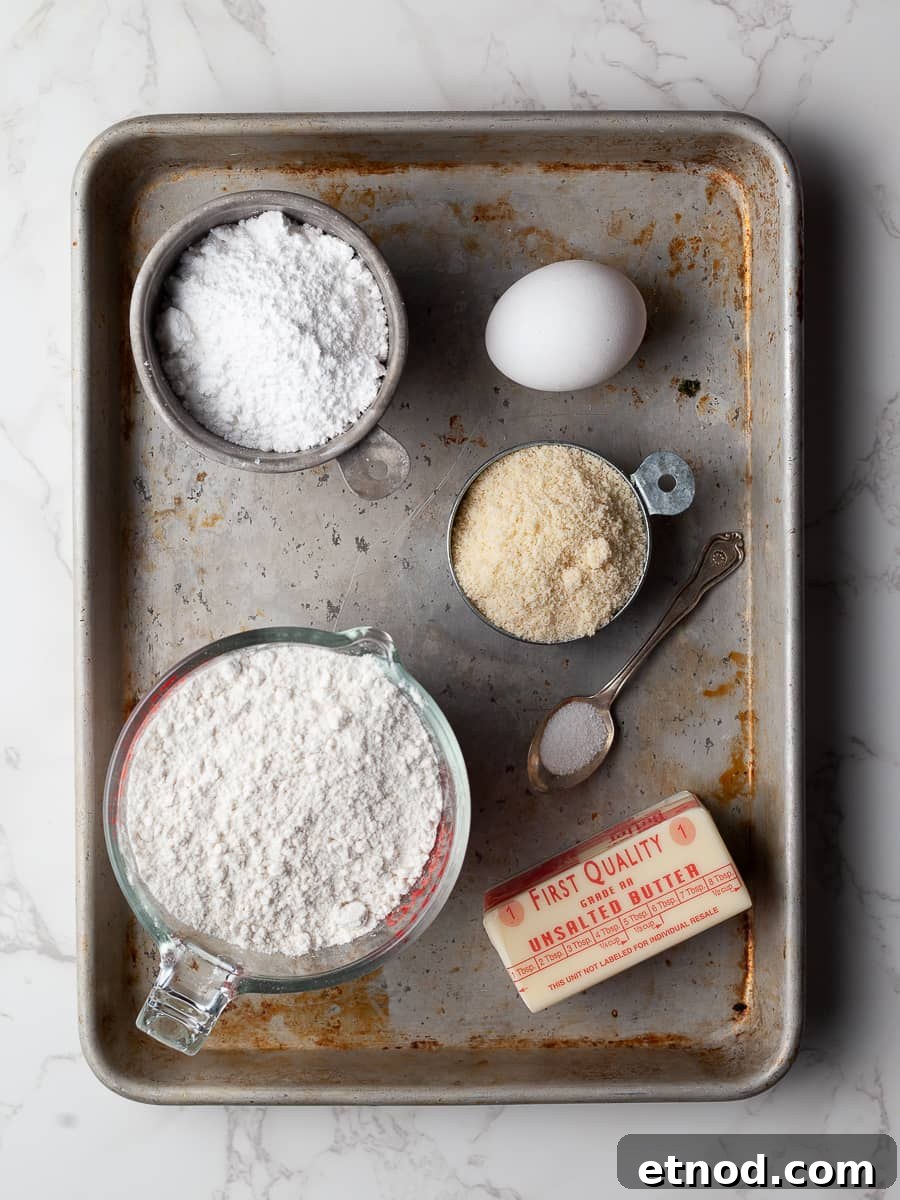
Gluten-Free Flour: This recipe works well with several commercial 1:1 gluten-free blends and with homemade blends. Some blends give a slightly lighter crumb than others; Cup4Cup tends to produce the lightest texture in testing.
Almond Flour: Almond flour adds richness and the cookie-like texture that distinguishes pâte sablée. If you need a nut-free option, replace the almond flour with an equal weight (40 grams) of additional gluten-free flour. Use finely ground almond flour rather than almond meal for best results.
Butter: Use high-quality butter: it’s the main flavor component in this dough and affects both taste and texture.
Recipe Equipment Notes
You can make this tart dough in a food processor, a stand mixer, or by hand. The food processor is fast and tidy, while a stand mixer or pastry cutter works fine if you prefer to avoid a processor. To roll the dough, use a rolling pin; a clean wine bottle also works if needed. For the tart pans, removable-bottom pans make unmolding easier.
How to make Gluten Free Tart Crust with a Standmixer
Bring the butter and egg to room temperature before starting; this helps produce the characteristic sandy dough and a tender baked crust.
Step 1: In a small bowl whisk together the gluten-free flour, almond flour, and kosher salt. Set aside.
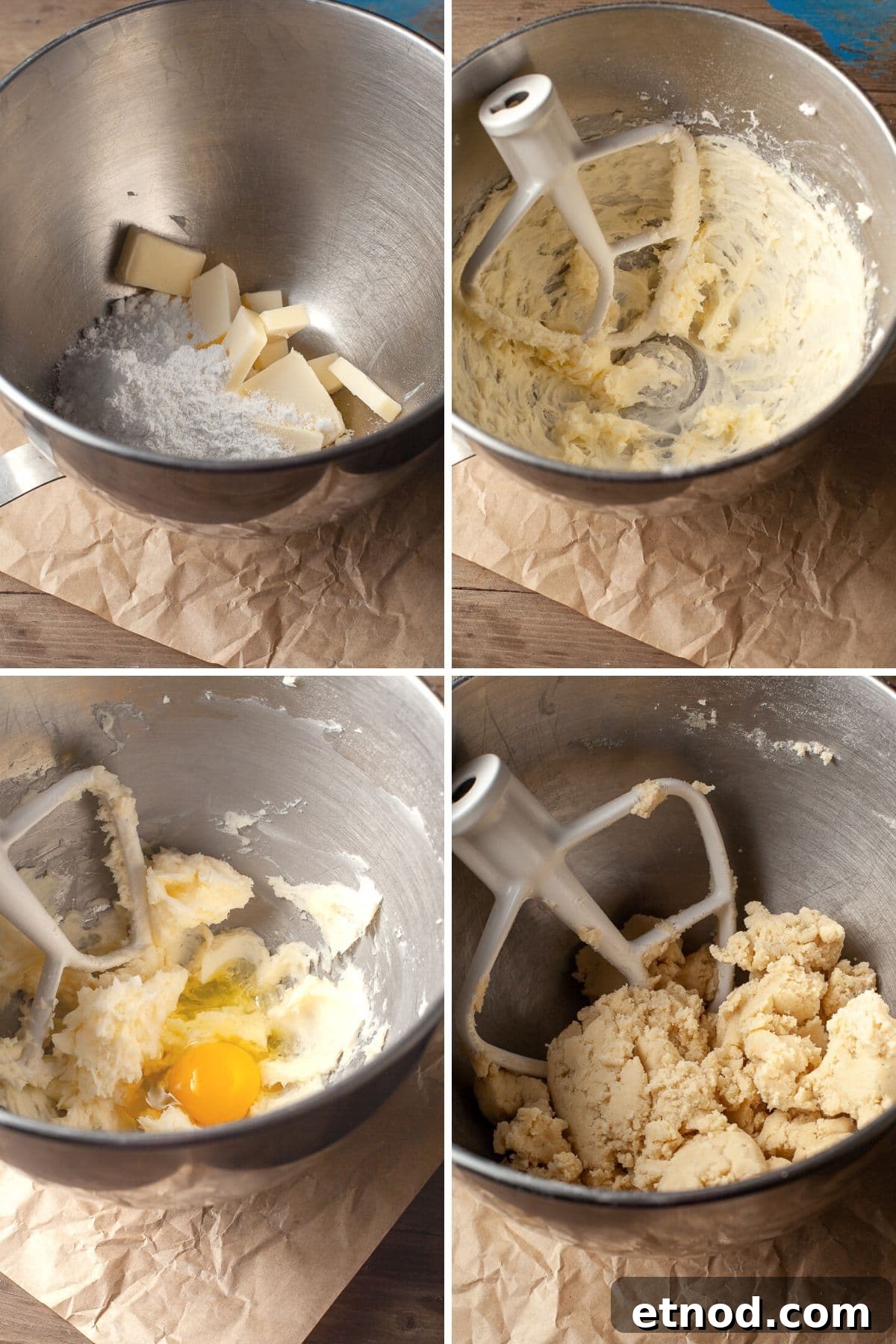
Step 2: In the stand mixer bowl fitted with the paddle attachment, cream the room-temperature butter and powdered sugar until smooth. Avoid overmixing.
Step 3: Scrape down the bowl, add the room-temperature egg, and mix until combined.
Step 4: With the mixer on low, add the dry ingredients and mix just until no streaks of flour remain.
Step 5: Transfer the dough to a parchment-lined sheet tray, shape it into a disk about 1″ tall, wrap it, and chill for at least 2 hours or up to 2 days before rolling.
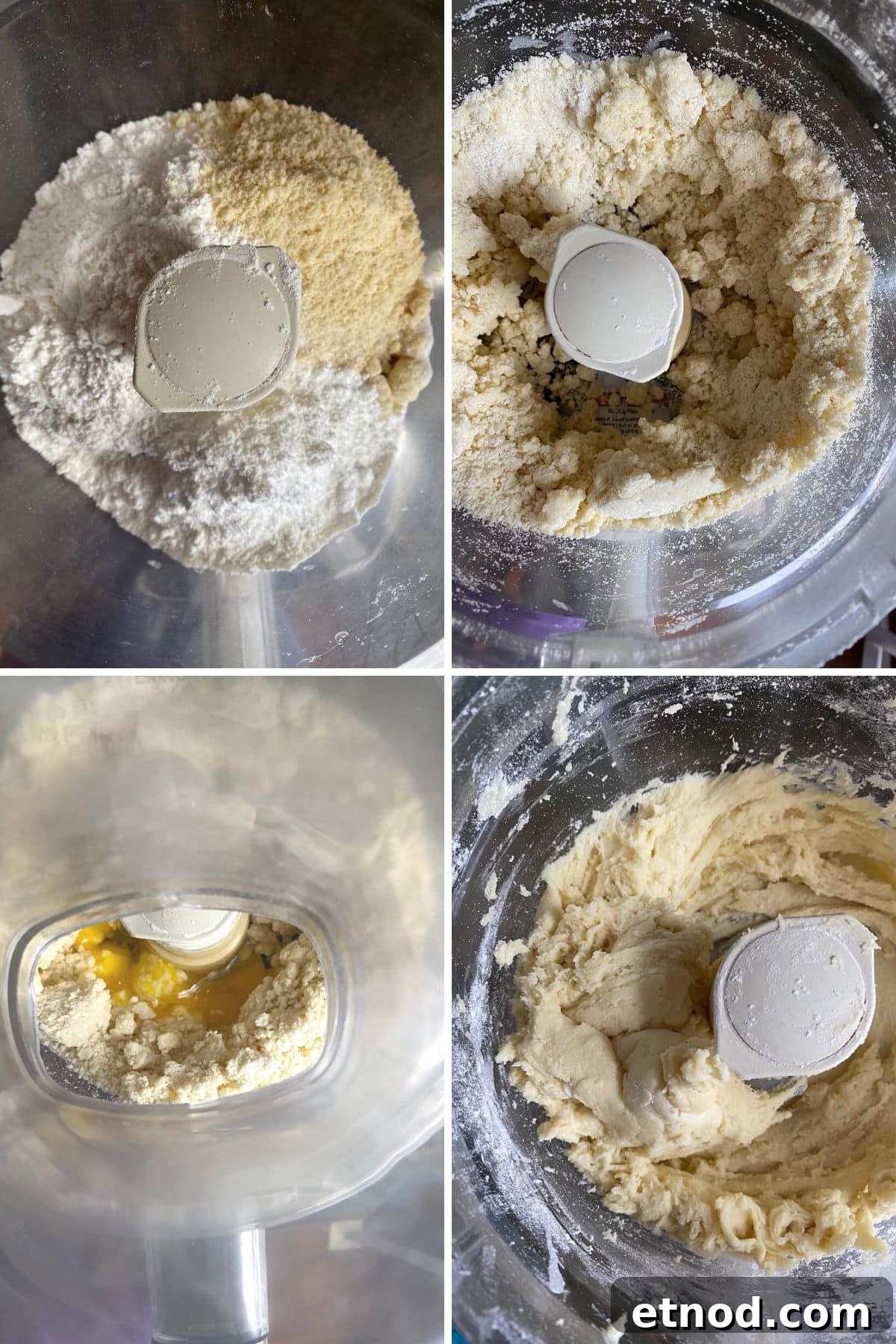
How to make Gluten Free Pâte Sablée in the food processor
This dough can be quite soft straight from the processor — that’s normal. Chilling sets it so it can be rolled.
Step 1: Pulse the dry ingredients in the food processor 10–15 times to combine.
Step 2: Add the room-temperature butter (cut into pieces) and pulse 10–15 times until the mixture resembles coarse crumbs.
Step 3: Run the processor for 10 seconds, then add the whole egg through the feed tube and blend 5–10 seconds until combined.
Step 4: Turn the dough out onto a parchment-lined sheet tray, compress into a 1″ disk, wrap, and refrigerate for at least 2 hours or up to 2 days. The dough will firm up in the fridge.
How to assemble Tart Shells
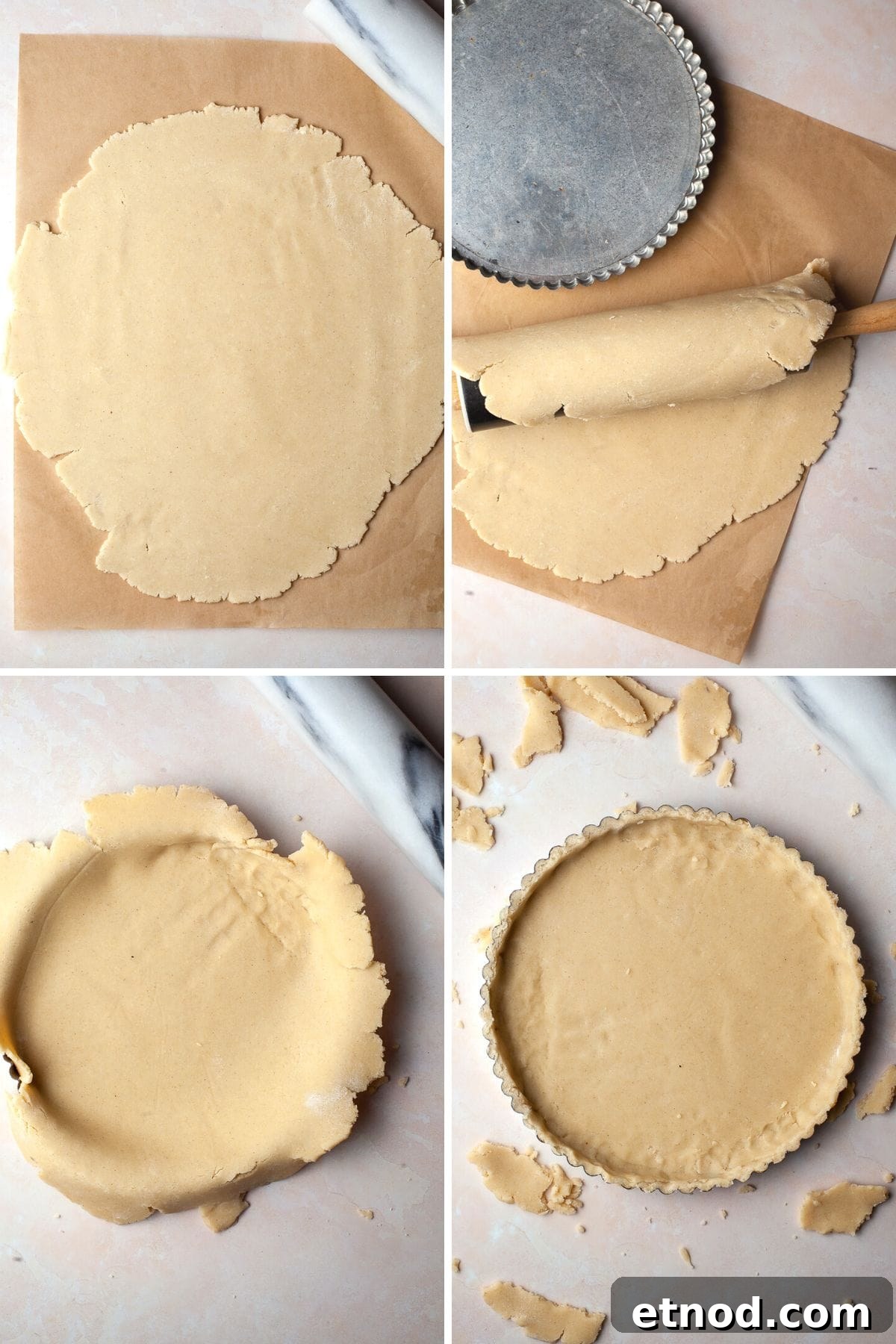
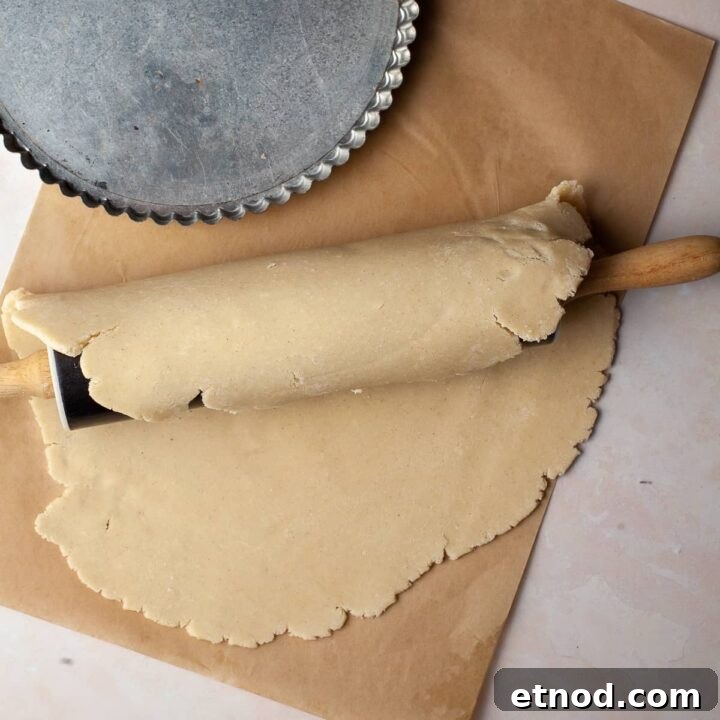
Roll chilled Pâte Sablée between two sheets of parchment paper. If the dough is too firm to roll, let it rest at room temperature 10–15 minutes.
Start rolling from the center outward and rotate the parchment 90 degrees every few rolls to keep the thickness even and to prevent cracking. If the dough sticks, dust lightly with gluten-free flour.
Roll to about 1/8–1/4 inch thick (about 0.5 cm).
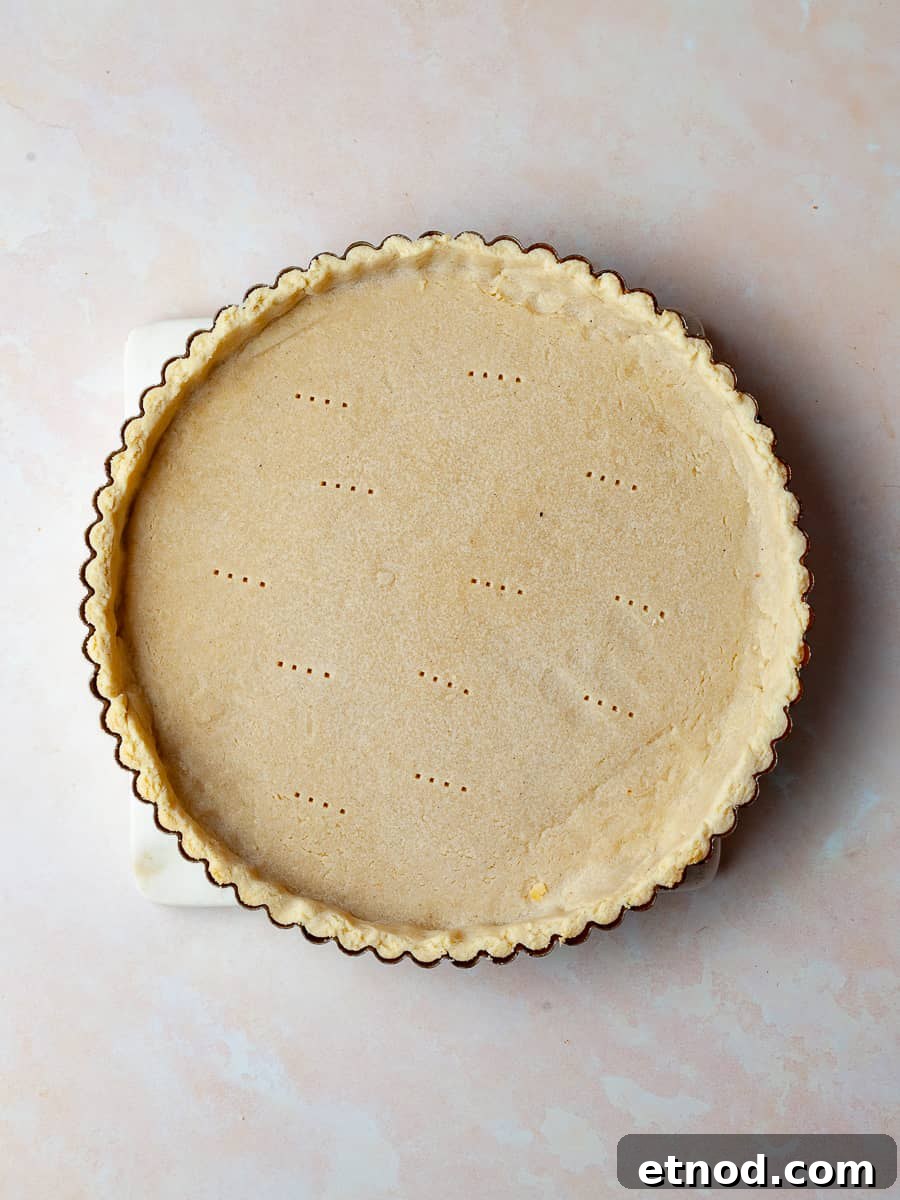
If the dough softens while working, chill briefly before cutting. Remove the top parchment, cut a circle slightly larger than the tart pan, lay it over the pan, and press gently into the bottom and up the sides. Trim excess, leaving a tiny overhang (about 2–3 mm) to allow for slight shrinkage during baking.
Chill shaped tart shells for 30 minutes before blind baking. You can shape shells up to three days ahead or freeze them for up to three months. Re-roll scraps if needed, but avoid more than two or three re-rolls to prevent toughness.
How to blind bake tart shells
Blind baking gives the crust a head start so it holds up to moist fillings.
Step 1: Preheat the oven to 350°F and position the rack in the middle.
Step 2: Prick the tart base several times with a fork to release trapped air.
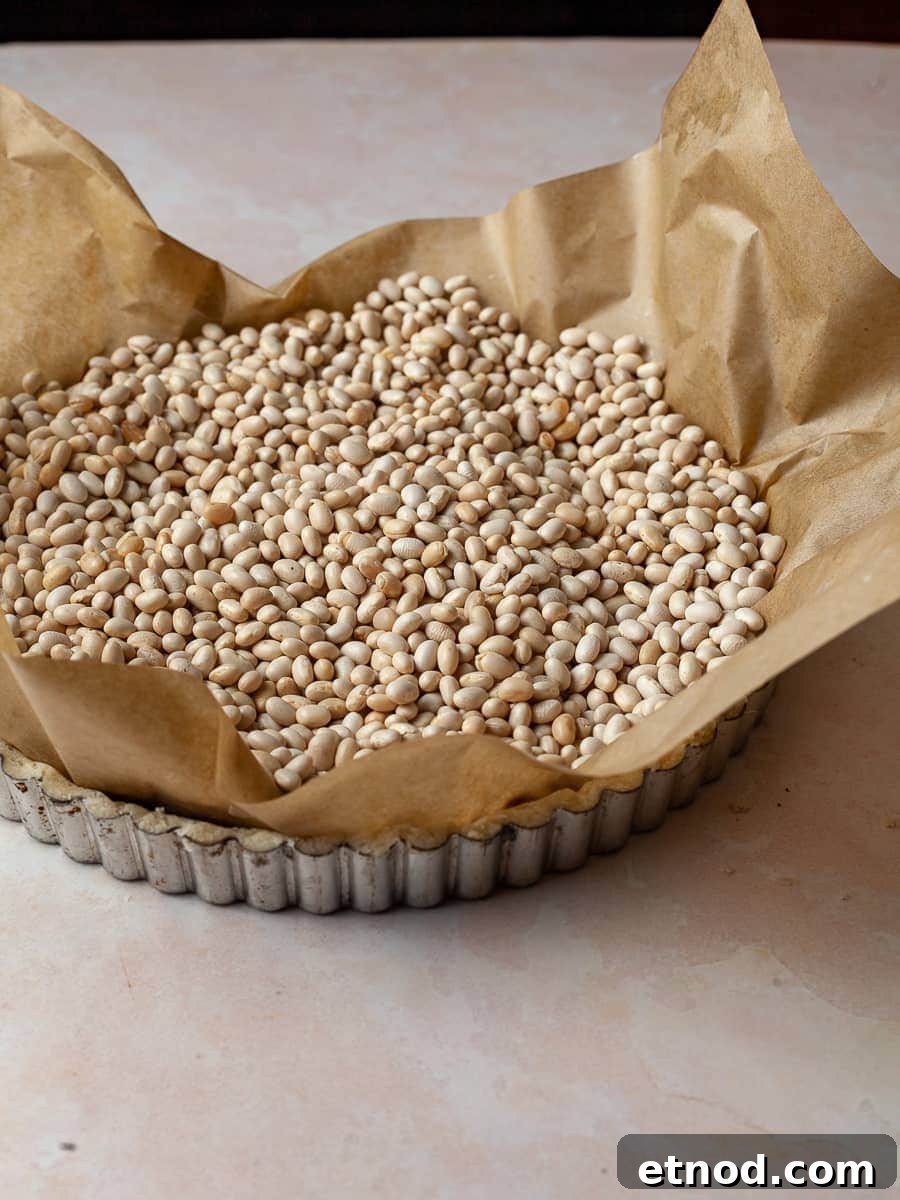
Step 3: Line the shell tightly with parchment or foil, making sure to cover the edges, and fill evenly with dried beans, rice, or pie weights.
Step 4: Bake for 15 minutes, then remove from the oven and carefully lift out the parchment and weights.
Step 5: Let the shell cool on a wire rack before filling and finishing the tart.
FAQ about Gluten Free Tart Crust Recipe
Pie crusts are typically made with cold butter and handled minimally for a flaky texture. Tart crusts like pâte sablée use room-temperature butter and a creamed method, producing a richer, more cookie-like texture.
Crumbly crusts often result from measurement errors, overworking the dough, or overbaking during blind baking. Check measurements, avoid excessive mixing, and adjust baking time for smaller or larger pans.
For tart shells, a tart-specific dough such as pâte sablée is recommended because it yields the right balance of tenderness and structure for fillings.
Note about Salt in my Recipes
Different salts vary in intensity and crystal size. Adjust measurements if you use a salt other than the variety called for in a recipe, as some kosher salts measure differently from table salt.
Baking in grams
Weights are more accurate than volume measurements for baking. Digital kitchen scales are inexpensive and provide consistent results, especially with gluten-free flours that vary in density.
Note about Ovens and Oven Temperatures
These recipes are tested in conventional ovens with racks set in the middle. If you bake with convection, reduce temperature or time as needed and consider using an oven thermometer for accuracy.
Substitutions and Modifications
Substituting ingredients or altering methods can change texture and flavor. Follow the recipe for best results or expect differences when making significant changes.
📖 Recipe
Gluten Free Pâte Sablée
A classic French tart dough adapted to be gluten free. Rich, tender, and perfect for both fruit and cream fillings.
20 minutes
2 hours
2 hours 20 minutes
Ingredients
For the GLUTEN FREE PÂTE SABLÉE
- 240 grams Gluten-Free Multipurpose Flour
- 40 grams fine ground almond flour
- 75 grams powdered sugar
- 1/8 teaspoon kosher salt
- 113 grams butter, room temperature, cut into smaller pieces
- 1 large egg, room temperature (around 60 grams)
Instructions
How to make Gluten Free Tart Dough (Food Processor)
- Combine the gluten-free flour, almond flour, powdered sugar, and salt in the food processor and pulse 10–15 times.
- Add the room-temperature butter and pulse 10–15 times until the mixture resembles coarse crumbs.
- Run the processor for 10 seconds, add the whole egg through the feeder, and blend 5–10 seconds to combine.
- Transfer the soft dough to a parchment-lined sheet tray, compress into a 1″ disk, wrap, and chill for at least 2 hours before rolling.
- The dough can be made up to 3 days ahead or frozen for up to 3 months.
How to make Gluten Free Tart Dough (Standmixer)
- Whisk the gluten-free flour, almond flour, and kosher salt in a small bowl. Set aside.
- Cream the room-temperature butter and powdered sugar in a stand mixer fitted with the paddle attachment until smooth.
- Scrape the bowl, add the room-temperature egg, and mix until combined.
- With the mixer on low, add the dry ingredients and mix until there are no visible streaks of flour.
- Transfer to a parchment-lined tray, form a 1″ disk, wrap, and refrigerate for at least 2 hours or up to 2 days before rolling.
Nutrition Information:
Yield:
1
Serving Size:
1
Amount Per Serving:
Calories: 100
Calories are an estimate.