My reliable Lard Pie Crust blends rendered lard and butter to produce a shatteringly flaky, tender, and richly flavored crust that works beautifully for both sweet and savory pies.
Once I learned how much better a crust made with lard performs, I stopped making all-butter crusts exclusively. Combining rendered leaf lard with high-fat butter creates a crust with superior flake, tenderness, and depth of flavor that enhances quiches, pot pies, fruit pies and more.
When I refer to “lard,” I mean good-quality rendered leaf lard—not the highly processed, hydrogenated tubs sometimes found in supermarkets. Quality leaf lard is widely available from specialty grocers, local butchers, farmers markets, or reputable online sources, and it’s worth seeking out for a truly exceptional pie crust.
“Excellent! Just like my Nan’s pie crust (who was a culinary professional for many years.) The perfect balance between butter and lard, great flavor and rolls out beautifully. Thank you.”
Lynne
Table of Contents
- Why This Recipe is The Best
- Ingredients for Lard Pie Crust
- How to Make Lard Pie Crust
- My Pro-Tips for a Perfect Crust
- How to Blind Bake Lard Pie Crust
- What to Make
- FAQ
- Storage Tips
- Lard Pie Crust Recipe
Why This Recipe is The Best
- For Flakiness: Lard yields an especially flaky, crisp pastry because it has a higher melting point than butter, helping the dough hold its structure as it bakes.
- For Flavor & Tenderness: Butter provides rich flavor and tenderness. Using both fats gives you a crust that is flaky, tender and full of flavor.
- The “Leaf Lard” Advantage: Leaf lard is the highest-quality rendered pork fat; it has a subtle, neutral flavor that won’t taste porky and is ideal for baking.
Ingredients for Lard Pie Crust
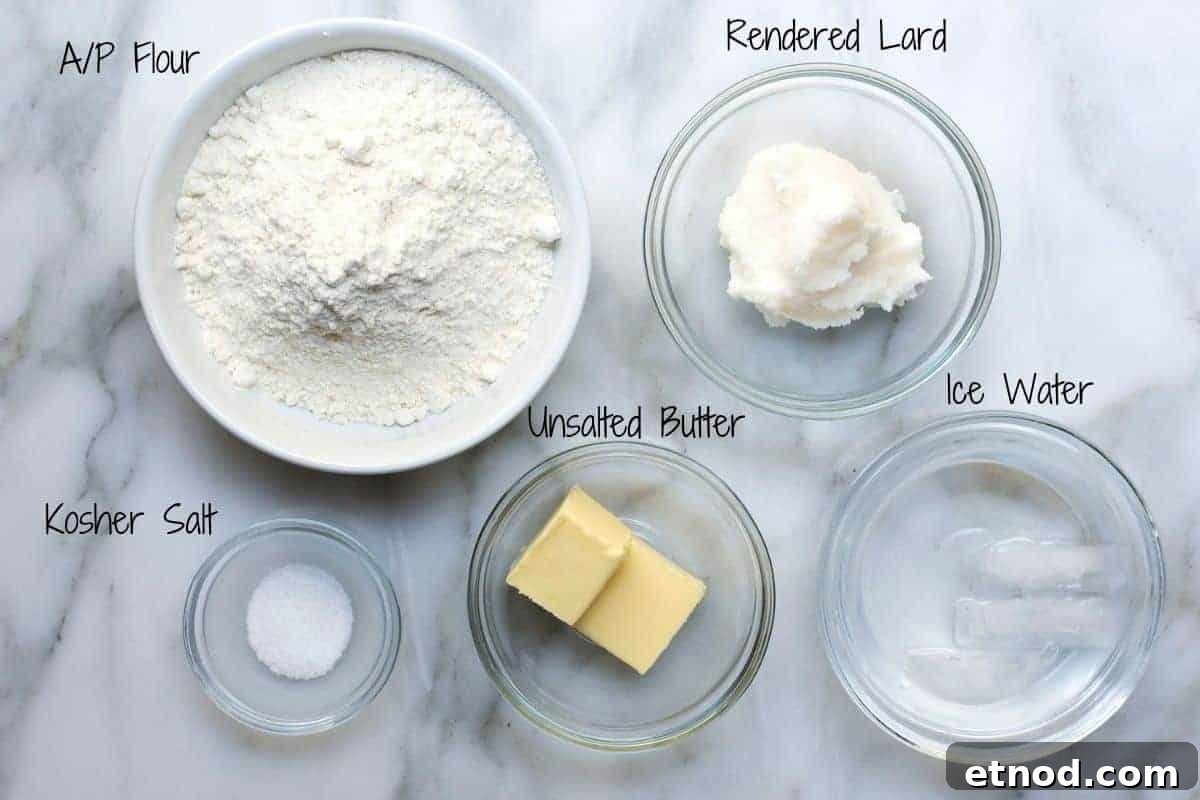
- All-purpose flour
- Kosher salt (use half the amount if substituting fine sea salt)
- Rendered leaf lard, chilled
- Unsalted butter, ideally high-fat European style, chilled and cubed
- Ice water
How to Make Lard Pie Crust
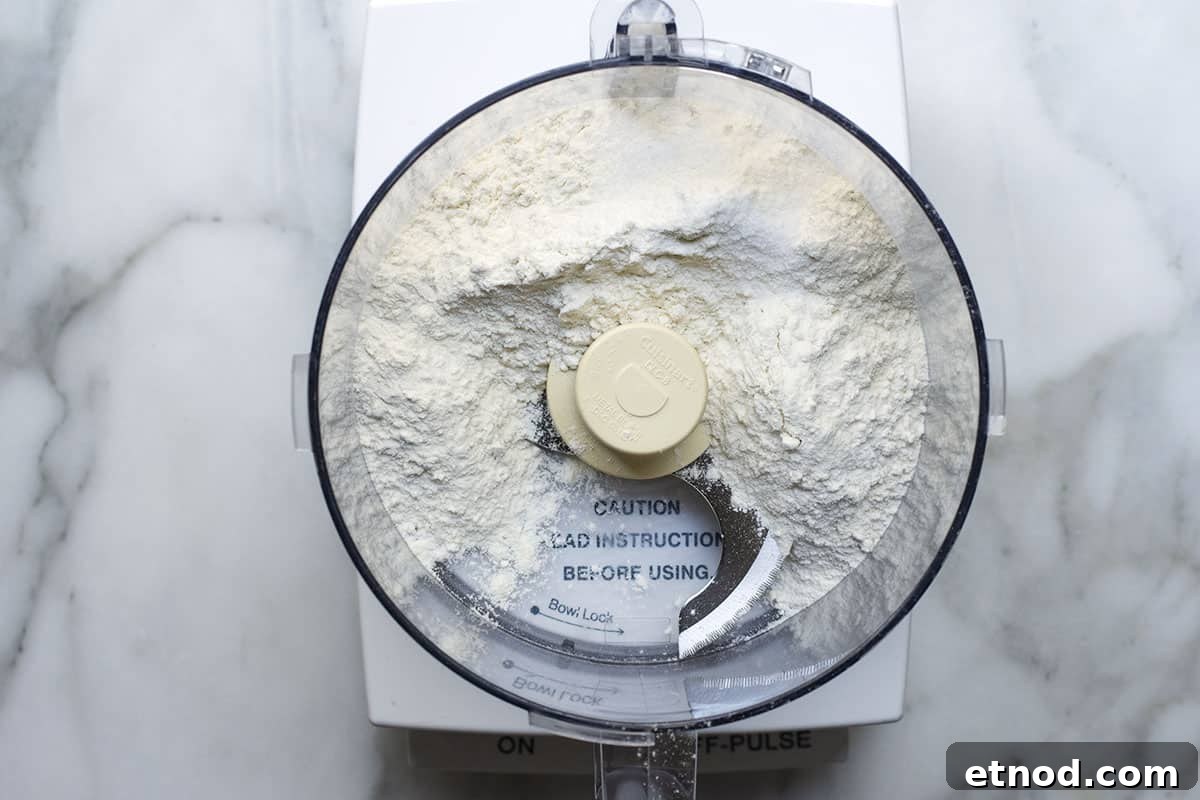
Cut the fat into the flour: In a food processor, pulse flour and salt to combine. Add chilled lard and butter and pulse until the mixture looks like coarse crumbs with some pieces slightly larger than peas. (If making by hand, cut the fats into the flour with a pastry cutter or two knives until similar texture is achieved.)
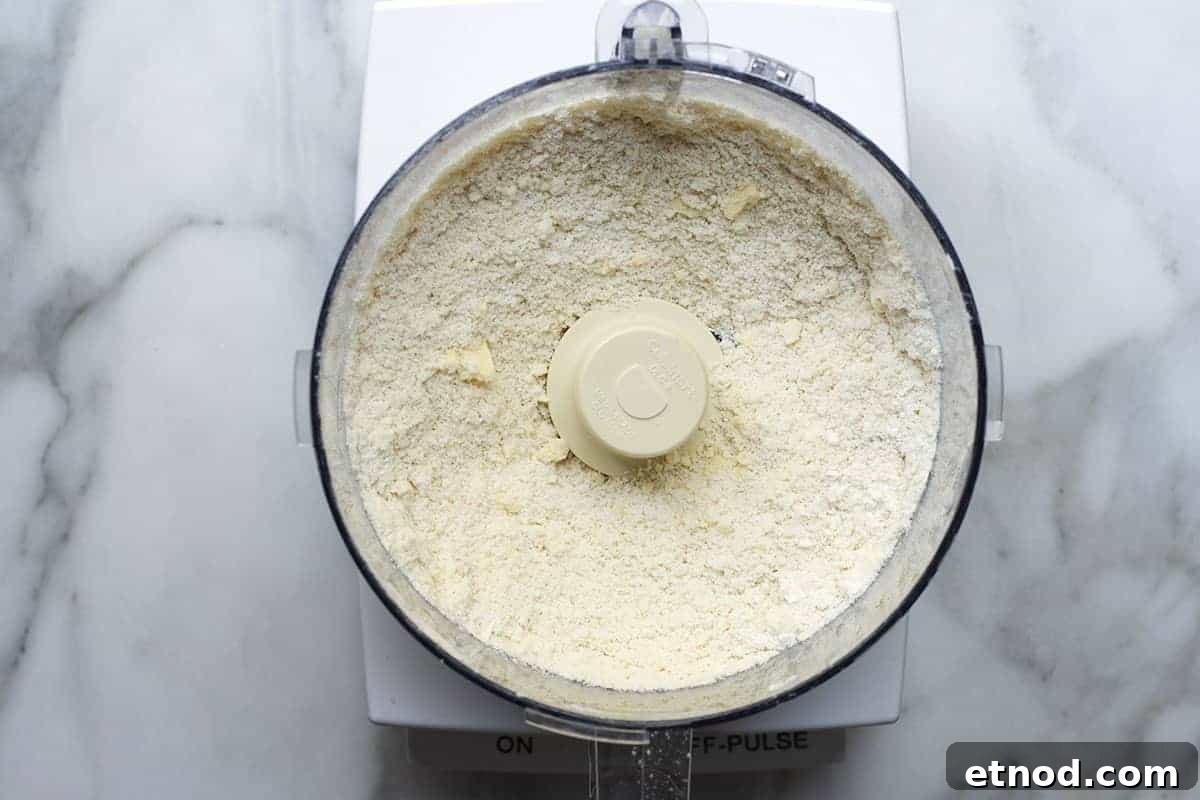
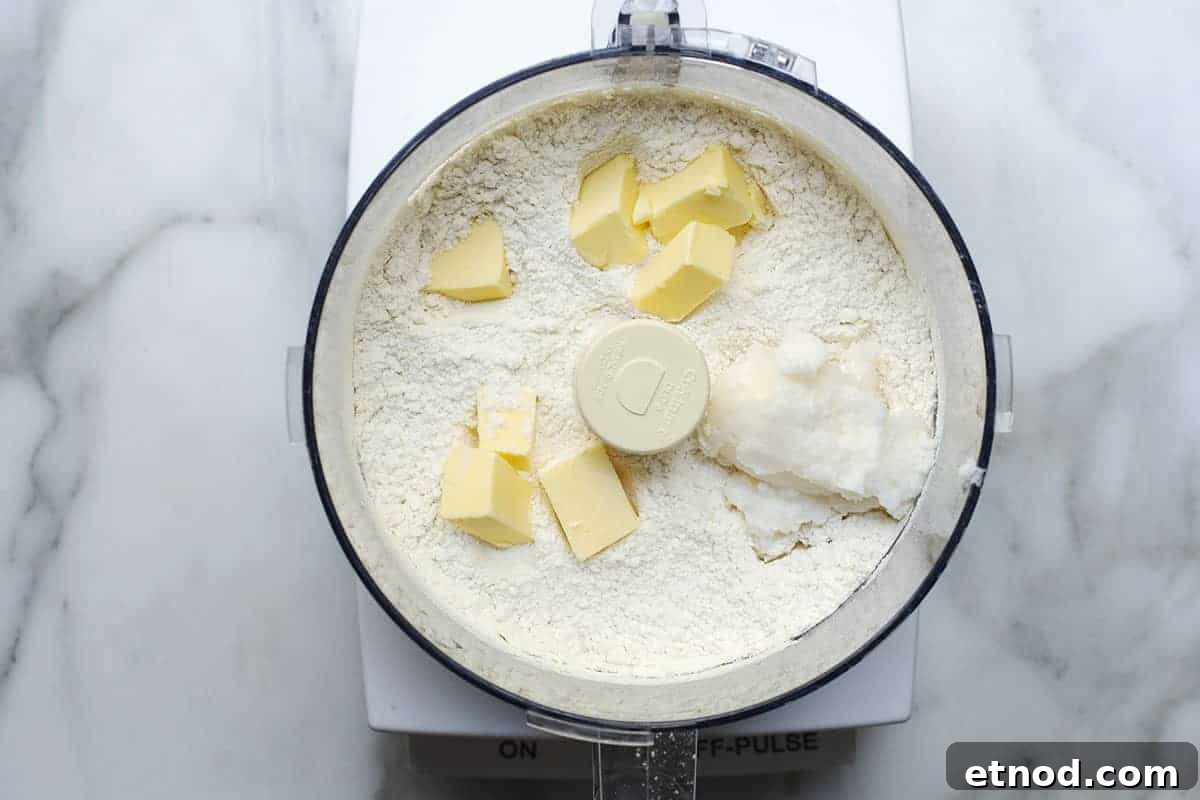
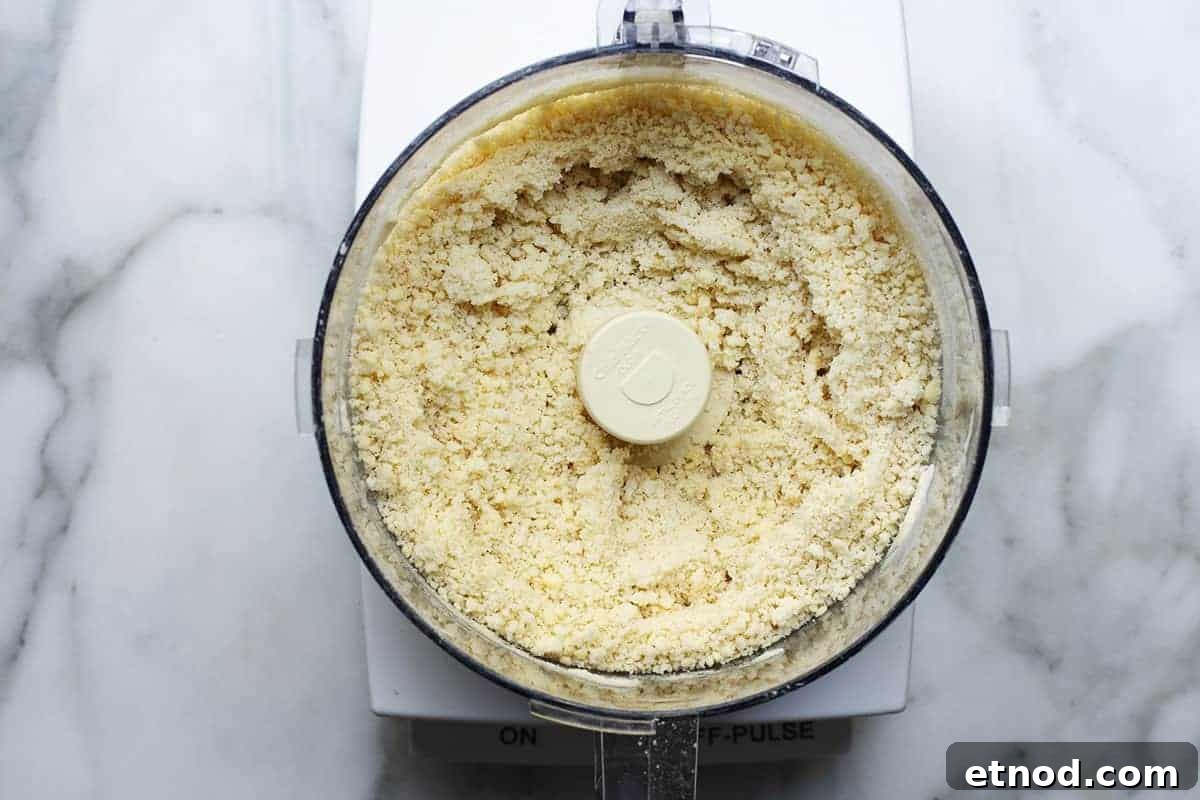
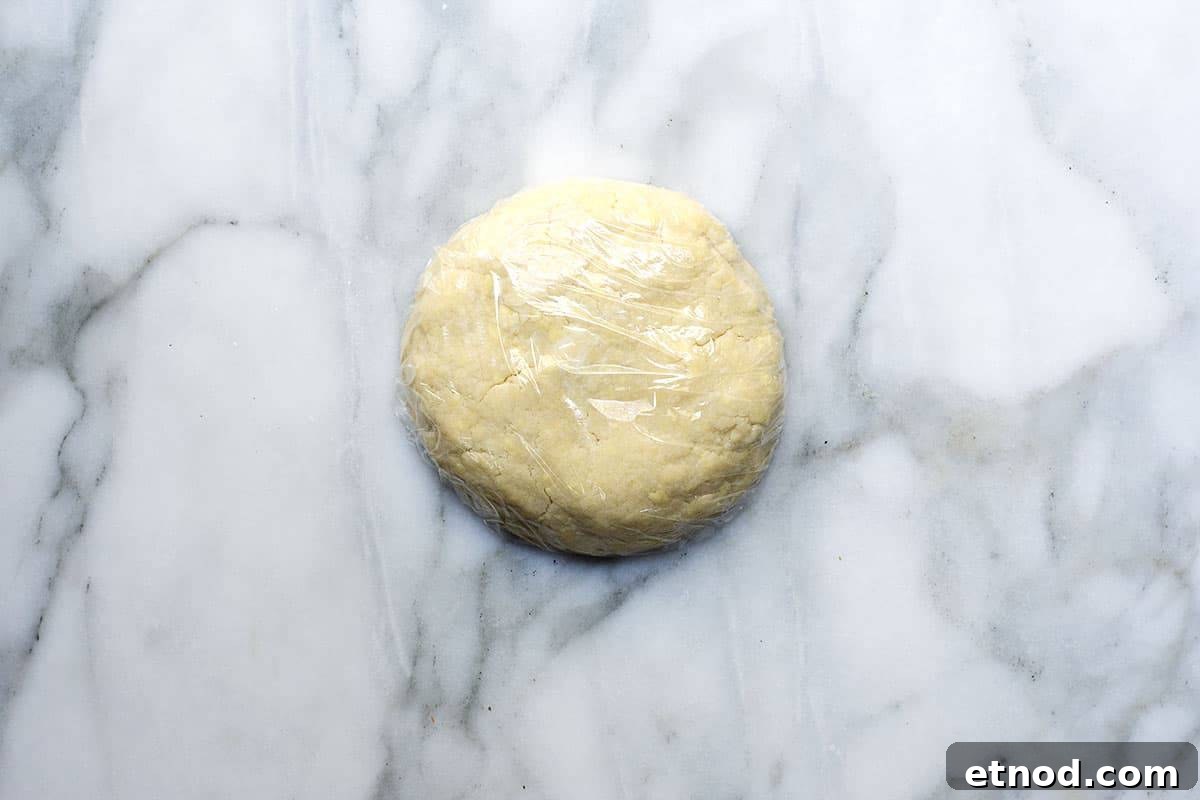
Add water, shape and chill: Sprinkle ice water in a tablespoon at a time, pulsing or mixing after each addition, until the dough just clumps when pinched. Turn the dough onto a floured surface, shape into a disc, wrap and chill in the refrigerator for at least one hour.
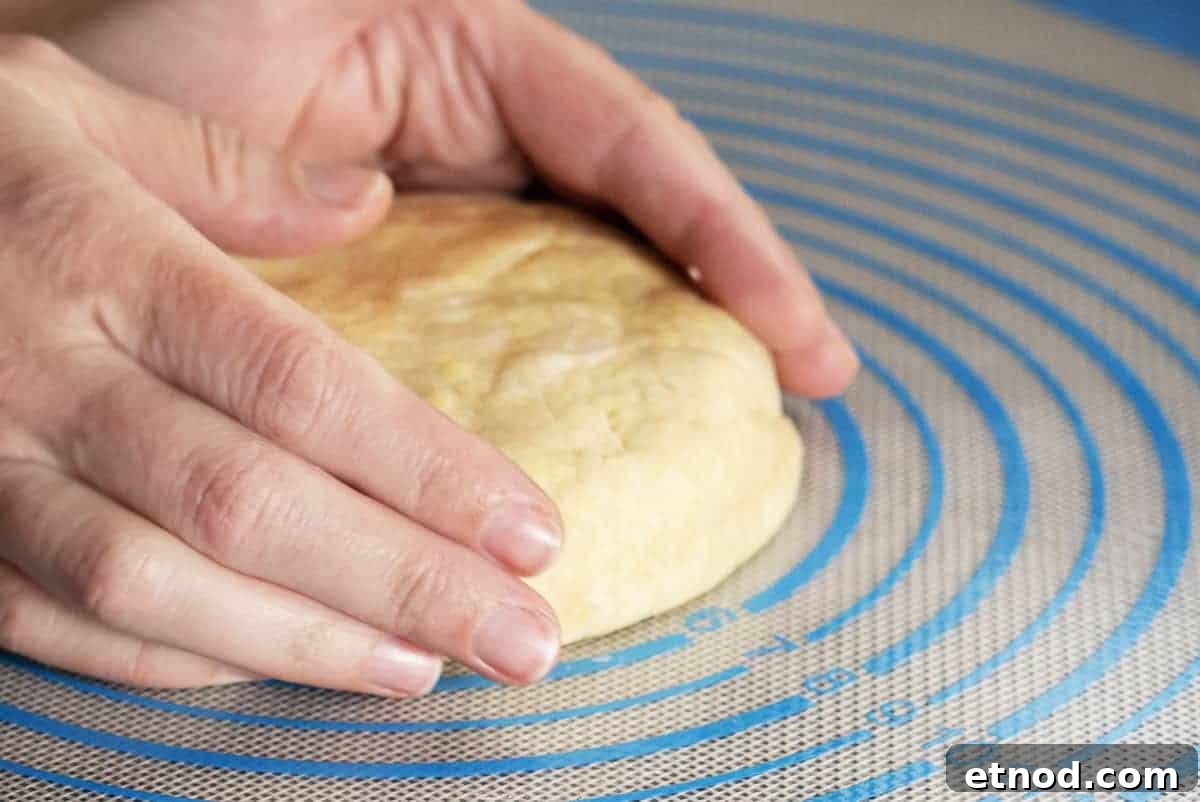
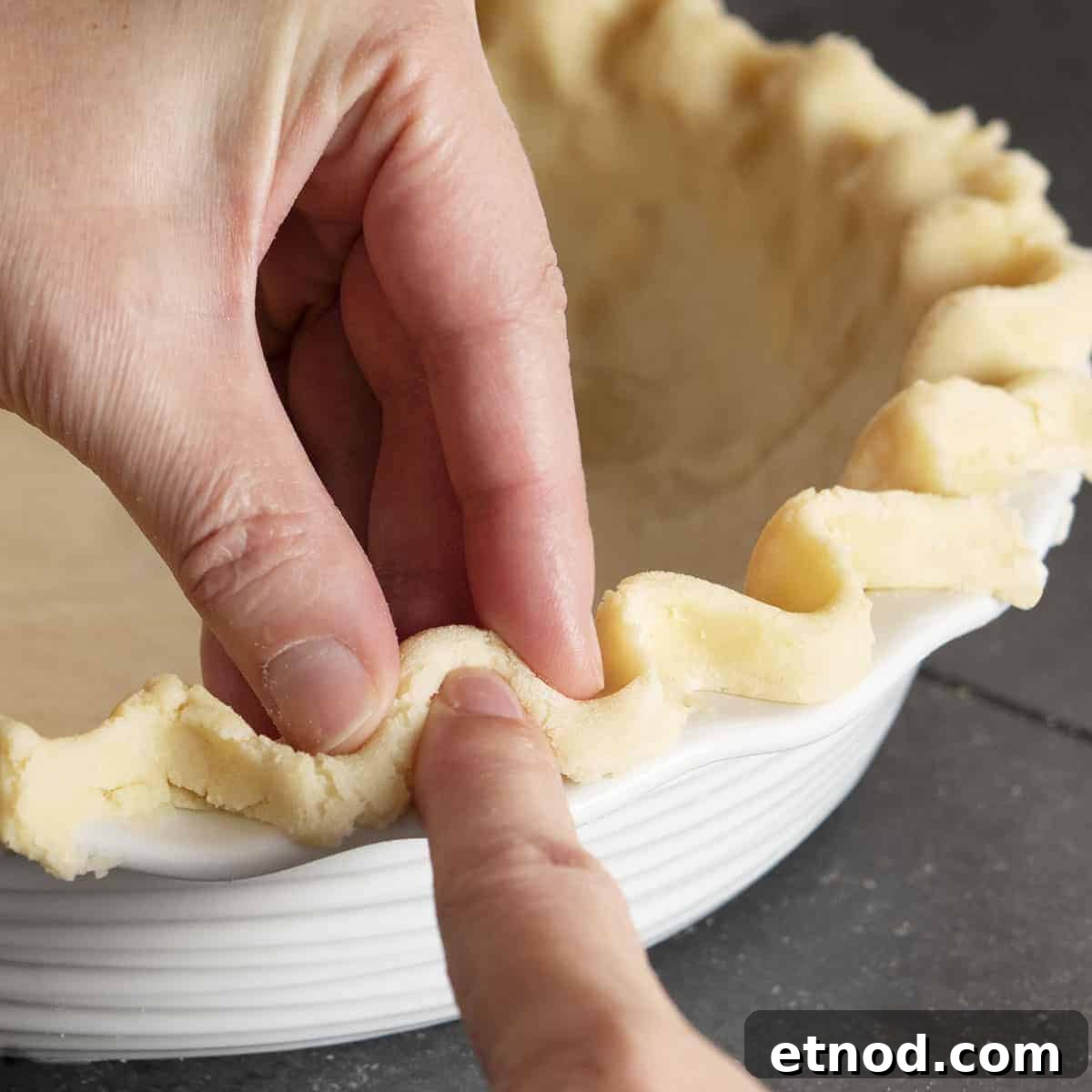
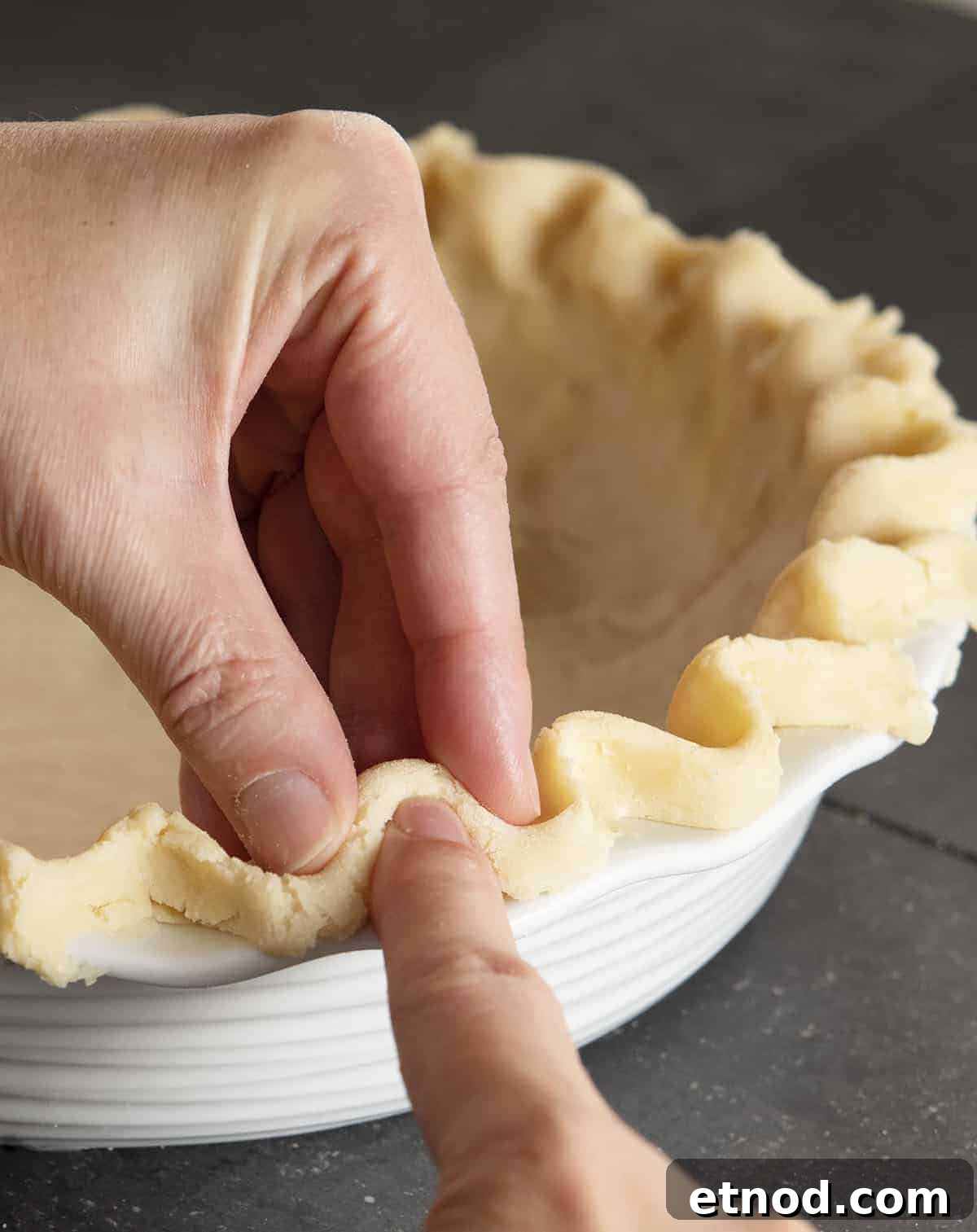
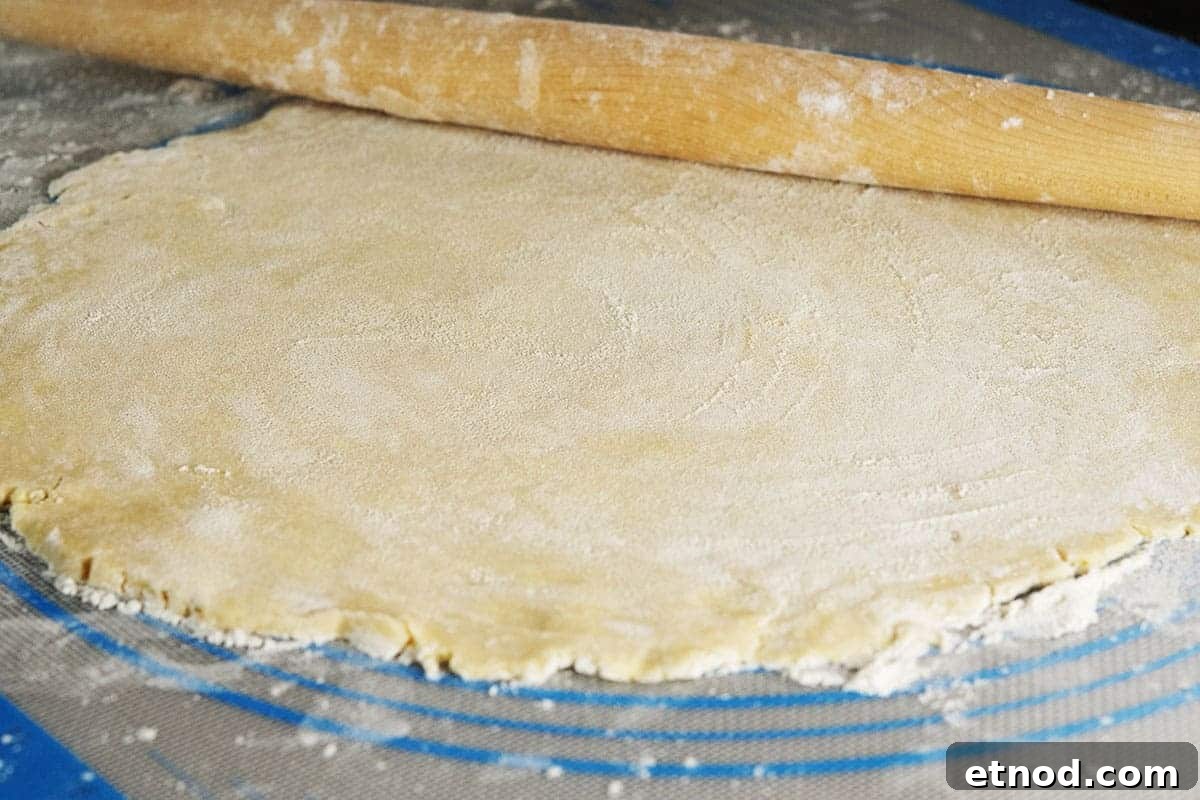
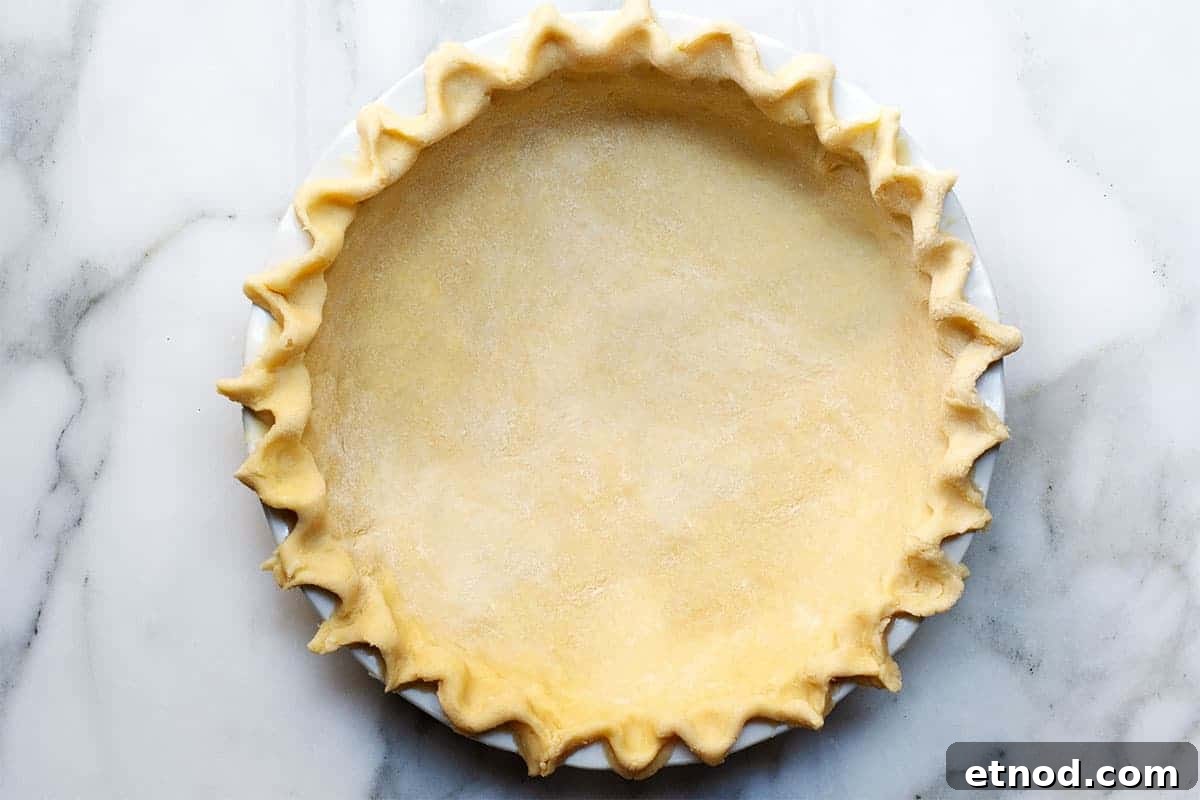
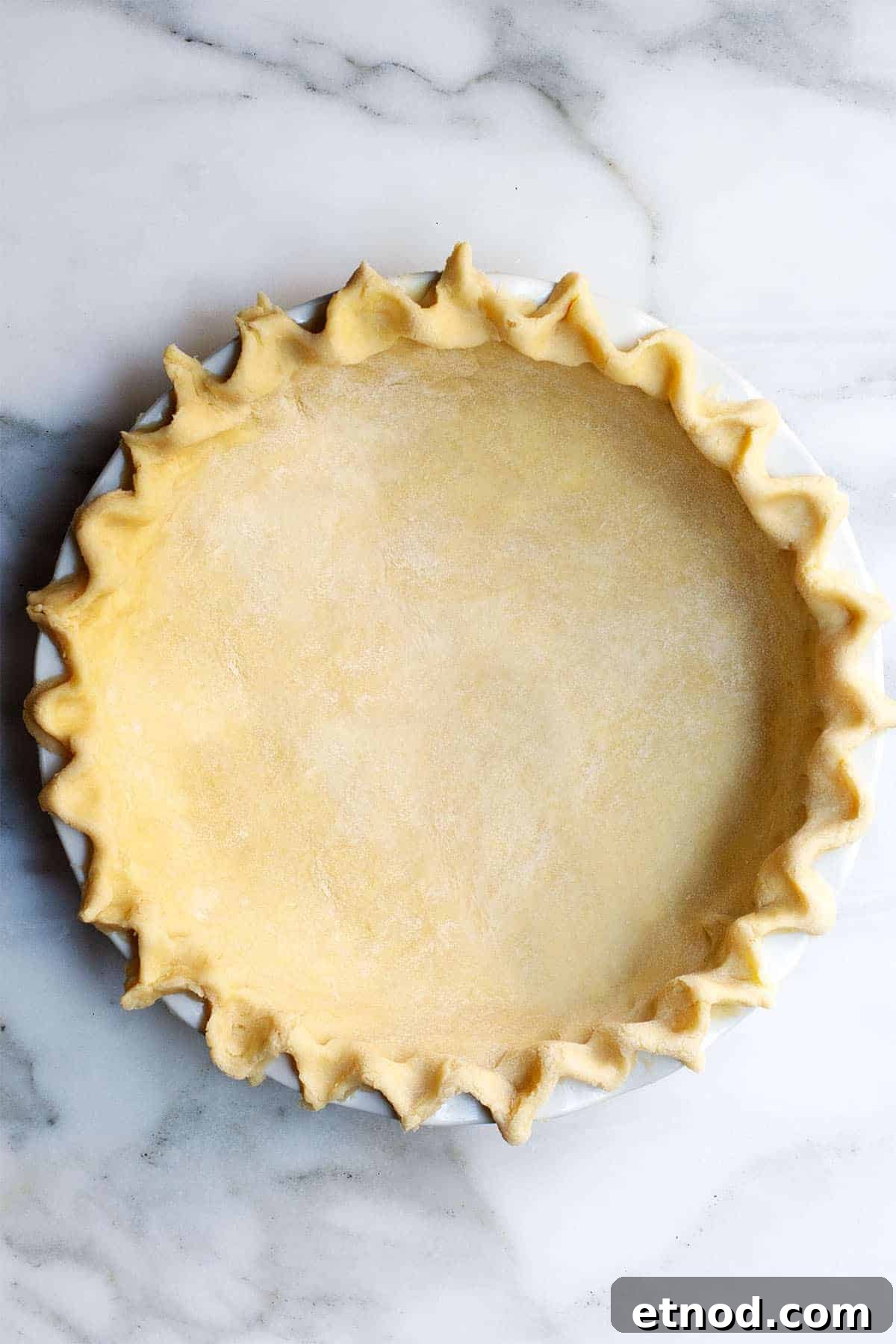
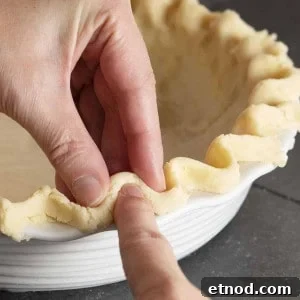
Roll, flute and chill again: On a floured surface, roll the chilled dough from the center outward into a 12-inch round. Transfer to a 9-inch pie pan, easing it into the pan without stretching. Trim to leave a 1-inch overhang and flute the edge by pressing with your thumb and forefinger to form a decorative rim. Cover and refrigerate at least 30 minutes before baking.
My Pro-Tips for a Perfect Crust
- Handling the dough: The dough should be cool and pliable. If it’s hard, let it rest at room temperature 15–30 minutes; if it looks greasy or warm, chill at least 20 minutes.
- Prevent shrinkage: Don’t stretch the dough when fitting it into the pan—ease it in instead. The 1-inch overhang helps compensate for natural shrinking.
- Make-ahead & storage: Refrigerate the formed dough up to 3 days or freeze up to 3 months. Thaw overnight in the refrigerator before rolling or baking.
- Why crusts get tough: Toughness usually results from overworking the dough, which develops gluten, or from fats getting too warm and melting into the flour. Keep ingredients cold and handle the dough minimally.
How to Blind Bake Lard Pie Crust
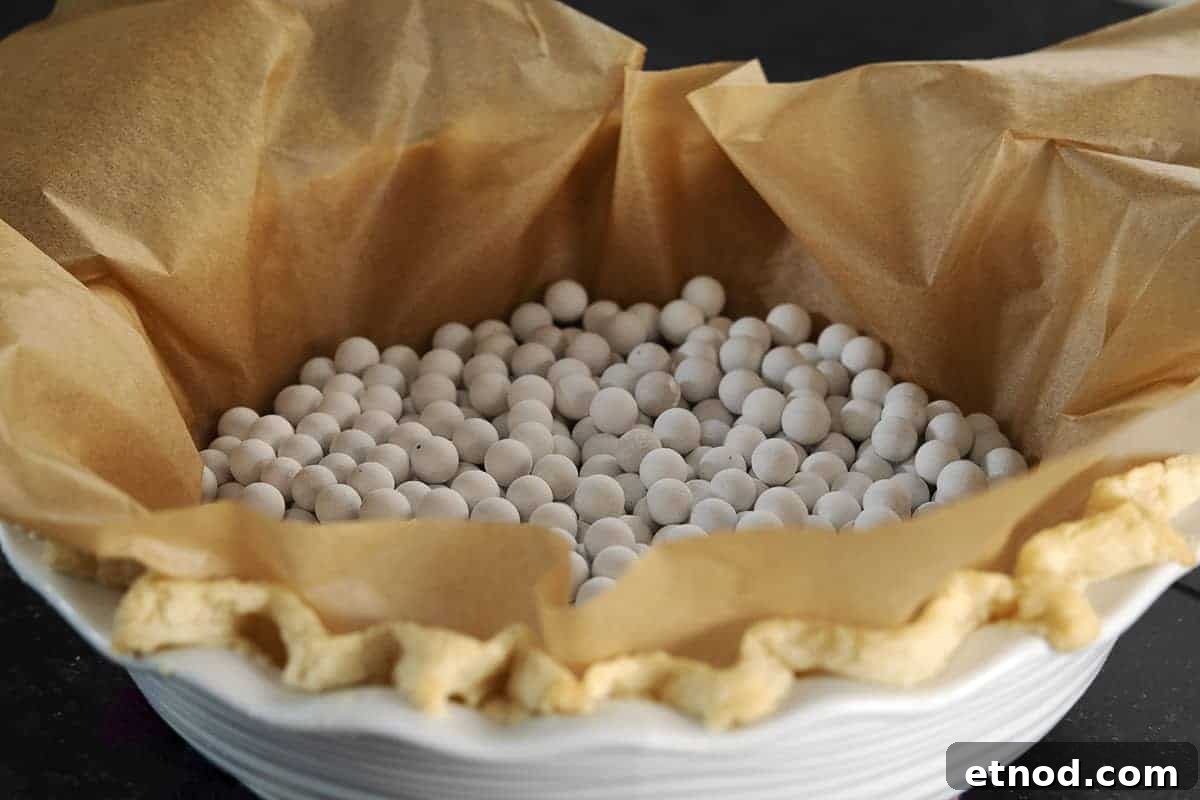
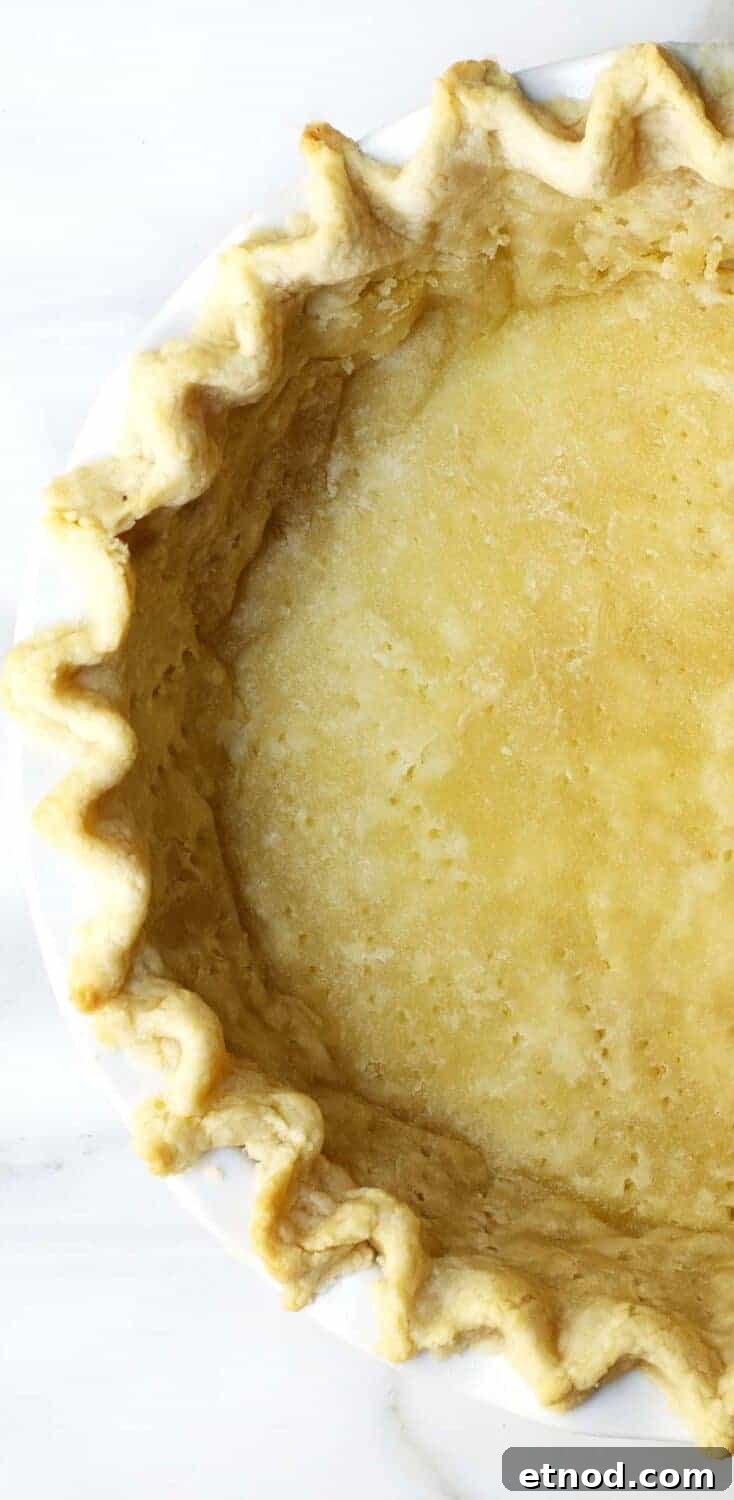
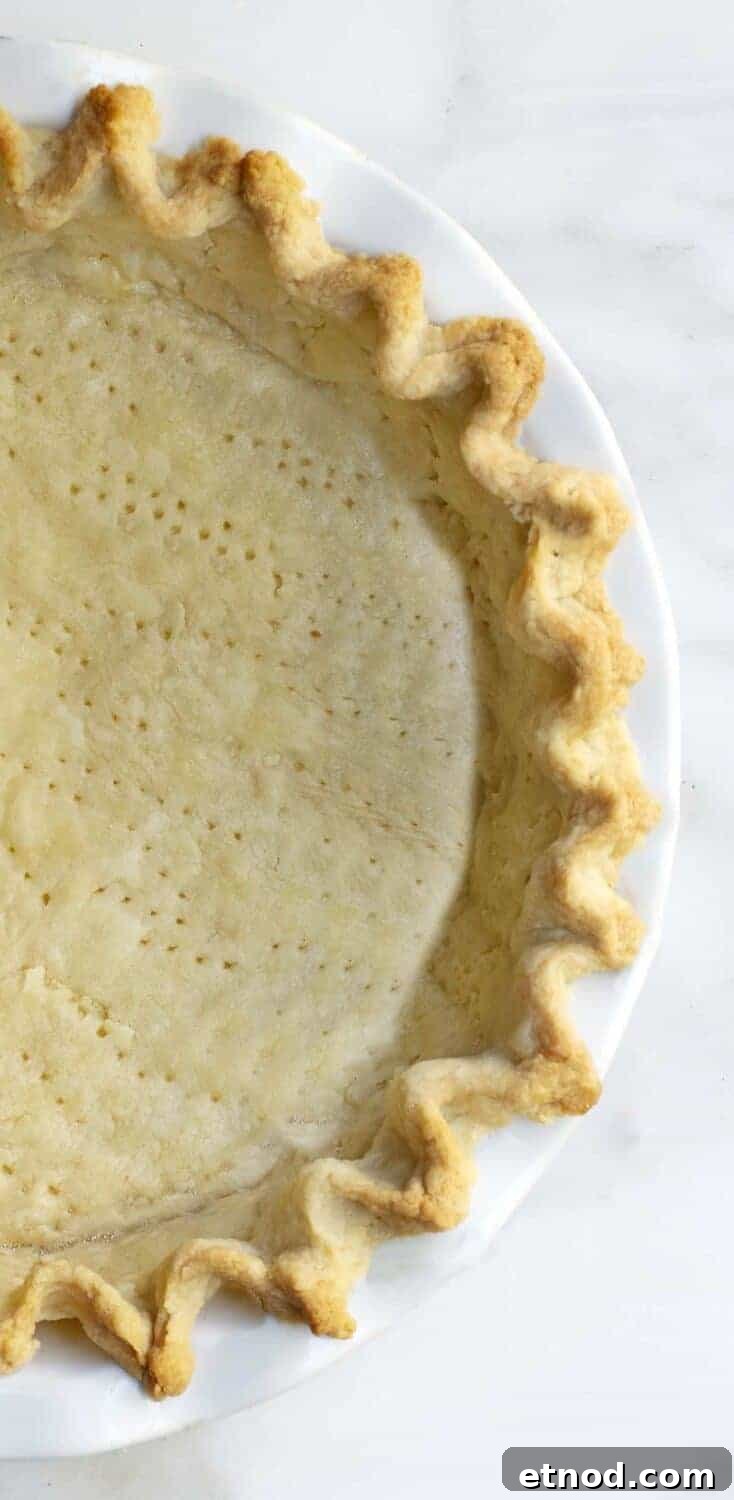
To blind bake, line the chilled crust with parchment or foil and fill with pie weights or dried beans. Bake in a 425°F oven for 12 minutes. Remove the weights and paper, prick the bottom and sides with a fork, then bake an additional 8–10 minutes for a partially baked shell or 10–12 minutes longer for a fully baked crust.
What to Make
This crust is perfect for savory pies like breakfast quiche, chicken or turkey pot pie, and for cutting into savory crackers to serve with soups. It’s equally excellent for sweet pies—apple, peach, pumpkin, pecan and berry pies all gain extra depth and a flaky texture from a lard-and-butter crust.
FAQ
Leaf lard is high-grade rendered fat taken from the area around a pig’s kidneys. It has a neutral flavor and is prized for baking because it creates a tender, flaky texture without imparting a porky taste.
Yes. For the best balance of flake and flavor, substitute up to half the butter with lard. Using both fats combines butter’s flavor with lard’s superior flakiness.
Lard creates a very flaky, crisp pastry. It is less flavorful on its own than butter, so blending it with butter produces a crust that is both flaky and flavorful.
No. Lard is rendered pork fat; Crisco is a brand of vegetable shortening made by hydrogenating vegetable oil. They behave differently in pastry.
Opinions vary. When using minimally processed rendered lard, many bakers prefer it to Crisco for texture and performance in traditional pastries.
Storage Tips
Store the dough in the refrigerator for up to 3 days before rolling. For longer storage, wrap tightly and freeze for up to 3 months; thaw overnight in the refrigerator before using.
Lard Pie Crust
Ingredients
- 1 1/2 cups all-purpose flour
- 1/2 teaspoon kosher salt
- 5 tablespoons lardideally leaf lard, chilled
- 4 tablespoons unsalted butterhigh-fat, chilled and cubed
- 4 tablespoons ice wateror up to 5 tablespoons, as needed
Instructions
To Make With a Food Processor:
-
Add flour and salt to the food processor and pulse to combine. Add chilled lard and butter and pulse until coarse crumbs form. Sprinkle in ice water, one tablespoon at a time, pulsing after each addition, until the mixture just holds together when squeezed. Turn out onto a floured surface, shape into a 1-inch disc, wrap and refrigerate at least one hour.
To Make by Hand:
-
Whisk flour and salt in a bowl. Cut in chilled lard and butter with a pastry cutter or two knives until you have irregular, coarse crumbs. Add ice water, one tablespoon at a time, and mix just until the dough clumps when pressed. Shape into a 1-inch disc, wrap and refrigerate at least one hour.
To Roll Out Pie Crust:
-
On a well-floured surface, roll the chilled dough into a 12-inch round, starting from the center and rolling outward. If the dough is too firm, let it rest 15–30 minutes at room temperature; if it feels warm or greasy, chill 20 minutes.
To Pan and Chill
-
Fold the dough over your rolling pin and ease it into a 9-inch deep-dish pie pan without stretching. Trim to leave a 1-inch overhang and flute the edge. Cover and refrigerate at least 30 minutes before baking.
How to Blind Bake or Fully Bake Pie Crust
-
Preheat oven to 425 °F (218 °C). Line the chilled shell with parchment or foil and fill with pie weights or dried beans. Bake 12 minutes. Remove weights and paper and prick the crust all over. For a partially baked shell, bake 8–10 minutes more; for a fully baked shell, bake another 10–12 minutes until golden brown.
Notes
- Lard: Use good-quality rendered leaf lard rather than highly processed hydrogenated lard.
- Storage: Refrigerate the dough up to 3 days or freeze up to 3 months; thaw overnight in the refrigerator before using.
- Baking: Partially bake the shell when filling and finishing in the oven (quiche); fully bake and cool for no-bake fillings.
- Double crust: For a double-crust pie, increase ingredients by 50% or double the recipe.
Nutrition
Nutrition information is an approximation.
Leave a comment & rate the recipe below!