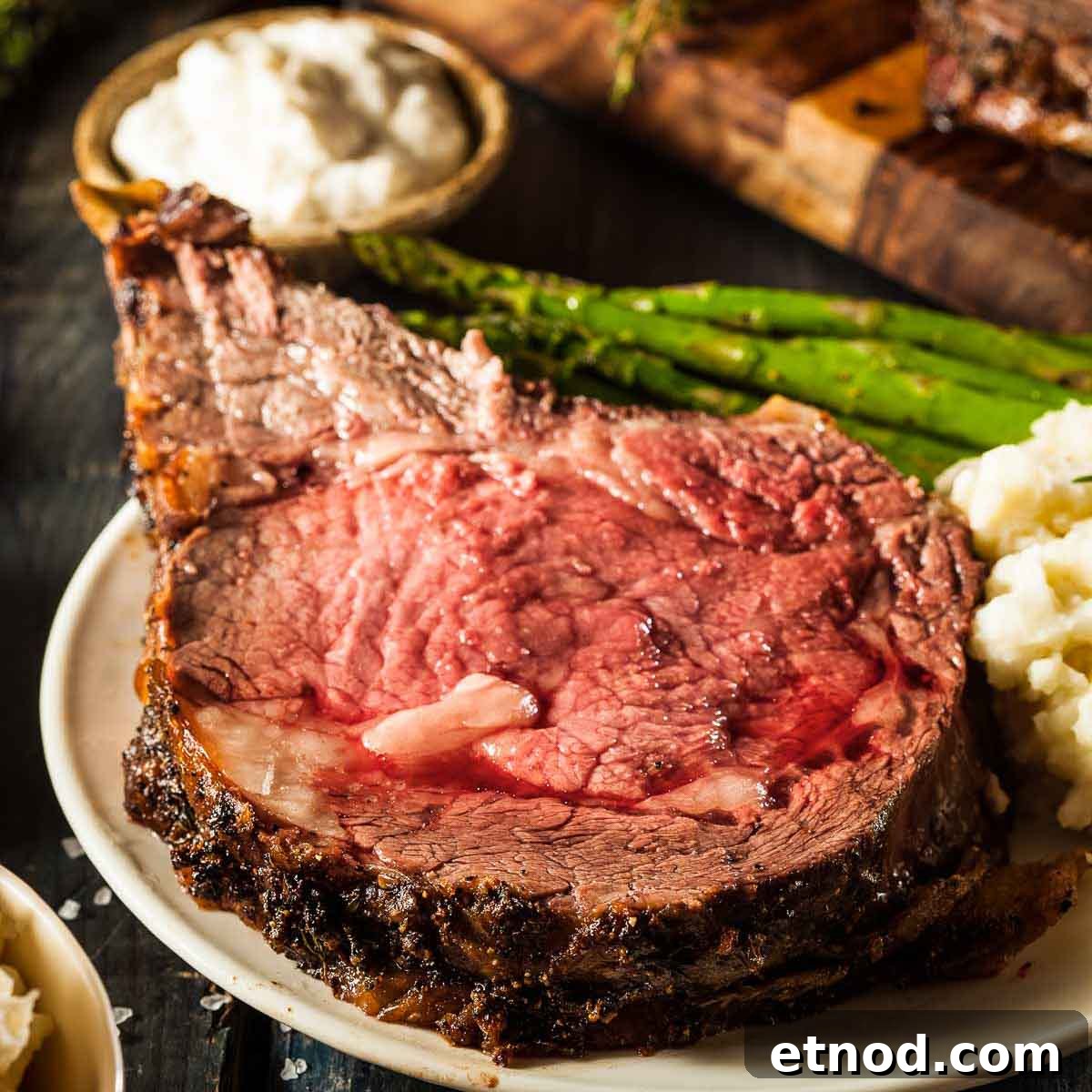
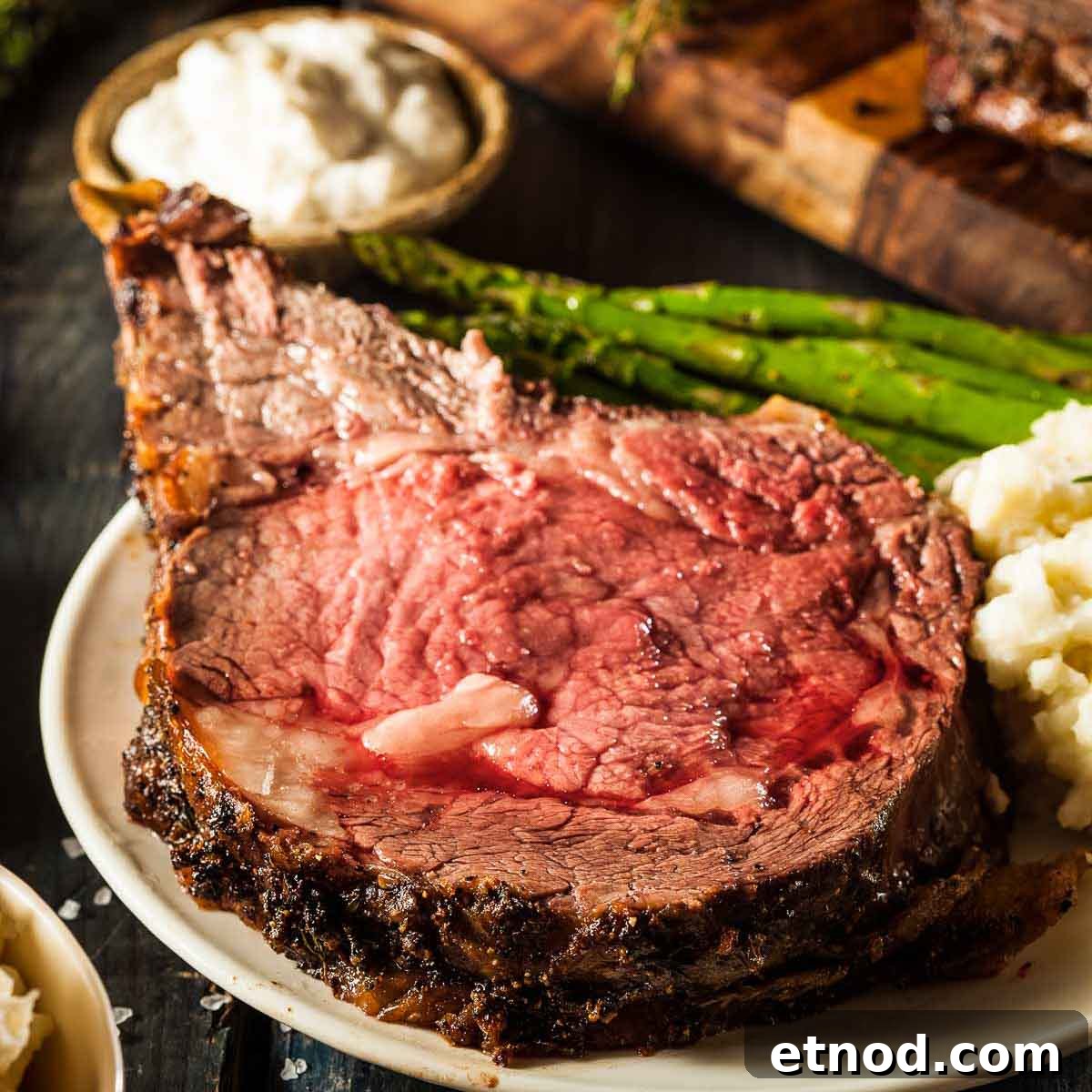
This is the reliable standing rib roast recipe that will steal the show at your next holiday meal. Juicy, tender prime rib with a deeply flavorful crust starts with a simple wet rub of Dijon mustard, garlic, coarse salt, and cracked peppercorns.
Below you’ll find clear instructions for bringing the roast to room temperature, creating a beautiful crust, and finishing the roast to a perfect medium-rare. The guide covers bone-in versus boneless roasts, the internal temperatures to aim for, an easy horseradish cream, and tips for making au jus and using leftovers.
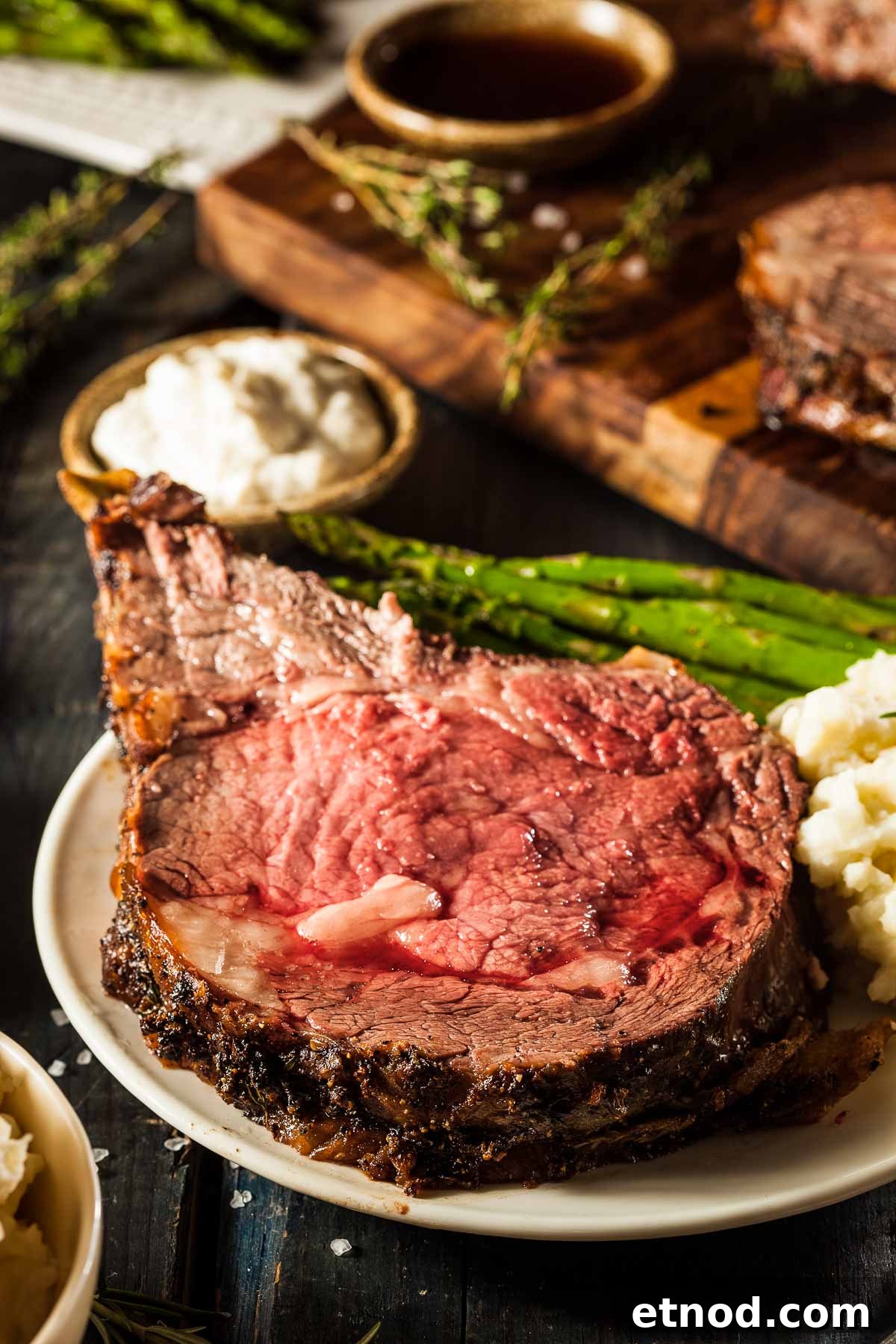
I’ve prepared this standing rib roast for holidays for years. When I find a good boneless roast I sometimes make a garlic-herb crust version, but a classic bone-in prime rib is a favorite for its flavor and presentation. I often serve it alongside a creamy mushroom risotto.
Ingredients
For the Roast
- 1 bone-in standing rib roast (prime rib), about 8 pounds (4–7 ribs; adjust cook time per the temperature chart)
Prime Rib Wet Rub (Dijon-Garlic-Peppercorn)
- ½ cup Dijon mustard
- 1 heaping tablespoon chopped garlic (3–4 cloves; mash with salt to make a paste)
- 2 tablespoons coarse kosher salt
- 1–2 tablespoons coarsely ground black pepper
Horseradish Cream
- 1 cup sour cream
- ¼ cup prepared horseradish (adjust to taste)
- Kosher salt & freshly ground black pepper, to taste
- 1 spoonful Dijon mustard (optional)
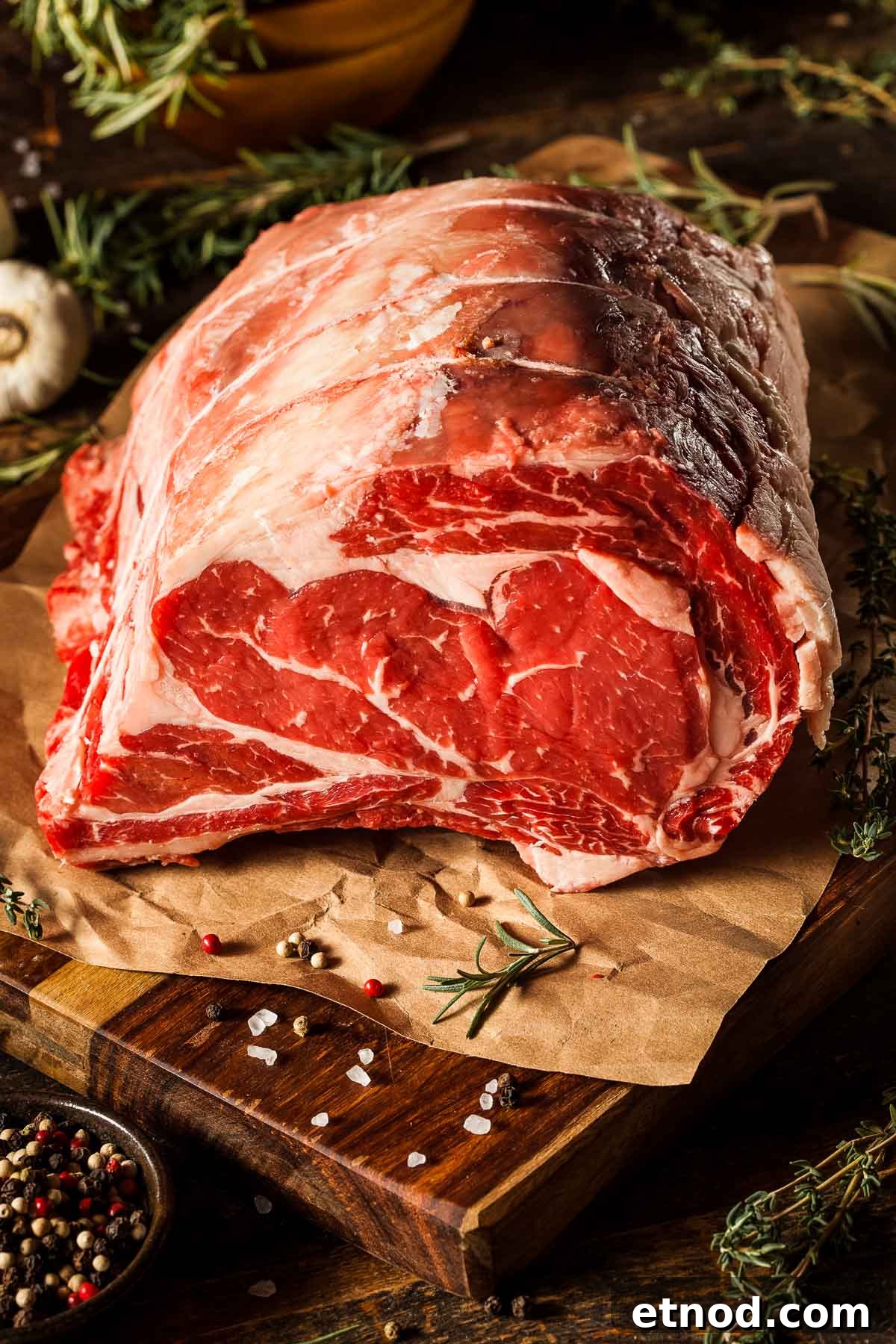
What to Buy
- Bone-in vs. boneless: Bone-in roasts offer more flavor and juiciness; the bones act as a natural rack. Boneless is easier to carve and can cook slightly faster.
- Rib count & weight: Plan about one rib per two people. A 4-rib roast (~8 lbs) serves 8–10; a full 7-rib roast can serve up to 14.
- Grade matters: Prime grade has more marbling and tenderness, but choice grade cooks up well when handled properly.
- Ask your butcher: Have the roast tied for even cooking and easier carving; ask for the bones to be frenched if you want a show-stopping presentation.
Step-by-Step Instructions
- Bring the roast to room temperature: Remove from the fridge and let sit 1½–2 hours. This promotes even cooking and prevents an overcooked exterior with an undercooked center.
- Preheat the oven: Set to 450°F (232°C).
- Prepare the wet rub: On a cutting board, mash the chopped garlic with the kosher salt to form a paste. Combine the garlic paste with Dijon and coarsely ground black pepper in a small bowl. Let rest 15 minutes to meld flavors.
- Apply the wet rub: Place the roast ribs-down on a rack in a roasting pan. Slather the mustard mixture over the entire surface, coating all sides.
- Initial high-heat sear: Roast at 450°F for 20–30 minutes until browned and crusted.
- Lower the oven temperature: Without opening the door, reduce oven to 325°F (163°C). Continue roasting until the internal temperature reaches 120–125°F for medium-rare (adjust to your preferred doneness). Use a reliable meat thermometer for accuracy.
- Rest the roast: Remove from oven, tent loosely with foil, and rest 20–30 minutes. The internal temperature will rise ~5–10°F during resting.
- Carve & serve: Slice between the bones for large rib portions, or remove the bones and carve thin slices across the grain. Serve with horseradish cream and au jus if desired.
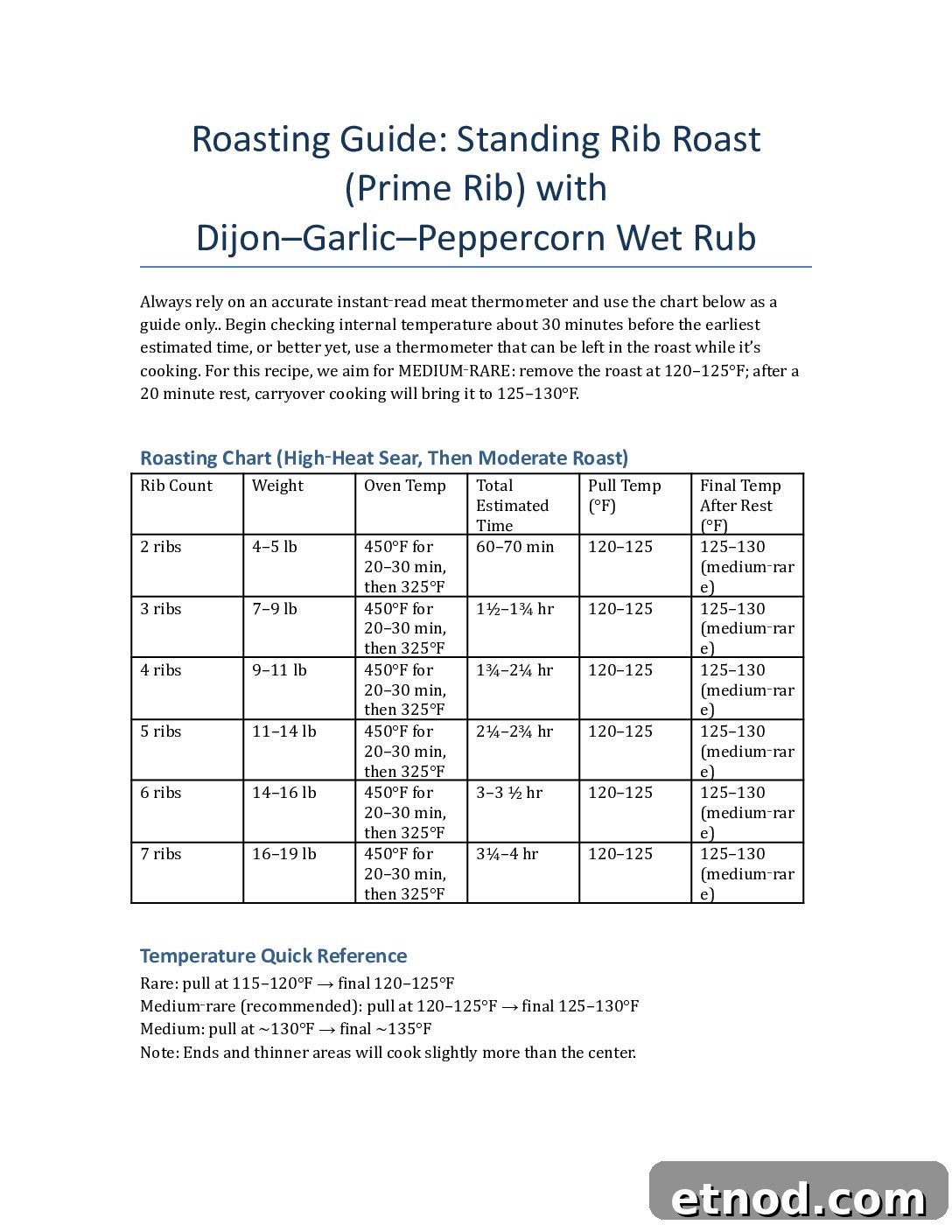
Temperature Chart
Use a temperature chart to ensure perfect results. A good target for medium-rare is 120–125°F before resting. The roast will carry over to the desired final temperature as it rests. Keep a meat thermometer handy to monitor progress.
Tips for the Perfect Standing Rib Roast
- Choose the right cut: Select a well-marbled roast for maximum flavor and tenderness; bone-in is traditional and flavorful.
- Room temperature matters: Let the roast sit out 1½–2 hours before cooking for even doneness.
- Use a meat thermometer: This takes the guesswork out of cooking an expensive cut—monitor the center without opening the oven.
- Don’t skip the high-heat sear: The initial blast at 450°F creates a deeply browned crust and helps lock in juices.
- Season thoroughly: Ensure the wet rub covers the roast completely for consistent flavor; the rub already contains plenty of salt.
- Rest before carving: Rest at least 20 minutes under tented foil so juices redistribute and slices stay moist.
- Carving technique: Slice between the bones for large portions or remove the bones first for thinner slices across the grain.
- Save the drippings: Use pan juices to make au jus for serving alongside horseradish cream.
- Adjust for roast shape & size: If the roast is unusually short or thick, start checking temperatures earlier than the chart suggests.
How to Make Au Jus
Au jus is an easy sauce made from the pan drippings. If you want both horseradish cream and au jus, follow these simple steps:
Ingredients
- Pan drippings from the roast
- 1–2 cups low-sodium beef broth
- ½ cup red wine (optional)
- Salt & freshly ground black pepper, to taste
Instructions
- Collect the drippings: Pour them into a heatproof cup and let sit so fat rises; skim most of the fat.
- Deglaze the pan: Place the roasting pan over medium heat, add red wine or a splash of broth, and scrape up browned bits.
- Add the broth: Stir in beef broth and the reserved drippings, then simmer about 5 minutes.
- Strain for a smooth sauce: Pass through a fine-mesh strainer into a serving vessel.
- Taste & adjust: Season with salt and pepper. For a slightly thicker jus, whisk 1 teaspoon cornstarch into 2 tablespoons cold water and add during simmering.
How to Use Leftovers
Leftover prime rib is versatile and delicious. Here are a few favorite uses:
- Reheated with sides: Warm slices or the whole roast with leftover risotto or mashed potatoes.
- Prime rib sandwiches: Thinly slice and pile on crusty bread with horseradish cream and caramelized onions, plus cheese if you like.
- French dip: Serve thin slices in a roll with warm au jus for dipping.
- Breakfast hash: Dice leftover beef and sauté with potatoes, onions, and peppers; top with an egg.
- Steak and eggs: Reheat slices and serve with eggs and toast for a hearty breakfast.
- Prime rib tacos: Warm slices or shredded meat in tortillas with chimichurri, pico, or pickled onions.
- Beef & barley soup: Chop leftovers for a rich, comforting soup base.
Reheating Leftovers
The key to reheating is retaining moisture and avoiding overcooking. Bring meat to room temperature if possible and slice only what you plan to eat.
- Oven (best): Wrap slices or roast in foil with a splash of au jus or broth. Warm at 250°F until heated through.
- Sous vide (precise): Seal slices with jus and heat in a 165°F water bath for about an hour.
- Steamer (fast): Wrap slices with a little broth and steam 3–6 minutes until heated.
- Air fryer: Wrap roast in foil with broth and heat at 225°F, checking frequently until warm.
- Microwave: For convenience, microwave in short bursts with sides on the plate until warmed through.
Frequently Asked Questions
What is a standing rib roast?
A standing rib roast is the same cut as prime rib, taken from the primal rib section. It’s called “standing” because it’s roasted with the rib bones acting as a natural rack.
What’s the difference between prime rib and ribeye?
Prime rib is the whole roast including the bones; ribeye is a steak cut from that roast before cooking.
How much prime rib should I serve per person?
Plan about ½ pound per person, which is sufficient when serving sides.
What internal temperature should prime rib be cooked to?
For medium-rare, aim for 120–125°F before resting. The temperature will rise another 5–10°F while resting.
How long should I rest the roast before carving?
Rest at least 20 minutes to allow the juices to redistribute.
What’s the best way to store leftovers?
Wrap leftovers tightly or store in an airtight container in the fridge for up to 4 days, or freeze for up to 3 months.
Related
Looking for other recipes? Try these:
- The BEST Braised Beef Short Ribs Recipe for the Holidays
- Beef Wellington Recipe
- Beef Bourguignon Recipe
- Tomahawk Steak Recipe
Pairings
Favorite dishes to serve with standing rib roast:
- Homemade Creamed Corn (With or Without Cream)
- Roasted Carrot Souffle
- Easy Green Bean Casserole with Blue Cheese
- Green Beans Almondine
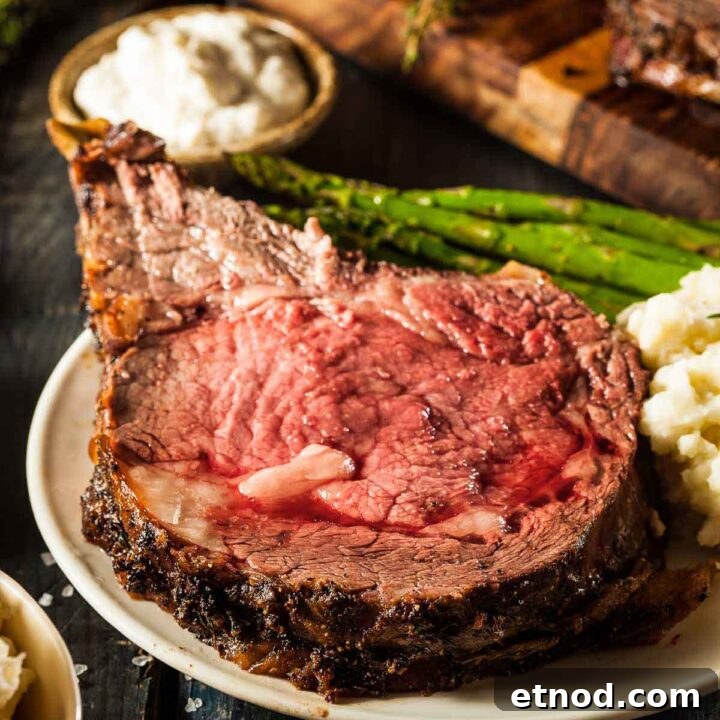
Standing Rib Roast with Garlic-Mustard Wet Rub
8-10 servings
10 minutes
2 hours 30 minutes
20 minutes
3 hours
A standing rib roast is an ideal holiday centerpiece: impressive, straightforward, and delicious.
Ingredients
For the Roast
- 1 Prime Rib Roast, about 8 pounds
- 1 heaping tablespoon chopped garlic
- 2 tablespoons coarse kosher salt
- 1–2 tablespoons coarsely ground black pepper
- ½ cup Dijon mustard
For the Horseradish Cream
- 1 cup sour cream
- ¼ cup prepared horseradish
- Kosher salt & freshly ground black pepper, to taste
- A spoonful of Dijon, optional
For Au Jus
- Pan drippings from your cooked prime rib
- 1–2 cups beef broth (low-sodium)
- ½ cup red wine (optional)
- Salt & freshly ground black pepper, to taste
Instructions
- Preheat oven to 450°F.
- Bring roast to room temperature (allow to sit on counter for at least an hour).
- Make a garlic paste by pressing chopped garlic and salt with the side of a knife. Mix with Dijon and pepper. Let sit 15 minutes.
- Place roast ribs-down on a rack in a roasting pan. Slather with the mustard mixture, covering all sides. Roast 20–30 minutes until the exterior is well browned.
- Reduce oven to 325°F and continue cooking until the internal temperature reaches 120–125°F for medium-rare. Remove and rest 20 minutes, then carve and serve with horseradish cream.
For the Horseradish Cream
- Mix sour cream, prepared horseradish, salt, pepper, and optional Dijon. Let sit at room temperature while the roast cooks or chill in advance.
For Au Jus
- Pour pan drippings into a heatproof cup and skim most of the fat after a few minutes.
- Deglaze the roasting pan over medium heat with red wine or a little broth, scraping up browned bits.
- Add beef broth and the reserved drippings, simmer about 5 minutes, then strain into a serving bowl.
- Season to taste and serve warm. To thicken slightly, whisk 1 teaspoon cornstarch into 2 tablespoons cold water and stir in during simmering.
Notes
Rub for rib roast adapted from classic preparations.
Nutrition Information:
Yield: 8
Serving Size: 1
Amount Per Serving:
Calories: 113
Total Fat: 9g
Saturated Fat: 4g
Cholesterol: 26mg
Sodium: 2126mg
Carbohydrates: 5g
Protein: 4g
Nutrition estimates are provided as a courtesy and may vary; consult a nutritionist for precise needs.