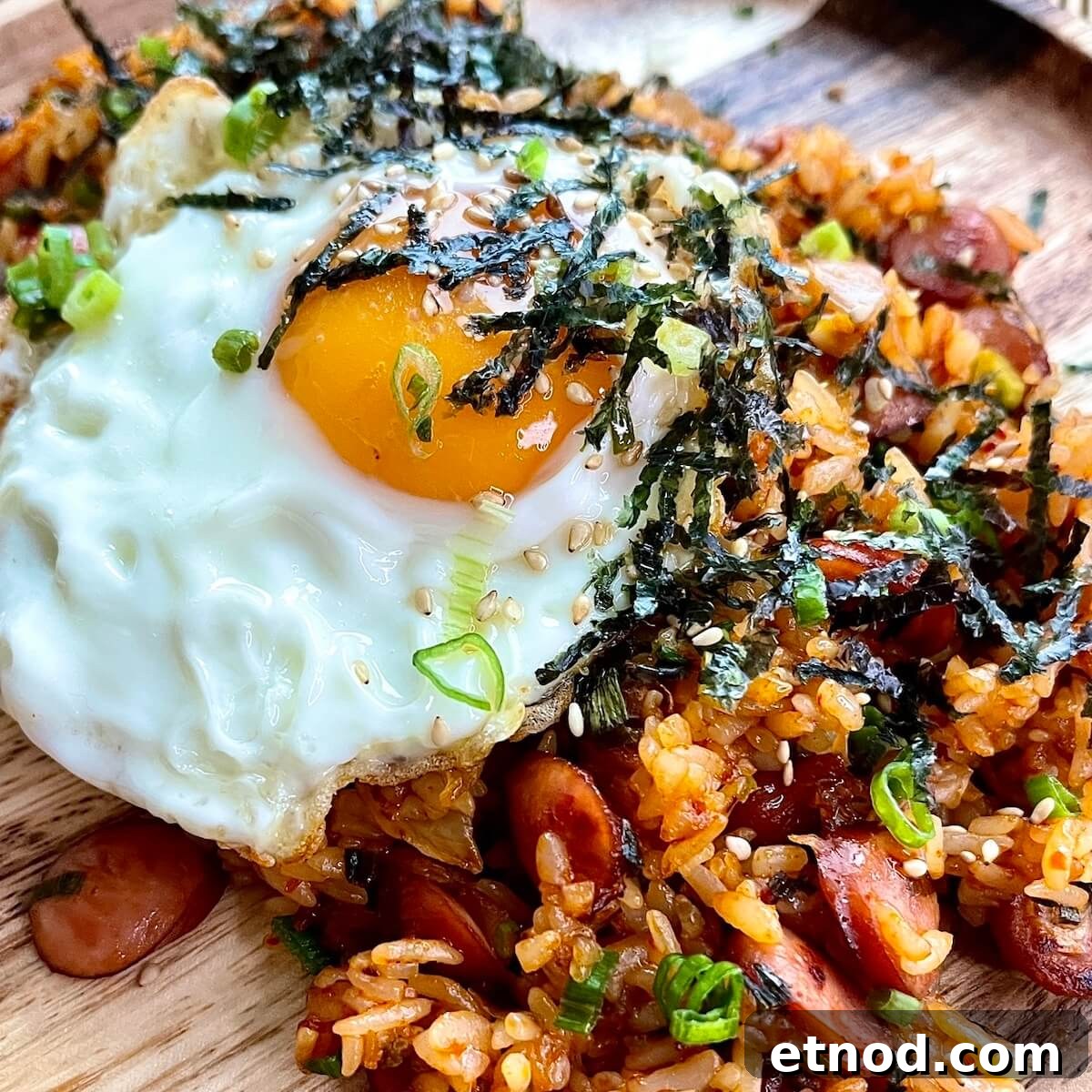
Kimchi fried rice, or kimchi bokkeumbap, is Korean comfort food at its finest. Bursting with savory, spicy, and tangy flavors, this dish comes together in about 15 minutes and is perfect for a quick weeknight meal.
Kimchi fried rice is highly adaptable. Change the mix-ins based on what’s in your fridge—mini sausages, spam, bacon, or pork belly all work well, or keep it vegetarian. The recipe below uses simple ingredients and techniques to achieve a flavorful, slightly crispy fried rice.
Ingredients
Rice
There’s a long-running debate about fresh versus day-old rice for fried rice. Both have advantages. This version uses fresh rice, cooked and then fried until excess moisture evaporates and the grains develop some crisp edges. Short- or medium-grain rice is recommended because it’s slightly stickier and clings together nicely, but jasmine rice can be used too.
Kimchi
Use well-fermented kimchi for maximum depth of flavor; it adds tang and umami that define the dish. If you prefer a milder taste, use less-fermented or freshly made kimchi.
Soy sauce
Soy sauce (ganjang) provides umami and rounds out the flavors. Korean soy sauce tends to be sweeter and less salty than some Japanese varieties, so adjust the amount depending on what you have. Adding soy sauce to the pan early and letting it cook briefly helps develop a richer, slightly caramelized flavor.
Sugar
A little sugar balances the acidity of fermented kimchi. Add it gradually and taste as you go—just enough to tame sourness without making the dish sweet.
Gochujang
Gochujang (Korean red pepper paste) adds depth and a mild heat. It’s optional but recommended for its savory, slightly sweet complexity. Mix it with a bit of water to loosen the paste before stirring it into the pan.
Gochugaru
Gochugaru (Korean red pepper flakes) gives an additional spicy kick and a bright color. Use it to taste if you like more heat.
Toppings
Finish the fried rice with chopped scallions, a drizzle of sesame oil, and toasted sesame seeds. Add the scallions near the end so they soften slightly but keep freshness. Because sesame oil has a low smoke point, add it after removing the pan from heat. Optional garnishes include seaweed flakes and a fried or poached egg on top.
Kimchi fried rice variations
- Add a layer of melty cheese on top for richness.
- Stir-fry sliced chili peppers for extra spice.
- If you don’t want a sunny-side-up egg, scramble or poach the egg instead.
- Meat options: spam, bacon, ham, pork belly, or sliced sausage.
- Canned tuna (especially spicy Korean-style tuna) is a surprisingly common and tasty addition.
- For creamier rice, mix in Asian mayonnaise such as Kewpie or a Korean mayo like Ottogi.
Kimchi fried rice is very forgiving and great for experimenting. Use these ideas as a starting point and adapt based on taste and what you have available.
Kimchi Fried Rice (김치 볶음밥)
- Author: Jasmine and Tea
- Total Time: 15
- Yield: 1 1x
Description
Quick, satisfying, and full of character, kimchi fried rice is a go-to meal when you want bold flavor with minimal fuss. It’s a perfect way to use leftover rice and kimchi while customizing with proteins or toppings you enjoy.
Ingredients
- 1 tbsp oil
- 8 scallion stalks, chopped (about 38g)
- ½ cup sliced mini sausages (about 70g) — optional
- 2 tsp Korean soy sauce (ganjang) — adjust if using a saltier variety
- 1 tsp sugar, plus more to taste
- ⅓ cup fully fermented kimchi
- 2 tsp gochujang mixed with 2 tsp water
- Instant rice container (210g, roughly 1 cup fresh rice) or equivalent cooked rice
- Gochugaru (Korean red pepper flakes), to taste
Other
- 1 egg + oil for pan-frying
- Toppings: sesame seeds, sesame oil, seaweed flakes (optional)
Instructions
- Heat a large frying pan over medium heat and add the oil and half of the chopped scallions. When the scallions start to sizzle, add the sliced sausages (if using) and cook about 5 minutes until lightly golden, reducing heat if needed to prevent burning.
- Add the soy sauce and sugar, stirring to combine. Let the soy sauce cook briefly to develop flavor. Stir in the kimchi and the gochujang-water mixture (the water helps loosen the paste).
- Add the rice, breaking up any clumps. Season with gochugaru if you want more heat. Continue cooking, stirring occasionally, until the rice reaches your desired level of crispiness, about 5–8 minutes. Longer cooking will evaporate more moisture and crisp the rice further.
- Taste and adjust seasonings—add more sugar to balance sourness or more soy sauce for saltiness. Stir in the remaining scallions in the last minute to soften them. Fry an egg to your liking and serve it on top. Garnish with sesame seeds, a drizzle of sesame oil, and seaweed flakes. Enjoy.
Notes
Korean soy sauce (ganjang) is typically sweeter and less salty than Japanese soy sauce. If you use a different soy sauce, taste and adjust the amount accordingly.
- Prep Time: 5
- Cook Time: 10